
If you make small portions of purée
You usually make one small portion and want to avoid ingredients getting stuck away from the blade in a large jug.


Choose a compact jug blender if you want to make small portions of plum purée and then spoon it out; a personal blender is a better fit if you also make smoothies in the blending cup. For just a few spoonfuls, mashing by hand or using a hand blender may be more practical. Compare the space needed for the whole appliance, how easy it is to clean and the temperature guidance, and remove the plum stones before blending.
You usually make one small portion and want to avoid ingredients getting stuck away from the blade in a large jug.
You want to be able to store the appliance with its cup and accessories easily; its dimensions and the number of separate parts matter.
You want to use the same appliance for cold plum purée and drinks, so the blending cup and ease of cleaning are important.
A good fit if: you want to blend small portions of stoned plums and then spoon the purée out of a jug.
Bear in mind: check the minimum fill level and whether the jug, blade and base will fit in your kitchen.
A good fit if: you regularly make smoothies in the same cup as well as purée.
Bear in mind: the cup’s capacity doesn’t guarantee that a few spoonfuls of thick purée will blend well; check the temperature guidance too.
A good fit if: you’re only preparing a few spoonfuls of soft plum and don’t want to store an extra blender cup.
Bear in mind: how well it works depends on the quantity and the bowl you use.
For making plum purée in a small kitchen, portion size, storage space, cleaning and the temperature of the ingredients are the key points to compare.
| What to consider | What to look for | Who does this matter to? |
|---|---|---|
| Blending small portions | Compare cup sizes and check the minimum fill level in the instructions; also consider whether you can easily spoon the purée out of the jug. | If I’m only preparing a few plums, I want the ingredients to reach the blade easily. Around 36% of consumers say small portions are their top buying priority. |
| Storage in a small kitchen | Measure the available shelf and cupboard space, allowing for the base, cup and any extra accessories. | In my small kitchen, I want to store the whole set without loose parts getting in the way. Around 29% of consumers put storage space first. |
| Cleaning the cup and blade | Check which parts can be removed and which are dishwasher-safe according to the model instructions. | After making purée, I want to clean the cup and blade without unnecessary hassle. Around 21% of consumers give ease of cleaning top priority. |
| Purée temperature | Check the temperature and filling instructions for the exact model; don’t assume a sealed blending cup is suitable for hot ingredients. | If I want to purée stewed plums, I want to know which method the appliance allows. Around 14% of consumers focus mainly on processing warm purée. |
Remove the stone and, if needed, cut the plum into pieces before processing. The Voedingscentrum advises removing the stone; for a small portion of fruit purée, it also suggests mashing as an option.
A cup’s capacity doesn’t tell you the minimum amount of purée needed for the ingredients to blend properly. For a very small portion, mashing may be a simpler alternative.
Use your usual portion size as a guide and check the model’s instructions for the minimum fill level.
For very small portions, using a blender may mean you also need to use and wash an extra tool or bowl.
nutribullet’s safety information warns that hot contents in a sealed blending cup can build up pressure and be released suddenly.
Let stewed plums cool first and follow the temperature guidance for the exact appliance.
A cup or extra bottle takes up space too, so the complete set may need more room than the base alone.
Measure your available cupboard space and think about where you’ll store all the parts.
Extra cups and accessories need their own storage space.
Philips describes the HR2510/90 as a compact mini blender for smoothies and sauces, among other things; a jug could be a good choice if you want to spoon out the purée.
Bosch lists a 0.6 l blending cup for the VitaPower MMB2111S; this could be relevant if you also want to make smoothies in a cup.
nutribullet sells the Original NB603DG as a personal blender with a 700 ml cup.
Tefal describes the Blend Up BL19H4F0 as a compact blender with two travel bottles, designed for things such as sauces and cold soups.
This selection includes compact and personal blenders for small portions, purée or smoothies. Check whether each model’s cup and recommended method suit your portion size and kitchen.
 No image available
A compact mini blender with a jug for anyone who wants to spoon out the purée; check the minimum fill level for your portion.
Capacity: 0.6 Litre. Power: 350 W.
 No image available
The jug design could be a good fit if you want to spoon out the purée after blending; check that the size suits your portion.
Power: 250W. Capacity: 500ml. Glass jug.
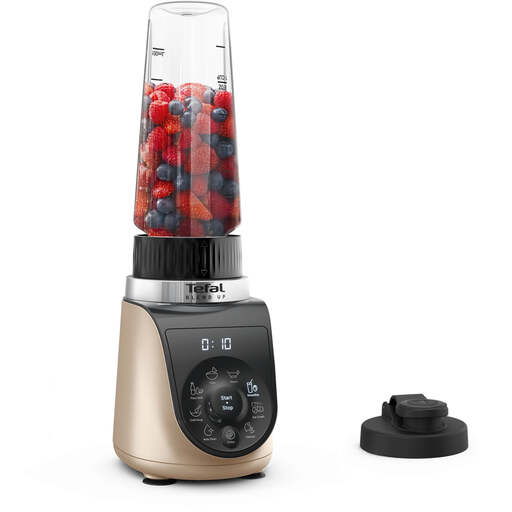 No image available
A personal smoothie blender to compare if you want to make smoothies as well as purée.
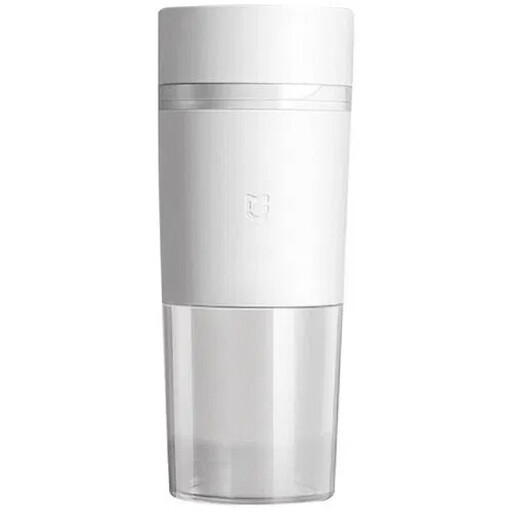 No image available
A portable blender to compare if you want to prepare a portion to take with you.
The product information warns against blending hot liquids.
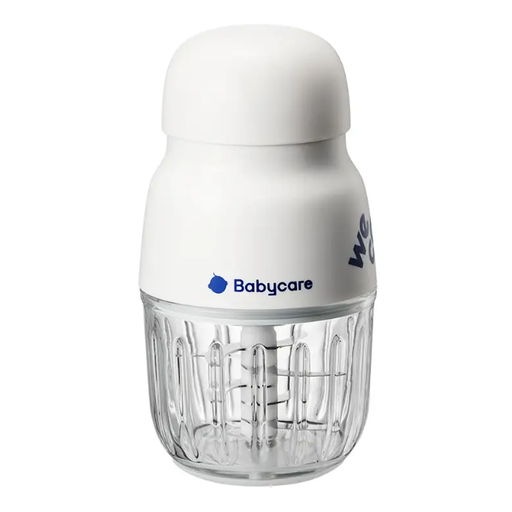 No image available
The single-serve version is worth comparing if you mainly make small portions of purée.
Capacity: 10 fl oz.
Yes. Wash the plums, remove the stones and, if needed, cut the flesh into smaller pieces before processing. The Voedingscentrum advises removing the stones.
Don’t assume that you can. nutribullet’s safety information warns that hot contents in a sealed blending cup can build up pressure. Let the plums cool and check the instructions for your exact model.
For homemade fruit purée, the Voedingscentrum recommends storing it for 2 days in the fridge or 3 months in the freezer. For a fruit smoothie, it gives separate guidance of 1–2 days in the fridge. Follow the advice that applies to what you’ve made.
According to ACM ConsuWijzer, if a product is faulty despite being used normally, the seller must offer an appropriate solution. This is separate from any manufacturer’s warranty; there isn’t simply one fixed period that applies to every blender.
The NVWA explains that CE marking is required for electrical products and lists separate requirements for materials that come into contact with food. These general rules alone don’t prove that a specific product meets all the applicable requirements.