
Making purée for several guests
You want to make enough purée in one go, so you compare the jug’s usable capacity. The Consumers’ Association describes a blender as particularly suitable for mixtures with plenty of liquid or larger quantities.


A jug blender is often a good choice if you’re making several portions of plum purée for guests and using enough liquid. Compare the usable capacity, not just the maximum capacity. A hand blender may be more practical for a small or thick mixture, while a personal blender is best suited to a small portion with enough liquid. Remove the stones and wash the plums first, and follow the instructions for use and cleaning.
You want to make enough purée in one go, so you compare the jug’s usable capacity. The Consumers’ Association describes a blender as particularly suitable for mixtures with plenty of liquid or larger quantities.
You want to add very little liquid or are working with a small, thick mixture. It’s worth weighing up whether a jug blender or hand blender is more suitable; hand blenders can also struggle with very thick ingredients.
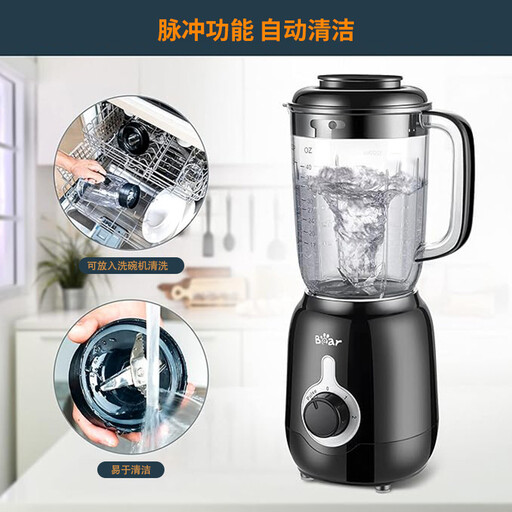
You make purée occasionally and want to know which parts can be detached and are listed as dishwasher-safe in the product specifications. Check this for the exact model.
Best for: making several portions at once and purée with enough liquid.
Keep in mind: a jug takes up space and is less convenient for very small or thick portions, according to the Consumers’ Association.
Best for: a smaller quantity that you want to purée in a suitable mixing bowl.
Keep in mind: a hand blender can struggle with very thick ingredients. Follow the instructions and use a suitable bowl.
Best for: a small portion with enough liquid, made in a compact blending cup.
Keep in mind: the Nutribullet NB603DG comes with a 700 ml cup; you may need to blend in several batches for multiple guests.
| What to consider | What to look for | Who should pay extra attention? |
|---|---|---|
| Quantity for guests | Compare the effective or usable capacity and the fill line with your recipe; don’t rely on the maximum capacity alone. | If I want to make enough purée for guests in one go, usable capacity matters most. Around 36% of consumers prioritise making enough purée for their guests. |
| Thickness and texture | Decide how thick you want the purée to be and check the instructions to see which ingredients and quantities the appliance can handle. | If you want to add very little liquid, pay extra attention to whether the appliance is suitable for thick mixtures. Around 29% of consumers prioritise getting the right texture for thick purée. |
| Cleaning | Check which parts can be detached and are dishwasher-safe for each model; don’t assume this applies to every part. | If I only use the appliance occasionally, I don’t want lots of unnecessary parts to clean after puréeing. Around 21% of consumers prioritise easy cleaning. |
| Small portions | Compare the recipe quantity with the permitted fill level of the cup or jug, and check that the model is suitable for the consistency you want. | If you usually make a modest amount, you won’t want to have to fill a large jug. Around 14% of consumers prioritise a compact option for small portions. |
The maximum capacity may be higher than the quantity you can actually process according to the specifications. Philips lists the HR2041/00 as having a maximum capacity of 1.9 l and an effective capacity of 1 l; Tefal gives the BL871D31 a usable capacity of 1.5 l.
Compare the effective or usable capacity with your recipe, and pay attention to the fill line too.
A jug with too little usable capacity may mean blending in extra batches.
Wattage alone doesn’t tell you how smooth a particular appliance will make plum purée. The Consumers’ Association assesses puréeing results separately; the models mentioned haven’t been tested against each other with plum purée.
First choose the appliance type and capacity that suit your portion. For performance comparisons, look for a relevant independent test rather than relying on wattage alone.
A small blending cup may mean you have to make the purée in several batches. The Nutribullet NB603DG comes with a 700 ml cup.
Compare the permitted fill level with the total quantity you need.
Making several batches may mean extra washing-up in between.
The 3000 Series HR2041/00 is an example of a jug blender suited to thinner purée and portions within its effective capacity.
The PerfectMix+ BL871D31 is an option if you’re looking for a larger usable capacity and a glass jug.
The MultiQuick 5 MQ 535 Sauce is an example of a hand blender for smaller quantities in a suitable mixing bowl.
The Original 600 NB603DG is a compact personal blender for small mixtures with enough liquid.
This selection includes jug blenders for several portions and a hand blender set for smaller quantities. Check the CE mark on the specific appliance too; the NVWA states that it’s compulsory for electrical products in the Netherlands.
 No image available
This jug blender is suited to making a larger batch for guests.
The product name lists a capacity of 1.5 l and 2 speeds.
 No image available
A hand blender may suit a smaller quantity that you want to purée in a suitable bowl.
The product name lists a chopper and whisk.
 No image available
This jug blender is suited to thinner mixtures within its effective capacity.
Philips lists an effective capacity of 1 l and a maximum capacity of 1.9 l, a plastic jug and one speed plus a pulse setting. Compare your portion with the effective capacity.
 No image available
The jug capacity suits a larger batch, but check the liquid requirement if you want to keep the purée thick.
The product name lists 600 W, 1.5 l and 3 speeds. The instructions specify a minimum of 300 ml of liquid.
 No image available
The 1.2 l jug is an option for a larger batch; if you’re making thick purée, bear in mind the specified amount of liquid.
The product name lists 500 W, 2 speeds, a pulse function and 4 stainless steel blades. The safety instructions specify a minimum of 300 ml of liquid.
Remove the stones and cut the plums into pieces before blending. The Netherlands Nutrition Centre advises removing the stones and washing fresh fruit under running water.
You could add a little liquid or purée smaller portions, as the Consumers’ Association recommends for ingredients that are difficult to blend. Adding liquid may change the consistency, so check your appliance’s instructions too.
Follow the cleaning instructions for the exact model. Nutribullet says that the detached blade on the NB603DG can be cleaned with soap and water, and that the cup is dishwasher-safe on the top rack. Tefal lists the BL871D31 as having a dishwasher-safe glass jug and removable blades; this doesn’t automatically apply to all blenders.
When you buy as a consumer in the Netherlands, you have statutory rights in addition to any manufacturer’s guarantee. ACM ConsuWijzer explains that if a product doesn’t meet what you could reasonably expect under normal use, the seller must provide an appropriate solution free of charge, such as a repair or replacement. There isn’t one fixed statutory guarantee period that applies to every appliance.
Yes. The NVWA states that a CE mark is compulsory for electrical products in the Netherlands. Check the mark on the specific appliance; it doesn’t tell you how smooth the blender will make plum purée.