
Vandaag of morgen in huis

Kwaliteit gegarandeerd

Welkomstaanbiedingen ontgrendelen: GRATIS bezorging | Tot 80% korting | Gratis 30 dagen JoyPlus-proefperiode
Download de app
When you want to buy plates, you will often look first at colour, shape and price. However, it is mainly the material, size and care requirements that determine whether a plate remains practical to use. An inexpensive dinnerware set may be less convenient if the plates cannot be stacked, become damaged easily or are not dishwasher-safe.
This buying guide helps consumers, families, campers, party organisers and catering businesses compare their options effectively. You will find practical points to consider, along with a selection of popular choices for everyday use, outdoor activities and catering.
A 27 cm plate provides plenty of room for a complete meal, but it may not fit as easily in a small dishwasher or kitchen cupboard. For everyday use, dinner plates measuring around 23 to 27 cm are standard. Smaller plates are useful for breakfast, dessert or children.
Also consider the height. Deep plates are suitable for soup, pasta and sauces, but take up more space when stacked.
A metal or plastic plate may withstand drops better than ceramic, but that does not mean every part of it is indestructible. Check the product description for the material, thickness, rim finish and permitted uses.
With stainless steel plates, it is important to check that the product is actually described as 304 stainless steel. According to Maxcook’s product information, this refers to 304 stainless steel that is resistant to corrosion and easy to clean. When serving hot food, always use oven gloves: metal can conduct heat quickly.
When choosing disposable plates, the packaging plays an important role. A product made from bagasse or bamboo fibre may be an alternative to traditional plastic, but always check your local council’s waste disposal instructions. “Compostable” does not automatically mean that the plate can go in your ordinary household food-waste bin. This depends on local regulations and the certification used.
For a large event, the quantity is also more important than a small price difference per plate. Compare the number of plates in a pack, the size and how sturdy they are when used with hot or greasy food.
A round plate measuring around 23 cm is versatile. A 27 cm model provides more room for main courses. For children, children’s plates with a low rim or divided plates can be useful, as they keep different parts of the meal separate.
A plate with three or five compartments can also be practical for buffets, workplace canteens, lunch boxes and outdoor meals. In this case, check the diameter, height and capacity of the compartments.
Read the care instructions before buying. A product may be dishwasher-safe but unsuitable for an oven or microwave. Do not use damaged ceramic plates with cracks or chipped rims. With metal plates, drying them immediately can help reduce water spots.
For products that come into contact with food, check whether the seller provides material and compliance information. Brand descriptions regarding durability, safety or use should not automatically be treated as independently proven results. According to information provided by the manufacturers concerned, the materials mentioned are used for food contact; always follow the instructions on the product page.
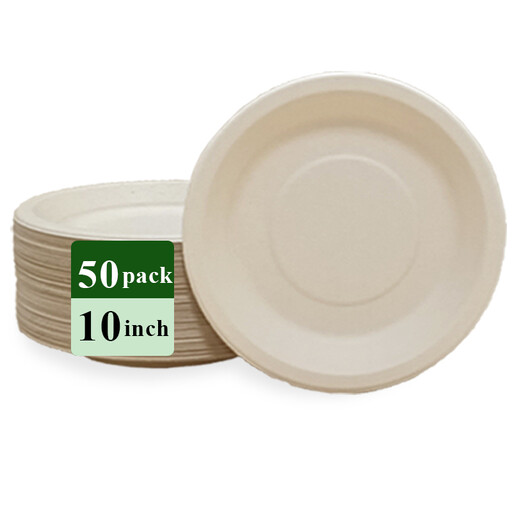
Why it suits this profile: A pack of 50 disposable plates is practical for birthday parties, community events and picnics where washing up is not an option.
The pack size makes the quantity clear from the outset. However, check your local waste disposal rules before throwing the plates away.
10-inch size and a pack of 50; suitable for larger groups.
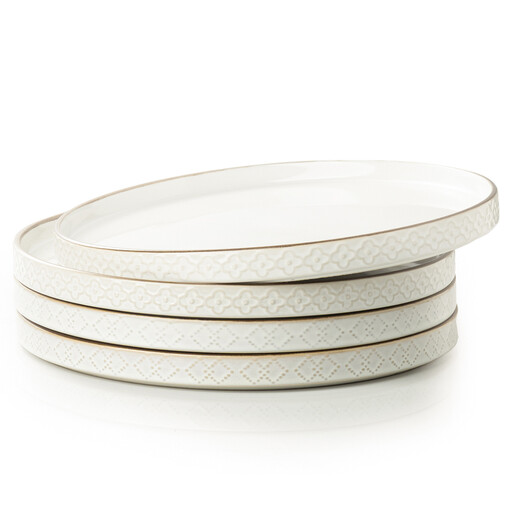
Why it suits this profile: This dinnerware set is ideal for families looking for a reliable set for everyday meals and entertaining.
The product information states a diameter of 10.25 inches, stackability and suitability for use in a dishwasher and microwave. Check the guidance on the underside of the plate.
Set of four ceramic plates, large size and a glazed surface according to the product description.

Why it suits this profile: A practical size for busy kitchens, campers and households where plates need to withstand intensive everyday use.
The material and permitted uses are clearly stated. The plate is not intended for microwave use; only use it in an oven or on induction in accordance with the product instructions.
24 cm diameter, 304 stainless steel and, according to the product information, suitable for dishwashers, ovens, steam ovens and induction hobs.
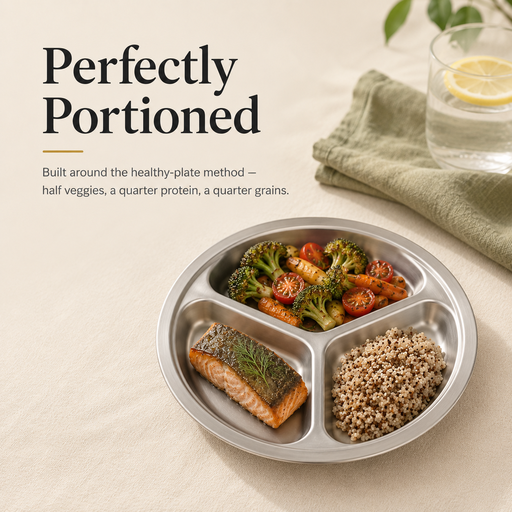
Why it suits this profile: The three compartments are practical for children, packed lunches, campsites and buffets where different foods need to be kept separate.
The diameter and height are stated, along with the warning that the plate is not suitable for microwave use. This helps prevent incorrect use.
304 stainless steel, three integrated compartments, set of two and, according to the product information, suitable for dishwashers and sterilisation.
We have put together a complete, up-to-date list of products that fully meet these strict selection criteria and the applicable European safety regulations.
A diameter of around 23 to 27 cm is practical for many households. Measure your cupboard and dishwasher beforehand. A smaller plate is often more convenient for breakfast, dessert or children. If you regularly serve soup or pasta, you may also want to choose deep plates.
No. Stainless steel plates must not be used in a microwave. Some models are suitable for ovens, steam ovens or induction hobs, but only when this is explicitly stated in the product information. Also check the heating warnings and use oven gloves when handling hot plates.
Their lifespan depends on the material, use and care. Ceramic can last for many years when handled carefully, while stainless steel plates are generally less susceptible to damage from drops. Disposable and compostable plates are intended for single use. Therefore, compare not only the purchase price but also the number of times the plates can be used, the cleaning required and how they should be disposed of.
