
Vandaag of morgen in huis

Kwaliteit gegarandeerd

Welkomstaanbiedingen ontgrendelen: GRATIS bezorging | Tot 80% korting | Gratis 30 dagen JoyPlus-proefperiode
Download de app
A plate may seem like a simple purchase, until you have to choose between disposable plates, ceramic dinner plates, stainless steel plates and compartment plates. A low price says little about durability, size or ease of use. Terms such as “sustainable”, “unbreakable” and “compostable” also require a closer look at the product specifications.
The following three pitfalls are common:
Paying too little attention to size and depth
A plate measuring 18 to 20 cm is practical for lunch or children, but may be too small for a full hot meal. Shallow disposable plates may also be less suitable for dishes with lots of sauce.
Mistaking marketing claims for a guarantee
A product marketed as compostable or biodegradable may depend on local collection and processing conditions. Always check the packaging, disposal instructions and product specifications. “Compostable” does not automatically mean that the plate belongs in every household compost bin.
Underestimating cleaning and storage requirements
Ceramic can break and takes up more space. Metal is generally practical for repeated use, but can become hot when serving hot food and is usually not suitable for the microwave. Disposable plates save on washing-up, but still require appropriate waste disposal.
Compartment plates and divided plates are useful when rice, vegetables, meat or sauce need to be kept separate. A three-compartment plate is often convenient for lunch and children. A five-compartment model offers more ways to organise food, but generally takes up more space during storage and washing-up.
Also check the depth of the compartments. Low dividers keep dry ingredients separate, but are less suitable for liquid dishes. With stainless steel models, a seamless construction is practical because there are fewer gaps where food residue can collect.
For catering and party plates, packs of 50 or 100 are practical. For everyday use, a set of 2, 3 or 4 reusable plates may make more sense.
Pay attention to:
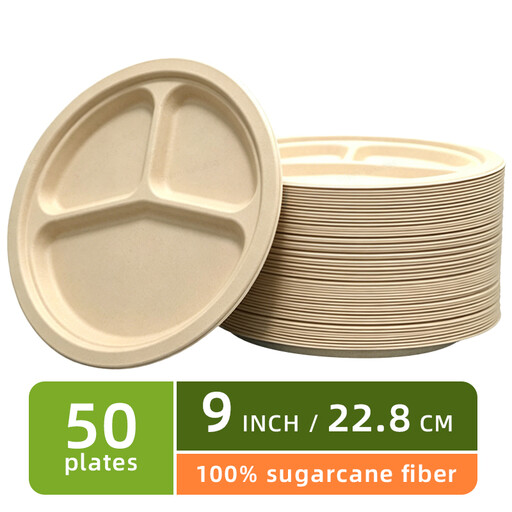
Why it suits this profile: The pack of 50 and 23 cm size are practical for a barbecue, birthday party or small catering job.
The clearly stated quantity and size make it easy to calculate how many you need in advance. Check the instructions for hot or greasy food before use.
50 plates measuring 23 cm; three compartments; according to the product name, made from sugarcane fibre and described as compostable.
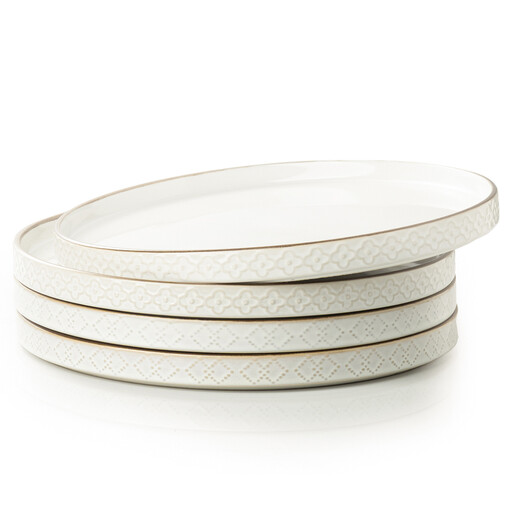
Why it suits this profile: This set is designed for everyday meals, dinners and special occasions where a coordinated tableware look is wanted.
The stated diameter of 10.25 inches stops you from choosing based solely on appearance without checking the available table and cupboard space.
Set of 4; ceramic material; according to the product description, suitable for the microwave and dishwasher.
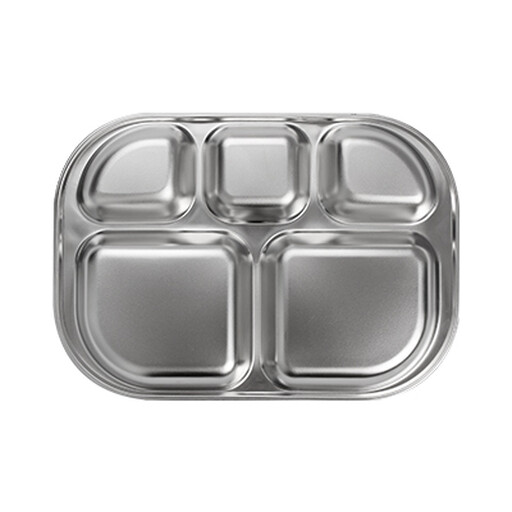
Why it suits this profile: Five separate compartments are useful for families, schools, workplace canteens, catering and campers who want to serve different dishes separately.
The layout prevents you from buying a flat plate when separate portions are needed. However, note that according to the description, stainless steel is not intended for microwave use.
304 stainless steel; five compartments; according to the product information, dishwasher-safe and suitable for repeated use.
For a one-off party, disposable plates are often simpler: there is less washing-up and you can plan the quantities in advance. Sugarcane plates, bagasse plates and bamboo fibre plates are possible choices if you want to use less plastic. When choosing sustainable tableware, always check exactly what the manufacturer means and how it should be disposed of after use.
Reusable stainless steel plates make more sense for regular use, for example when camping, at school or in a workplace canteen. Ceramic plates are better suited to a permanent kitchen and a traditional table setting. For children, compartment plates can help you serve different foods in an organised way, but always check the edges, stability and warnings regarding hot contents.
We have put together a complete, up-to-date list of products that fully meet these strict selection criteria and the applicable European safety regulations.
For dinner, a diameter of around 23 to 27 cm is a sensible choice. For lunch, children or a compact camping kit, approximately 18 to 20 cm may be more practical. Also check whether the plate fits in your cupboard, dishwasher or lunch bag.
Their lifespan depends on the material, use and care. Stainless steel plates are suitable for repeated use and are unlikely to shatter, but they can develop scratches or dents. Ceramic plates can last for many years with careful use, but are more vulnerable to being dropped and to thermal shock.
That varies from product to product. Check the product specifications and instructions before serving hot, moist or oily food. A label such as compostable does not, on its own, say anything about the maximum temperature or resistance to grease.
