
Vandaag of morgen in huis

Kwaliteit gegarandeerd

Welkomstaanbiedingen ontgrendelen: GRATIS bezorging | Tot 80% korting | Gratis 30 dagen JoyPlus-proefperiode
Download de app
Choosing the right plates and dishes might seem straightforward, until you use them every day. A plate that can't go in the microwave, a dish whose lid isn't dishwasher-safe, or a divided plate that turns out too small for a normal meal — these details quickly lead to frustration and extra expense.
With this buying guide, you can compare materials, sizes and uses for home, catering, hospitality, camping and organised portioning. This way, you can make a more informed choice between, for example, dinner plates, ceramic plates, stainless steel plates, glass oven dishes and compostable disposable plates.
Words like "durable", "strong" or "safe" don't tell you much without information about material, dimensions and care. So always check:
With the 5five Keepeat oven dishes, for example, the borosilicate glass is suitable for the oven and microwave. However, according to the product information, the polypropylene lid should not be used in the oven, microwave or dishwasher.
A 19.5 cm plate is practical for a child's meal, side dish or camping use, but can feel small for a full dinner. A 32 cm dish may not fit in every fridge or kitchen cupboard.
So measure your available space beforehand. Don't just look at the diameter — also consider the height, capacity and the space taken up by a handle or lid.
These properties don't always apply to every component. With a dish that has a lid, the glass may be microwave-safe while the lid is not. Stainless steel plates generally shouldn't go in the microwave, because metal can cause sparks.
Also check the care instructions. A glossy or reactive ceramic glaze may be described as dishwasher-safe, but can still benefit from a soft sponge and mild cleaner.
Ceramic plates and porcelain plates are suitable for everyday dining and often have a classic look. Check whether they are stackable and whether the product information says they are oven-, freezer-, microwave- and dishwasher-safe. The Dafuceramic set of four mentions all these uses, while the YumiPLUS plates, according to the description, should not be used on a hob, in an oven or over an open flame.
Glass oven dishes are handy for baking, storing and serving. Borosilicate glass is mentioned in the product information for the 5five Keepeat dishes. Do watch out for thermal shock and check the maximum oven temperature. The oval dish with lid is rated up to 400 °C; the separate round glass dish up to 300 °C.
Stainless steel plates are lightweight, break-resistant and suitable for families, catering and outdoor use. The PURECOOK models are made from 304 stainless steel. That's a verifiable material specification, but it doesn't automatically mean every model is suitable for every appliance. According to the product information, the 3-compartment models are not suitable for the microwave.
Compostable disposable plates made from bagasse or bamboo fibre are practical for parties, catering and large groups. The Sugarcane Disposable Dinner Plates come in packs of 50 and have three compartments. With this type of product, always check the information about heat, grease, moisture and waste disposal. "Compostable" doesn't mean the plate belongs in every UK household bin or home compost heap.
A 3-compartment plate keeps, for example, main course, side dish and sauce separate. A 5-compartment tray offers more room for different components without flavours mixing straight away. This can be useful for families with children, workplace canteens, buffets and meal prep.
Pay attention to the depth of the compartments. A shallow compartment is fine for dry foods, but less practical for sauce or soup. Also check whether the edges are rounded and whether the plate sits steadily on the table.
Choose dishwasher-safe dinnerware when you often cook for several people. For families and catering, this can save time, but hand washing can help keep decoration or a matte finish looking good for longer on some surfaces.
Microwave-safe dinnerware is handy for leftovers and meal prep. Don't use metal plates in the microwave, and remove the lid from dishes when the product information advises you to. Check ceramic and glass for cracks or damage before reusing them.
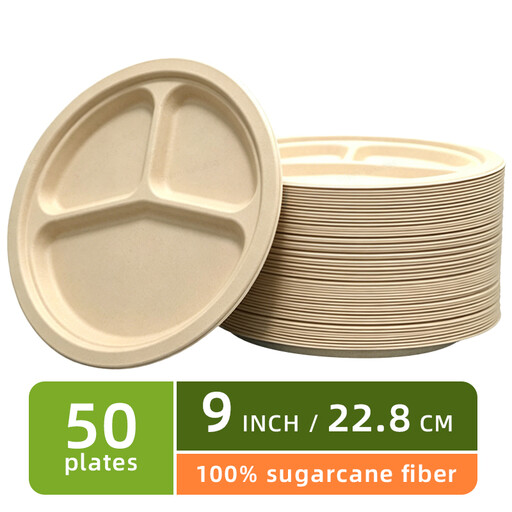
Why this fits the profile: The pack of 50 plates is practical when you need lots of tableware for a party, house move or catering event without buying a large stock of reusable plates.
The quantity, 23 cm diameter and three-compartment layout are clearly stated. Do check the guidance on heat, grease and waste disposal before buying.
50 pieces, three compartments and bagasse as the stated material; suitable for catering and gatherings.
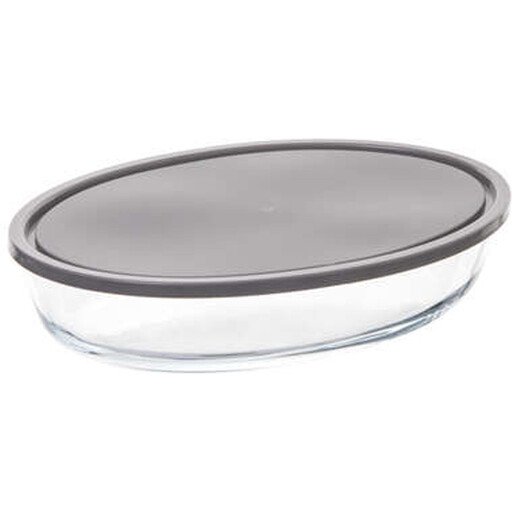
Why this fits the profile: This borosilicate glass dish combines cooking, serving and storing in one piece. It has a 2.4 litre capacity and measures 32 x 21 x 6.7 cm.
The lid's limitations are clearly stated: not suitable for oven, microwave or dishwasher. So you know which part needs separate care.
2.4 litre capacity, oven- and microwave-safe glass and an included lid for storage.
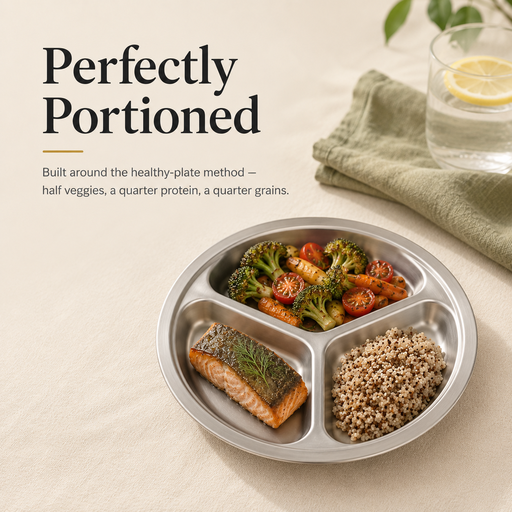
Why this fits the profile: The three separate compartments are ideal for families, camping, meal prep and serving different dishes separately. The diameter is 19.5 cm.
The material and dimensions are specified. The product information also states that the plate is not suitable for the microwave, so you won't use it incorrectly.
304 stainless steel, three compartments, set of two and dishwasher-safe according to the product description.
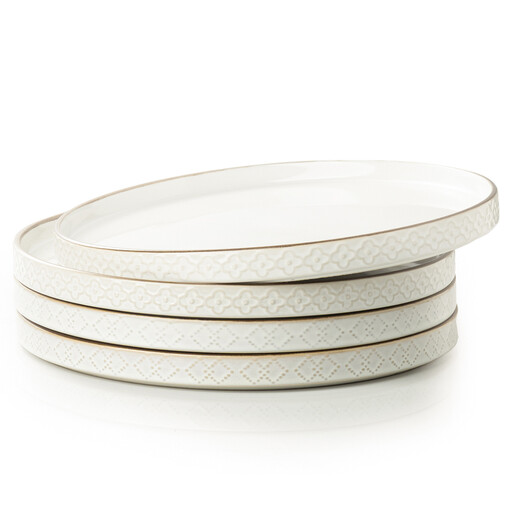
Why this fits the profile: The 10.25 inch diameter offers plenty of room for main courses, pasta and side dishes. Four matching plates are handy for a household or a small dining table.
The product description mentions the permitted appliances and the stackable design. Always check the marking on the underside before use.
Set of four, ceramic material, stackable and suitable for microwave, oven, fridge, freezer and dishwasher according to the product description.
We've put together a full, up-to-date list of products that fully meet these strict selection criteria and comply with current European safety regulations.
For camping, lightweight, break-resistant materials are ideal. Camping plates made from stainless steel are suitable for repeated use and often require little maintenance. Check whether the model is stackable and whether the plate doesn't get too hot with warm food. For a one-off event, compostable disposable plates can be a practical solution.
A divided plate has two, three or more compartments. This keeps, for example, rice, vegetables and sauce better separated. A normal dinner plate offers more open space and is usually more flexible for large or mixed dishes. Choose a 3-compartment plate for simple meal organisation and a 5-compartment tray when you want to serve several components separately.
The lifespan depends on the material, use and care. Ceramic and glass can last a long time as long as you avoid cracks, chips and major thermal shocks. Stainless steel is less prone to breakage, but can get scratches or dents. Disposable plates are intended for single use. Always follow the manufacturer's care instructions and replace dinnerware when you see visible damage.
