
Vandaag of morgen in huis

Kwaliteit gegarandeerd

Welkomstaanbiedingen ontgrendelen: GRATIS bezorging | Tot 80% korting | Gratis 30 dagen JoyPlus-proefperiode
Download de app
A plastic garden net can be used as a privacy screen for the garden, windbreak netting for the balcony, fence netting, garden barrier or crop protection net. However, many nets look similar while differing considerably in mesh size, material, dimensions and fixing method.
If you focus only on colour or price, you may encounter three common pitfalls:
A mesh that is too open for the intended use
Coarse plastic fencing may be suitable as a garden barrier, but offers little privacy. For a balcony privacy net or garden privacy screen, a more densely woven net is the more logical choice.
Not paying enough attention to wind load
A dense net catches more wind. Without sturdy posts, cable ties, eyelets or other fixings, the screen may come loose or start to sag. A windbreak net reduces the flow of wind, but does not replace a stable structure.
Confusing UV resistance with unlimited service life
According to the brands’ product descriptions, UV-treated materials can retain their colour and properties for longer. This does not mean that every net will last indefinitely in all weather conditions. Regularly check the edges, fixing points and any tears.
HDPE, or high-density polyethylene, is often used for a green garden net, privacy screen and crop protection. The material is lightweight and flexible. Polyethylene is also referred to as PE.
Polypropylene, usually called PP, is more commonly used for plastic fencing and barrier netting where tensile and tear strength are important. According to the product information, Textilene consists of PVC and polyester and has a more fabric-like appearance.
Pay attention to the difference between a woven privacy screen and an open mesh:
The mesh size determines what the net keeps out and how much air, light and water can pass through it.
Do not automatically use a net for a purpose other than the one stated on the packaging or product page. A bird net is not the same as a fall protection net, and a plastic garden barrier is not a portable partition for people.
First measure the length and height of the area to be covered. Allow for overlap, bends and an extra section for fixing. A garden net on a roll is useful for long fences or larger plots, but requires careful planning of the posts and fixing points.
Also check:
On a balcony or patio, pay extra attention to loose ends and gusts of wind. Do not use a net as fall protection, and keep it out of children’s reach where there is a risk of entanglement.
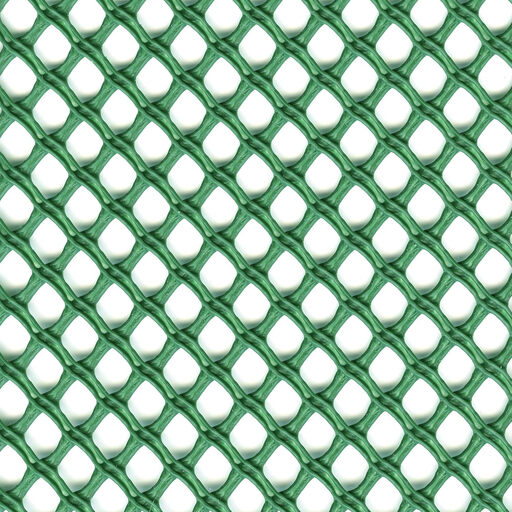
Why it suits this profile: The 1 x 5 metre roll is easy to manage for a balcony, small patio or short fence. According to the product description, the net can be easily cut to size and attached with plastic cable ties.
The compact size helps limit waste when you only want to screen off a small area initially. However, check in advance how many cable ties you need; according to the description, they are not included.
Green colour, 100% new polyethylene according to the product information, UV treatment and easy to cut.
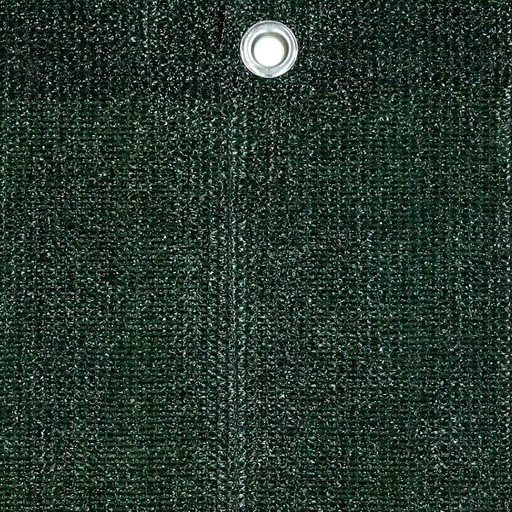
Why it suits this profile: This dense privacy net for balconies, gardens and patios is ideal when screening and a neat installation are important. It measures 2 x 5 metres.
The aluminium eyelets along the edges make fixing more predictable than with a net without installation points. The dense weave also helps prevent people from looking in; however, plan for extra-strong fixing in windy conditions.
Polyethylene, UV-stabilised according to the product information, tear- and fray-resistant properties according to the manufacturer, and aluminium eyelets.
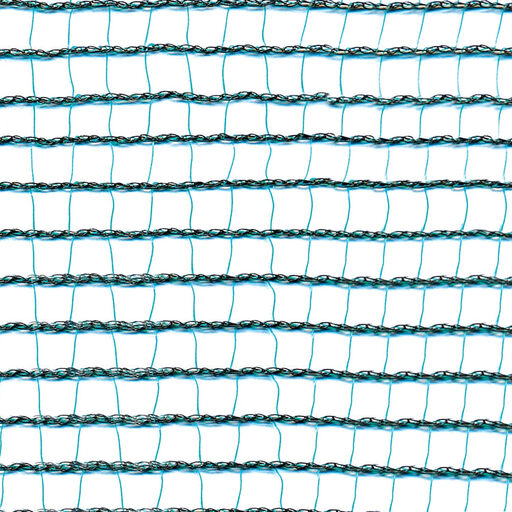
Why it suits this profile: This garden anti-hail net is designed for allotments, fruit trees and other crops. According to the product description, the net allows air and water to pass through and has a mesh size of 7 x 8 mm.
The intended use and mesh size are clearly specified, so you will not mistake this net for a privacy screen or coarse fence netting. Stakes, rope or weights are required and are not necessarily included.
Measures 2 x 10 metres, PE monofilament according to the product information, allows air and water to pass through, and is suitable for installation over crops.
Measure and cut the net only after you have determined the fixing points. For fence netting or a garden privacy screen, install posts or support points at regular intervals and distribute the tension along the edge. Pull the material tight enough to limit sagging, but avoid sharp folds and excessive tension.
For a net for balconies and patios, cable ties, clips or eyelets are practical. After the first few windy days, check that the fixings are still secure. With crop nets, it is advisable to leave room for the plants to grow.
Clean plastic nets with water when dust, leaves or mud build up. Store seasonal netting somewhere dry and out of direct sunlight. Do not use naked flames or intense heat near polyethylene or polypropylene. Cut off protruding ends or finish them safely.
We have put together a complete, up-to-date list of products that fully meet these strict selection criteria and the applicable European safety regulations.
Choose a densely woven privacy screen or balcony privacy net with limited visibility through it. An open garden barrier can keep animals or objects out, but generally offers less privacy. Check the height, length and whether eyelets or loops are included.
Use cable ties, clips, wire or suitable staples, depending on the type of fence and the edge of the net. Attach it at multiple points distributed along the top and bottom edges. For a heavy privacy screen, sturdy posts and additional intermediate fixing points are needed.
This depends on the material, exposure to sunlight, wind, installation and maintenance. According to TENAX’s own product information, UV-treated nets can retain their colour and properties for longer. Check the net regularly and replace it when the structure, edge or fixings show visible signs of weakening.
