For identifying plants through an online service, you need a laptop that lets you view and upload photos comfortably; there’s no evidence that a dedicated AI chip is a requirement for this approach. If you’ll be comparing photos at a desk for long periods, screen space and ports matter. If you’re building your own photo archive, you’ll also need to consider the storage capacity of the model you choose. If you take your laptop out with you often, a smaller screen may be more practical.
Who is this guide for?
Identifying plants at home
You upload plant photos to an online service and compare its suggestions with the features in your photos. Pl@ntNet describes how to identify plants through its website; bear in mind that you’ll need to check the suggestions.
Comparing photos at your desk
You spend longer periods viewing photos, observations and species information side by side, so you’ll want plenty of screen space and ports that suit your equipment. The specifications for Lenovo’s IdeaPad Slim 5 and Apple’s MacBook Air show why it’s worth checking the ports on the exact model you’re considering.
Managing observations
You store your own photos or work with exported observation tables. iNaturalist explains how to export observation data as a CSV file; check separately how to keep your original photo files.
What should you look for when choosing?
| What to consider |
What to look for |
Who is this important for? |
| Uploading and checking photos |
Check how to transfer photos from your camera or phone, and whether the details you want to compare are clearly visible. |
If you mainly upload photos through a browser, you’ll want to check the suggestions against the features of the plant. Around 36% of consumers put online identification and checking first. |
| Screen space |
Compare the screen size and the connection for an external monitor, if you plan to use one, on the exact model. |
If you view photos alongside species information at your desk, a larger built-in screen may be useful. Around 29% of consumers say screen-based work is their top priority. |
| Your own photo archive |
Estimate how much space your photo files will take up, and check the model’s SSD capacity and USB ports. |
If you store your own photos locally and manage observations, consider your storage needs separately from any online archive. Around 21% of consumers prioritise managing their archive locally. |
| Portability and connections |
Check the screen size and whether you can connect your camera, card reader or monitor to the available ports. |
If you also use your laptop away from home, a more compact screen may matter more than having the maximum amount of workspace. Around 14% of consumers put portability first. |
What to watch out for
-
Assuming an AI chip guarantees accurate species identification
When you identify plants using an online service, you upload photos and assess the suggested species yourself. Pl@ntNet describes this approach; iNaturalist notes that automatic suggestions can depend on the photos and species available.
Don’t buy a laptop for this online task solely because it’s advertised as having an NPU or AI features. Compare the plant’s features yourself and check uncertain identifications against species information.
-
Assuming every model has the same ports and screen
Specifications can vary within a laptop range. So a specification for the range doesn’t automatically confirm which ports or screen an individual model has.
Check the full model name and the ports on the specific version you want to buy.
A paid warranty extension may involve extra costs.
Brands compared
Lenovo
The IdeaPad Slim 5 16AKP10 is worth considering if you’re looking for a larger screen and ports for uploading photos or connecting an external monitor.
- Lenovo PSREF lists HDMI, USB-A, USB-C and a microSD card reader for this product family.
- The processor, screen and storage vary by model; check the specifications for the exact version.
Apple
According to Apple Netherlands, the MacBook Air M5 range includes 13-inch and 15-inch models, giving you a choice between portability and built-in screen space.
- Apple lists two Thunderbolt 4 ports for the 13-inch model, along with configurations offering different amounts of memory and storage.
- The ports listed don’t include built-in HDMI or an SD card reader. Also check that your software runs on macOS.
HP
The OmniBook 5 16-bm0615ndx is a 16-inch configuration to compare if built-in screen space is important to you.
- HP Netherlands lists 16 GB of RAM and a 512 GB SSD for this model.
- Check the ports and screen specifications of the exact model before comparing it with other configurations.
Dell
The Dell Pro 16 range is a business-focused alternative to compare if a 16-inch laptop and support are separate factors in your buying decision.
- Dell Netherlands lists a 16-inch model with screen options that vary by model.
- The screen, ports and service terms can vary by configuration; check the terms for the exact model.
Joybuy laptops for desk work
This selection features laptops with larger built-in screens for comparing plant photos at a desk. Check the listed storage and other specifications for each model.
 No image available
ASUS ROG Strix G16 G614FR-S5252W, RTX 5070 Ti, 16 GB, 1 TB SSD
This 16-inch model is worth comparing if you spend long periods working at a desk and store photo files locally.
The product name lists a Ryzen 9 9955HX processor, an RTX 5070 Ti, 16 GB of memory and a 1 TB SSD. The charger isn’t included.
View at Joybuy
 No image available
HP OmniBook 3 16-by0058ndx, 8 GB, 512 GB SSD
This 16-inch model is designed for anyone who wants to view photos and information on a larger built-in screen while working at a desk.
The product name lists an AMD Ryzen 5 7520U, 8 GB of RAM, a 512 GB SSD, a 2K IPS screen and Windows 11 Home. The charger isn’t included.
View at Joybuy
 No image available
Thunderobot 16-inch gaming laptop, i7-14700HX, RTX 5070, 32 GB, 1 TB SSD
The 16-inch screen and listed storage make this model worth comparing for desk work with photo files stored locally.
The product name lists a 2560 × 1600 IPS screen and a 240 Hz refresh rate. The included keyboard layout is described as UK RGB Keyboard.
View at Joybuy
 No image available
ASUS Vivobook S16 S3607QA-SH109W, 16 GB, 512 GB SSD
This 16-inch model is worth considering if you want to compare photos and species information on the built-in screen.
The product name lists a WUXGA OLED screen, a Snapdragon X processor, 16 GB LPDDR5X, a 512 GB SSD and Windows 11 Home.
View at Joybuy
 No image available
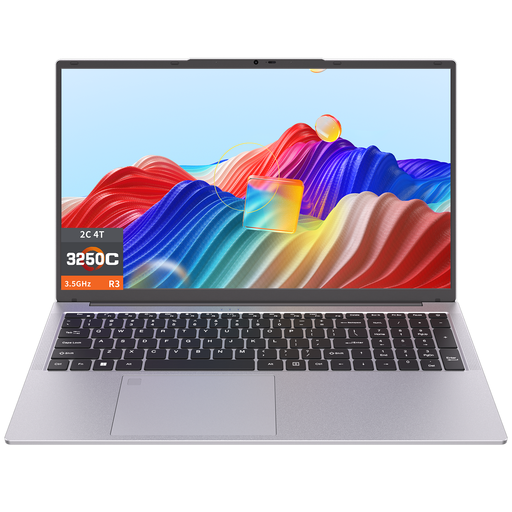
Auusda T173A, 17.3-inch, 8 GB, 512 GB SSD
The 17.3-inch screen may suit long periods of work in one place, when built-in screen space is a priority.
The product name lists a 3250C processor, 8 GB of DDR4 RAM and a 512 GB SSD.
View at Joybuy
Frequently asked questions
Do I need a special AI laptop to identify plant species with Pl@ntNet?
Not for the process described on the website: you submit photos and compare the suggestions yourself with the available species information. This doesn’t necessarily tell you anything about the requirements of other analysis software installed locally.
How can I take more useful photos for identification?
Pl@ntNet recommends sharp, well-lit photos showing different parts of the plant, such as its leaves, flowers and fruit. Then compare the suggested species with the available images and species information.
Can I export my observations?
iNaturalist explains how account holders can export observation data as a CSV file. Don’t assume that this table is also a local backup of your entire collection of original photos.
What do the guarantee and cooling-off period mean when buying online in the Netherlands?
When you buy from a business at a distance, you usually have a 14-day cooling-off period, with some exceptions, according to the Government of the Netherlands. The Government also states that your statutory guarantee applies if a product doesn’t meet requirements, and that the retailer must provide a solution. There is no fixed statutory two-year guarantee period for all products.


