
Vandaag of morgen in huis

Kwaliteit gegarandeerd

Welkomstaanbiedingen ontgrendelen: GRATIS bezorging | Tot 80% korting | Gratis 30 dagen JoyPlus-proefperiode
Download de app
A plant-based cat litter sounds appealing: lighter bags, a natural texture and often less dust than traditional options. However, the word plant-based doesn't tell you everything about performance, ingredients or disposal. If you rely solely on eye-catching packaging, you could end up with clumps that fall apart quickly, lots of tracking, or an odour that lingers in your home.
This buying guide will help you compare plant-based cat litter on ingredients, clumping, dust levels, odour control and cost of use.
Tofu, cassava and tapioca cat litters are made from plant-based materials, but some formulas also contain mineral ingredients. For example, the product description of pidan Cassava Cat Litter lists silica, calcium carbonate and guar gum alongside cassava and corn starch.
Always check the full ingredients list. If you want the simplest possible composition, look for terms like cassava, tapioca, corn, soya and pea fibre. What’s more, “biodegradable cat litter” isn’t automatic proof that every component is biodegradable.
A cat litter that tackles odours can work in different ways. Some varieties use baking soda or an absorbent structure; others add a scent, such as green tea or a creamy fragrance.
A perfume masks an odour but doesn’t necessarily remove the cause. For cats that avoid strong smells, or for households that prefer not to use fragrance, unscented varieties are often a more sensible starting point. Also check whether “odourless” means no fragrance has been added, or whether there’s just a light natural scent present.
Fine granules can feel pleasant on your cat’s paws, but they can also be more easily tracked out of the tray. Product descriptions often use terms like low-dust or dust-free. In practice, the granule size, how you pour, the scooping action and your cat’s behaviour all play a part.
So look for a combination of low-dust cat litter, a suitable litter mat and gentle topping up. A fine texture isn’t automatically right for every cat or every household.
Clumping cat litter makes daily scooping easier, provided urine is absorbed quickly and the clump stays firm enough. Look at:
A layer of around 5 to 8 centimetres is recommended for several products. Too little litter increases the chance of sticking to the bottom. In a multi-cat household, a firm clump is especially practical because you need to scoop more often and the tray is used more heavily.
Tofu cat litter is typically made from fibres, for example from soya or peas. Cassava and tapioca cat litter uses starchy ingredients. The granule size partly determines how much the litter tracks and how natural digging feels.
Cat litter for sensitive cats in practice usually means: choose a soft, fine texture and be cautious with strong perfumes. Introduce a new litter gradually by first mixing it with the familiar variety.
Low dust levels are especially welcome when filling and scooping. Odour control then goes hand in hand with daily maintenance. No litter replaces the daily removal of faeces and urine clumps.
Also pay attention to the packaging:
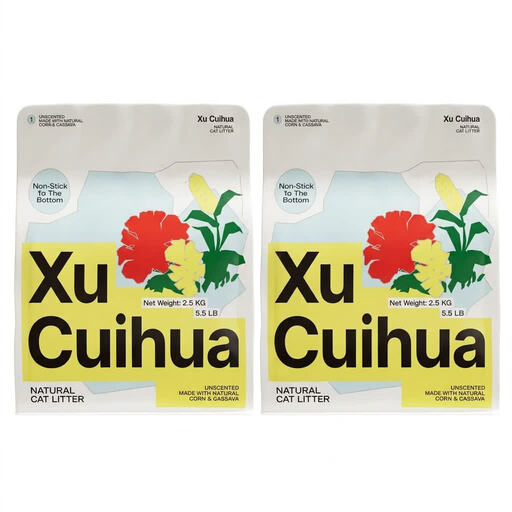
Why this fits the profile: Two 2.5 kg bags offer a practical way to try a new plant-based formula without committing to a very large stock straight away.
The product description mentions cassava and corn as ingredients, a fine texture and an unscented formula. Check the label for the exact composition.
Two packs, fast clumping according to the product information and no added fragrances according to the description.
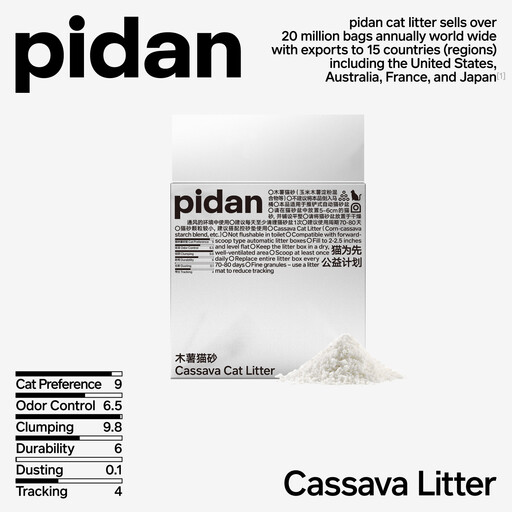
Why this fits the profile: The 9.6 kg bulk pack is suitable for regular use and multi-cat households.
The specifications list cassava and corn starch, baking soda, silica and guar gum. This shows you that “plant-based” here isn’t the same as fully plant-based.
Four 2.4 kg bags, fast clumping and a fine texture; the product description also mentions low dust levels.

Why this fits the profile: The 5 kg bag is practical when you need to top up frequently and want a tofu formula with an emphasis on strong clumps and odour control.
The description mentions a tofu formula, strong clumping and low dust levels. The “flushable” claim should be assessed according to your local regulations and drainage system.
5 kg content, tofu as the main material and, according to the product information, extra strong clumps and improved odour control.
We’ve put together a full, up-to-date list of products that fully meet these strict selection criteria and comply with current European safety regulations.
That depends on the composition, the amount of litter and your maintenance routine. Varieties with baking soda, strong clumping or an absorbent structure can help with odour control according to their product descriptions. Daily scooping remains essential. Choose unscented cat litter if you don’t want extra fragrance in your home.
How long it lasts depends on the number of cats, the size of the tray, the depth of litter and how often you scoop. A 2.5 kg bag runs out faster in a multi-cat household than a 9.6 or 10.4 kg pack. So compare not just the purchase price, but also the weight per bag and how much you need to top up each day.
Not as a rule. Some product descriptions mention small amounts as flushable, while others strongly advise against it. Always follow the label and consider your local drainage system. When in doubt, put used litter in a well-sealed bag with your household waste.
