
Vandaag of morgen in huis

Kwaliteit gegarandeerd

Welkomstaanbiedingen ontgrendelen: GRATIS bezorging | Tot 80% korting | Gratis 30 dagen JoyPlus-proefperiode
Download de app
By the Joybuy Product Recommendation Officer
Plant-based cat litter is popular with households looking to use fewer mineral resources and prioritise a lightweight, low-dust solution. Tofu, cassava, tapioca and corn can all be practical choices, but not every variety suits every cat or litter tray.
The packaging does not always tell the whole story either. Pay particular attention to how clumps form, how the litter should be disposed of and whether the product is suitable for an automatic litter tray.
A product may contain biodegradable plant fibres but still be unsuitable for flushing down the toilet. Clumps can expand or block pipes. Always check the usage instructions on the packaging. If it says “do not flush”, dispose of used litter with household waste in accordance with local regulations.
Even when a brand states that small amounts can be flushed, it is still best to exercise caution. Check your local drainage system’s regulations first, and never flush large quantities at once.
Odour-controlling cat litter can work by absorbing moisture quickly, sealing in clumps or adding odour-absorbing ingredients. Fragrance, however, only masks smells and may be unpleasant for some cats.
An unscented variety, such as a cassava and corn product with no added fragrance, is therefore a sensible starting point for sensitive cats or households where people would rather not smell perfume.
Fine granules can feel comfortable under a cat’s paws, but they may also stick more easily to paws or be carried outside the tray. With an automatic litter tray, clump strength, granule size and recommended litter depth are particularly important. Also check whether the manufacturer explicitly states that the product is suitable for the type of sieve or scooping system you use.
Do not rely solely on terms such as “natural” or “eco-friendly”. Check the full ingredients list. Some plant-based products also contain silica, bentonite, minerals, sodium bicarbonate or binding agents.
For easy cleaning, you want only the wet section to harden. Check the product information for details of fast, strong clumping and whether the description says that the clumps do not break apart easily.
A recommended layer of around 5 to 8 centimetres is common across many products. Maintain this depth when specified on the packaging. Too little litter can allow urine to reach the bottom of the tray; too much increases consumption and may cause more tracking.
Scoop out solid waste and urine clumps every day. Top up the tray when the level drops and replace the entire contents according to the label and your household’s usage. This may need to be done more often if you have multiple cats.
“Low dust” or “dust-free when poured” are product claims. According to the manufacturer’s product description, some varieties are designed to produce very little dust, but the amount of dust also depends on transport, storage and how the litter is poured.
Store the bag in a cool, dry place and seal it properly after use. Moisture can cause clumps to form inside the packaging. Also compare the price per kilogram, rather than just the price per bag. A larger pack is not always better value if low absorption means you need to top it up more frequently.
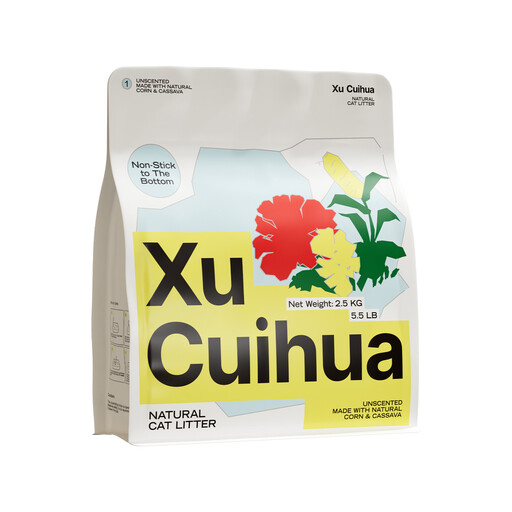
Why it suits this profile: A 2.5 kg bag is a manageable size to try first. The product description lists cassava and corn as ingredients, with no added fragrance.
The product information states that used clumps must not be flushed down the toilet. This makes the disposal method clear.
Cassava and corn base, an unscented formula and, according to the product description, fast-forming, compact clumps.
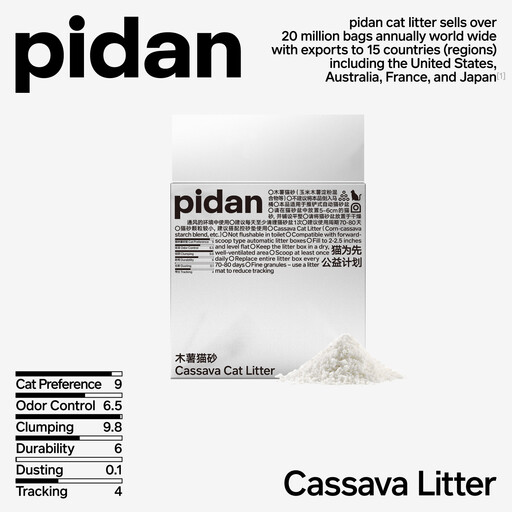
Why it suits this profile: The four-bag multipack is practical for regular use or a multi-cat household.
The product description mentions a low-dust structure but still advises against flushing. This prevents incorrect assumptions about disposal.
Cassava and corn starch, bicarbonate of soda according to the product specifications, and a total pack size of 9.6 kg.
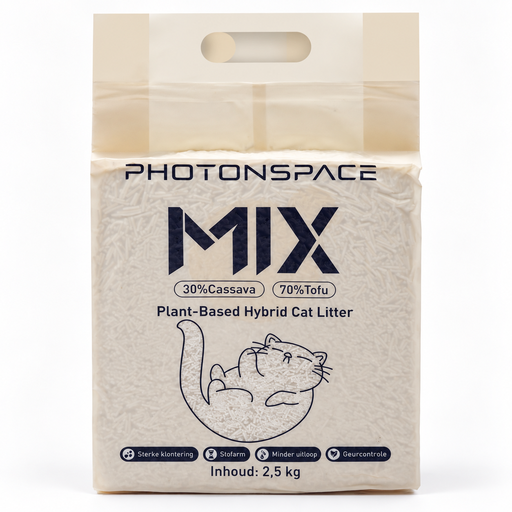
Why it suits this profile: According to the product description, this variety is suitable for traditional and certain automatic litter trays. Always check your device’s manual.
The recommended layer of 5 to 6 cm and the advice to use only compatible automatic systems make the application clearer.
A blend of 70% tofu and 30% cassava according to the product information, with low dust levels and a 2.5 kg pack.
We have put together a complete, up-to-date list of products that fully meet these strict selection criteria and the applicable European safety regulations.
Tofu, cassava and tapioca litters are often marketed as clumping cat litter. Look at the stated depth, daily scooping instructions and composition. A cassava and tofu blend may be appealing when you want to combine rapid moisture absorption with lightweight granules. Your actual experience will also depend on the amount of urine, the number of cats and ventilation.
This varies depending on the cat, tray size and scooping frequency. A 2.5 kg bag may last a single cat for less or more time than the product estimate, depending on how much you remove each day. For multiple cats, a larger pack is often more practical. Work out both the cost per kilogram and weekly consumption before choosing a multipack.
Some products are described as suitable for this purpose, while others are not. Check both the product page and your automatic litter tray’s manual. Look for strong clumping, granule size, the recommended litter depth and how the sieve mechanism operates. Do not use a mixed tofu and bentonite litter in an automatic system when the product description recommends manual use.
