
Breakfast hosts with guests who have different tastes
If not everyone wants the same kind of rusk, you can serve plain and wholemeal options separately. That way, each guest can choose without you having to settle on just one flavour.


Are you expecting guests who like both plain and wholemeal rusks at your Mother’s Day breakfast? Set out a packet of each so everyone has a choice. Choose a seeded variety only if it suits your guests’ preferences, and always check the packaging of the product you’re serving if anyone has allergies or questions about iodine.
If not everyone wants the same kind of rusk, you can serve plain and wholemeal options separately. That way, each guest can choose without you having to settle on just one flavour.
If you’re looking specifically for a wholemeal option, compare the product descriptions, ingredients and fibre content per 100 g. A seeded variety is a separate choice in terms of flavour and texture.
If anyone has allergies or questions about iodine, the name or colour of the rusk isn’t enough. Check the ingredients and allergen information on the packaging of every packet you plan to serve.
First decide whether your guests mainly want a choice of two flavours, or whether wholemeal or a familiar plain option should take centre stage. Then compare the labels on the packets you’re considering.
| What to consider | What to check | Who it matters to |
|---|---|---|
| Choice of flavours | Check whether one packet of plain rusks and one of wholemeal rusks suit the number of guests and the number of rusks in each packet. | If my guests have different preferences, I want to be able to serve both kinds without opening every packet straight away. Around 40% of consumers put this freedom of choice first. |
| Wholemeal and fibre | Read the product description and compare fibre per 100 g; also check the ingredients in seeded varieties. | Anyone looking mainly for wholemeal or a seeded variety will want to know what’s being served. Around 30% of consumers are expected to say that this is their top priority. |
| A familiar plain option | Check the product name, number of rusks and allergen information, even if the rusks look simple. | For my breakfast, I mainly want plain rusks that I can serve with a variety of toppings. For around 30% of consumers, this familiar choice matters most. |
The colour doesn’t tell you which grains have been used. The product descriptions identify the varieties mentioned as wholemeal.
Read the description and ingredients list. If fibre is your reason for choosing wholemeal, compare the fibre content per 100 g.
PLUS Wholemeal Rusks with Seeds lists wheat, barley, oats, egg and sesame, among other ingredients. So a seeded variety won’t automatically be suitable for every guest.
Check the packaging before serving and keep the product information to hand. If someone has a known allergy, make sure you have a separate option that you’ve checked carefully.
According to the Netherlands Nutrition Centre, bakers aren’t required to use baker’s salt. So you can’t tell whether a product contains it just from its category.
If iodine is relevant to your purchase, read the ingredients list of the rusks you choose.
Serving two kinds gives guests a choice, but you may have opened packets left over.
Choose the number of packets to suit your guests, and only open another if you need it. Store opened rusks in a dry place in a tightly sealed container.
Bolletje offers products including Echte Beschuit and dark wholemeal rusks. The right choice depends on the specific variety, not just the brand.
Albert Heijn lists both AH Plain Rusks and a wholemeal variety, so you can serve a choice of two flavours.
Jumbo lists plain and wholemeal rusks, each with 13 pieces, making them suitable for serving one packet of each.
PLUS lists regular wholemeal rusks and a seeded variety. They offer different choices in terms of flavour and ingredients.
ALDI lists a 13-piece packet of Goud Gebakken wholemeal rusks for anyone looking for a regular wholemeal option.
Lidl lists a 140 g packet of wholemeal rusks as an in-store product.
These Joybuy products include a plain option and two separate wholemeal options. To serve both flavours at breakfast, choose a packet of plain rusks alongside a packet of wholemeal rusks; none of the packs contains both kinds.
 No image available
An option for guests who prefer dark wholemeal rusks at Mother’s Day breakfast. Serve a plain variety separately if you’d like to offer that flavour too.
If anyone has allergies, check the packaging. Check the ingredients list if iodine is a consideration.
 No image available
A regular wholemeal option for guests who want wholemeal rusks alongside a packet of plain ones.
The product name states that the pack contains 13 pieces. Check the label if anyone has allergies or questions about iodine.
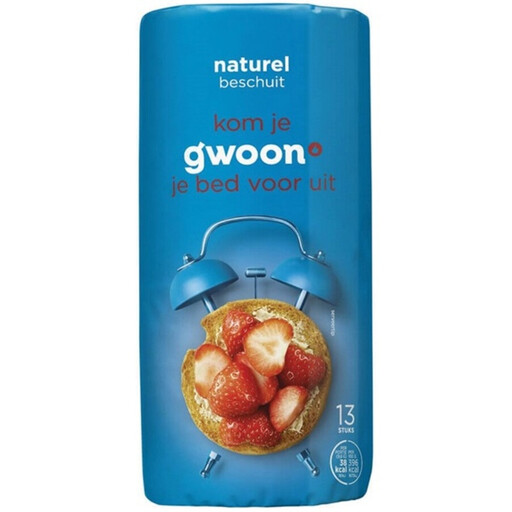 No image available
A packet of plain rusks for guests who prefer this flavour. Add wholemeal rusks separately if you’d like to offer both options.
The pack contains 125 g. Before serving to anyone with a milk allergy, check the allergen information on the packaging. Also check the ingredients list if iodine is relevant.
If your guests have different tastes, the easiest option is to serve both kinds separately. If most guests ask for wholemeal or seeded rusks, you can make more room for that variety; just remember to check the ingredients and allergen information for the product you choose.
No, don’t assume they do. According to the Netherlands Nutrition Centre, bakers aren’t required to use baker’s salt. If this matters to your choice, read the ingredients list for the specific rusks you’re considering.
Don’t assume they’re suitable just because they’re labelled plain or wholemeal. The Netherlands Nutrition Centre lists rusks among products that may contain gluten-containing grains. For that guest, check for a product clearly labelled gluten-free and avoid contact with other rusks.
Store rusks in a dry place and seal an opened pack tightly. For its plain rusks, Albert Heijn recommends storing them in a sealed tin after opening. Add toppings just before serving.