
Vandaag of morgen in huis

Kwaliteit gegarandeerd

Welkomstaanbiedingen ontgrendelen: GRATIS bezorging | Tot 80% korting | Gratis 30 dagen JoyPlus-proefperiode
Download de app
Choosing the right PLA filament can be the difference between a successful print and a failed project. With an overwhelming selection of brands, colours, and types, it can be difficult to determine which filament is right for your 3D printer and specific application. This guide is designed to help you make an informed choice by focusing on the specifications that truly matter.
Before you add a spool of filament to your shopping cart, there are a few key points to consider. These will help you select a filament that performs consistently and suits your project.
The most common diameter for 3D printer filament is 1.75mm. It is crucial that this diameter remains as consistent as possible along the entire length of the spool. Any deviation, or tolerance, is usually specified as +/- 0.02mm or +/- 0.03mm. A lower tolerance (closer to 0.02mm) means a more consistent flow of material, resulting in a cleaner and more dimensionally accurate print. For most FDM filament printers, this is a critical specification to watch.
Not all PLA is created equal. Depending on your goal, you can choose from several different variants:
The standard packaging for filament is a 1kg filament spool. This size offers a great balance between price and quantity and is suitable for most projects without needing to swap spools mid-print. Always check that the spool is compatible with your 3D printer's spool holder.
Based on clear specifications and applications, we have compiled a list of popular choices for you.
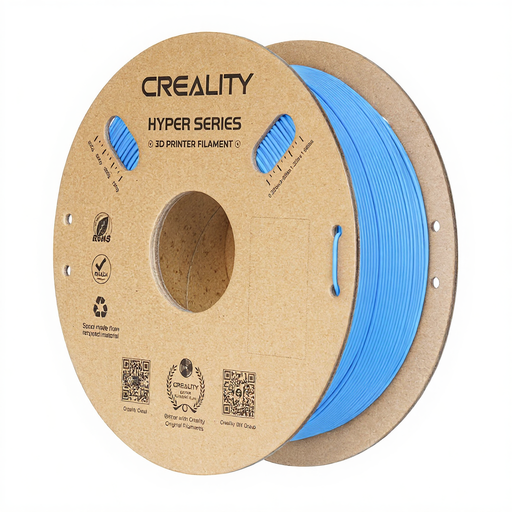
Why it stands out: This filament is specifically designed for speed. According to the manufacturer Creality, this high-speed filament is optimised for printing speeds up to 600 mm/s, which can significantly reduce print time. The dimensional tolerance of +/- 0.02mm ensures consistent extrusion, even at high speeds.
Advantages:
Who it's for: Users with a high-speed 3D printer (like the Creality K1 series or similar models) who want to produce functional parts or large prototypes quickly.
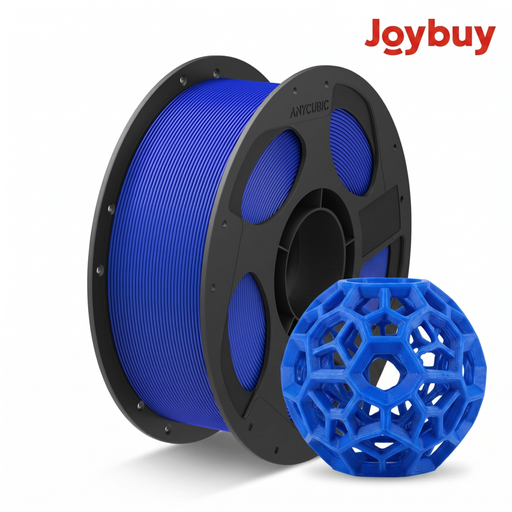
Why it stands out: This is a no-nonsense PLA filament 1.75mm that delivers on its promise. It offers reliable print quality for everyday projects. With a tolerance of ±0.02mm and a standard 1kg filament spool, this is a practical choice for a wide range of FDM printers.
Advantages:
Who it's for: Beginners, hobbyists, and schools looking for a reliable and affordable filament for general applications, from prototypes to toys and decorations.
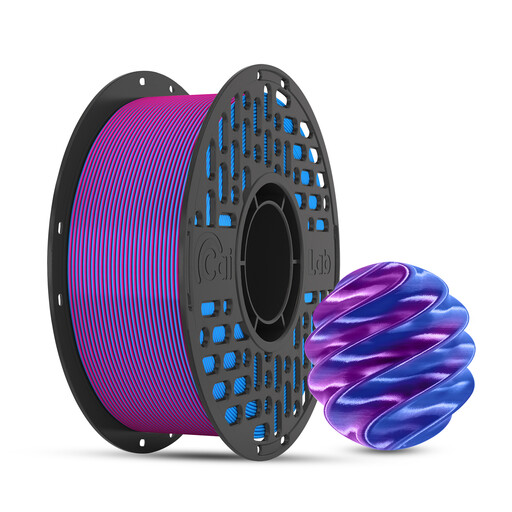
Why it stands out: This dual colour filament combines two colours (purple and blue) in a single strand. The result is a print that appears to change colour when viewed from different angles. The Silk PLA base also gives the object a striking, glossy finish.
Advantages:
Who it's for: Makers and artists who want to print decorative objects, vases, jewellery, or other visually striking projects. It's perfect for anyone looking to experiment with aesthetic filaments.
The world of 3D printer filament is vast and diverse. If the options above aren't exactly what you're looking for, or if you need a different specific colour or property, there is much more to discover.
Explore more Blue PLA 3D filament
PLA+ (or PLA Pro) is a variant of PLA with additives included to enhance certain properties. Manufacturers often claim that PLA+ is stronger, less brittle, or more heat-resistant than standard PLA. However, the exact improvements and properties can vary between brands.
PLA is hygroscopic, meaning it absorbs moisture from the air. Damp filament becomes brittle and can lead to poor print quality, such as stringing and clogged nozzles. Therefore, store your filament in a cool, dry place, preferably in a resealable bag with a sachet of silica gel (desiccant).
Yes, PLA is one of the most universal materials for FDM filament printers. It has a relatively low printing temperature (usually between 190-220°C) and, in most cases, does not require a heated print bed. This makes it one of the easiest materials to print with and suitable for virtually every FDM printer on the market.
