
Vandaag of morgen in huis

Kwaliteit gegarandeerd

Welkomstaanbiedingen ontgrendelen: GRATIS bezorging | Tot 80% korting | Gratis 30 dagen JoyPlus-proefperiode
Download de app
If you own a 3D printer, you know that choosing the right PLA filament can make the difference between a failed print and a flawless model. The market is saturated with options: different colours, finishes, and materials. It can be challenging to determine which filament is right for your project and printer.
This guide is designed to help. We'll highlight several popular choices and provide practical tips, enabling you to make an informed decision without getting lost in marketing jargon.
Before we dive into the products, here are a few key factors to consider when selecting the right filament for your 3D printer.
The most common choice is standard PLA, a user-friendly and biodegradable filament. It's ideal for beginners and a wide range of projects. However, if you're looking for something with enhanced mechanical strength, PLA+ filament is an interesting option. This material is often formulated to be less brittle and more durable, making it a form of high-strength PLA. For projects where aesthetics are paramount, you might opt for Matte PLA. A matte finish hides layer lines more effectively and gives your model a more professional, less plastic-like appearance.
Most consumer FDM 3D printers use 1.75mm 3D printer filament. This has become the industry standard due to its balance of precision and print speed. Nevertheless, always check your own printer's specifications. The wrong diameter will inevitably lead to clogs and printing issues. All the options recommended below have a diameter of 1.75mm.
The colour of your filament determines the final look of your print. Some filaments, like the 'Ruby' variant below, are translucent. This can create a unique effect, similar to stained glass. The intensity of the colour in translucent filament depends on the wall thickness and infill of your model. More material results in a deeper, more saturated colour.
Below is a selection of CAILAB filament that stands out for its unique properties.
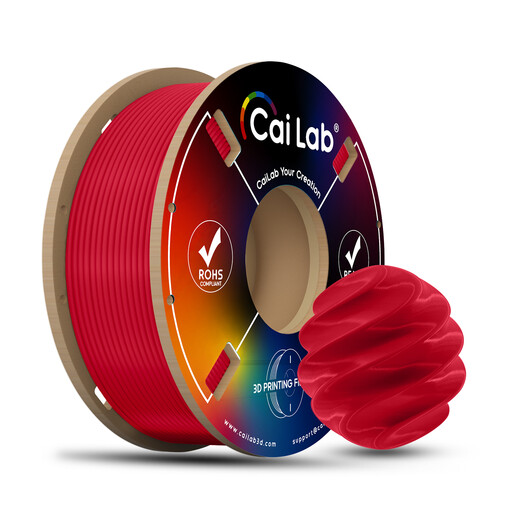
Why It Stands Out This filament combines the enhanced properties of PLA+ with a deep red, translucent 'Ruby' finish. According to the manufacturer CAILAB, this PLA+ Bio filament is engineered to be stronger and less brittle than standard PLA, with improved layer adhesion. The translucent finish provides a luxurious appearance, ideal for decorative objects.
Pros
Who Is It For? This filament is a great choice for creators printing decorative models, jewellery prototypes, or artistic projects who are seeking a striking, high-quality finish.
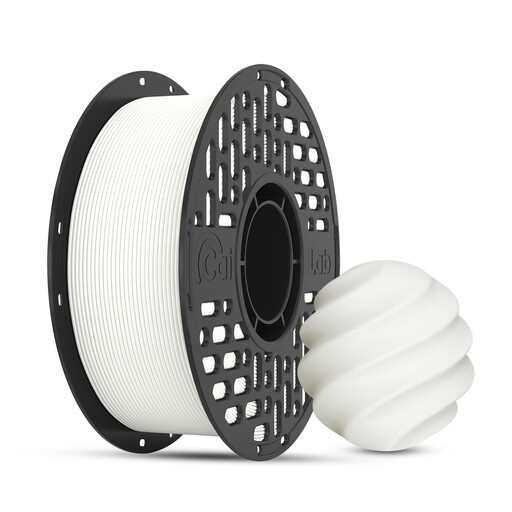
Why It Stands Out This Matte PLA filament is designed for a clean, non-glossy finish. According to CAILAB, the matte texture helps to minimize layer lines, resulting in a smoother and more professional-looking final product. The white colour is neutral and is well-suited for prototypes or models that will be painted later.
Pros
Who Is It For? Ideal for designers, architects, and hobbyists creating functional prototypes or visual models where a clean, professional appearance without any sheen is desired.
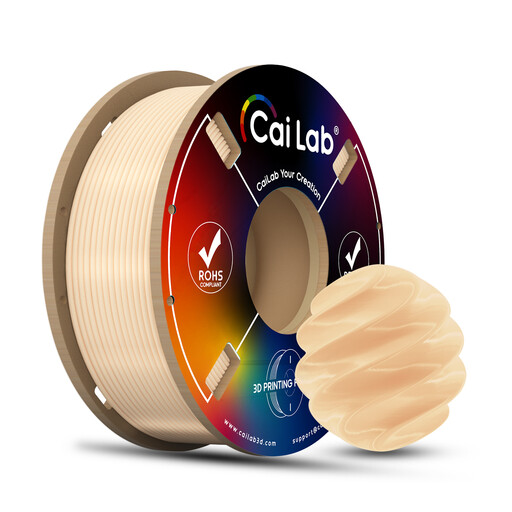
Why It Stands Out Like the Ruby variant, this is a PLA+ Bio filament, meaning it combines the benefits of enhanced strength with a base of renewable raw materials. The soft 'Peach Fuzz' colour is subtle and modern, suitable for a wide range of applications, from decoration to functional parts.
Pros
Who Is It For? An excellent all-rounder for both beginners and experienced users looking for a reliable filament with more durability than standard PLA, in a unique, soft colour.
Do you have another type of material or a specific colour in mind that isn't mentioned here? There are countless filaments available, from flexible materials to filaments with wood or metal fills.
Explore more options in our office desk toys category for a wider range of 3D printing materials.
PLA+ is an enhanced version of PLA. Manufacturers add additives to make the material tougher, less brittle, and sometimes more flexible. This results in prints that are more resistant to impacts and bending. The printing properties are similar, although PLA+ may sometimes require a slightly higher printing temperature.
PLA is hygroscopic, which means it absorbs moisture from the air. Damp filament leads to poor print quality, such as bubbles, stringing, and a rough surface. Therefore, always store your spool in an airtight bag or container, preferably with a sachet of silica gel (desiccant) to absorb moisture.
Yes, PLA (Polylactic Acid) is made from renewable resources like corn starch or sugarcane. It can break down under the right conditions in an industrial composting facility. This makes it a more eco-friendly choice compared to petroleum-based filaments like ABS.
