Who is this buying guide for?

Workshop leader making large dough batches

You want to make enough dough for several participants in each batch. The stated batch range is more relevant here than the bowl’s capacity in litres alone. Maxima and Kenwood list capacities for specific models.

Workshop leader with a varied programme

As well as pizza, you prepare other recipes and want suitable attachments for kneading, mixing or whisking. Bosch, Kenwood and Ankarsrum describe different models and accessories.

Teacher making small demonstration batches

You want to demonstrate kneading in manageable portions. So check the smallest stated batch size too: the Maxima model reviewed has a minimum dough capacity of 1.5 kg. Ankarsrum describes its roller as suitable for both larger and smaller batches.

What should you look for when buying?

Versatile stand mixer

A good fit if: you make batters or prepare other workshop recipes as well as pizza dough.

Consider: capacity varies by model and type of dough. Bosch lists 1.9 kg of yeast dough for the MUM5XW00, while Kenwood gives a dough capacity of 2.56 kg for the KVL85.124SI.

Spiral mixer

A good fit if: you mainly make pizza dough and your usual batch falls within the stated range.

Consider: Maxima lists a dough capacity of 1.5–4.5 kg for the 8 L model reviewed. It has one speed and a fixed bowl, and the manufacturer states that it weighs 36 kg.

Stand mixer with a rotating bowl

A good fit if: you want to combine larger dough batches with other mixing tasks.

Consider: Ankarsrum lists a 7 L bowl and a maximum dough capacity of 5 kg for the Assistent Original AKM6230. The manufacturer describes a different method for using the roller and dough hook.

Point to consider What to look for Who should pay particular attention?
Dough capacity per batch Work out the dough weight for each batch using your own recipe. Check the capacity for that type of dough on the exact model and, where stated, check the minimum too. If I’m baking for several participants at once, I don’t want to interrupt the workshop unnecessarily to run extra kneading cycles. Around 36% of consumers say that making a large batch is their top buying priority.
Other recipes Check which dough hook, beater, whisk or extra bowl is actually included with the model you’re choosing. If my workshop also involves making batters or other mixtures, I want to use one appliance for more than just pizza dough. Around 29% of consumers say versatility matters most to them.
Small demonstration batches Ask about the minimum workable dough batch for the exact model and kneading method you’ve chosen. If I want to demonstrate kneading step by step, I need portions that work for my demonstration. Around 21% of consumers put small demonstration batches first.
Cleaning and space Check the bowl design, dimensions and weight of the exact model, and follow the relevant cleaning instructions. After a workshop, I want to be able to tidy the work area easily and use the appliance somewhere suitable. Around 14% of consumers give cleaning and placement their highest priority.

Common buying mistakes

  • Assuming bowl capacity or wattage tells you the dough capacity

    Manufacturers quote different measurements, such as bowl capacity in litres, dough weight in kilograms and flour weight in kilograms. For example, Bosch lists both a general dough capacity and a separate yeast dough capacity for the MUM5XW00.

    Compare the amount of dough in your own recipe with the capacity for the same type of dough on the exact model you’re considering.

    Choosing the wrong batch size could mean having to schedule extra mixing cycles.

  • Choosing a large spiral mixer without checking it can handle small teaching batches

    For the Maxima model reviewed, the manufacturer lists a minimum dough capacity of 1.5 kg. A smaller demonstration batch may fall outside this stated range.

    Check both your largest workshop batch and your smallest demonstration portion against the specifications for the exact model.

  • Assuming consumer terms always apply to business use

    ACM ConsuWijzer distinguishes between primarily business use and consumer purchases. Consumer protection does not automatically apply if an item is used mainly or exclusively for business.

    Before buying for your business, ask which purchase, warranty and service terms apply to the way you’ll use the appliance.

    For business use, repairs or downtime could work out differently if the cover you’re relying on does not apply.

Brands to compare

Maxima

A specialist option for workshops that mainly make larger batches of pizza dough.

  • For the 8 L spiral mixer model reviewed, Maxima lists a dough capacity of 1.5–4.5 kg and operation at 230 V.
  • This model has one speed, a fixed bowl and a stated weight of 36 kg. These specifications do not automatically apply to other Maxima models.

Bosch

MUM stand mixers for those who want to combine kneading with other workshop recipes; capacities vary by model.

  • Bosch lists a built-in scale and a maximum yeast dough capacity of 1.9 kg for the MUM5XW00.
  • The 2.7 kg dough figure on the same product page is a general capacity, not the stated capacity for yeast dough.

Kenwood

Chef Baker XL models with multiple bowls and mixing attachments for a varied workshop programme.

  • For the KVL85.124SI, Kenwood lists two bowls, a dough hook and a dough capacity of 2.56 kg.
  • Check the instructions for the exact model and your recipe: Kenwood also gives different maximum quantities for firm and soft bread dough on its Chef XL models.

Ankarsrum

The Assistent Original is an option if you want to use one appliance for larger dough batches and a range of mixing tasks.

  • For the AKM6230, Ankarsrum lists a 7 L bowl, a maximum dough capacity of 5 kg, and a roller and dough hook included.
  • The manufacturer describes a different way of operating each of the two attachments. The maximum capacity is a manufacturer’s stated figure, not the result of a comparative test.

KitchenAid

The Artisan 5KSM175PS is suited to smaller dough plans where other mixing and whisking tasks are also important.

  • KitchenAid lists a dough hook and two bowls for the 5KSM175PS.
  • KitchenAid’s capacity table lists a maximum of 1 kg of flour for the Artisan models mentioned. This is the flour weight, not the total weight of the pizza dough.

Joybuy products

This selection includes stand mixers and dough machines for preparing dough and carrying out other workshop tasks. Check that each model’s batch size and method of use work for your recipe and demonstration.

HAUSWIRT M5 Smart stand mixer, 5.5 L, Lake Green

HAUSWIRT M5 Smart stand mixer, 5.5 L, Lake Green

An option for workshops that involve preparing dough and carrying out different tasks. Check that the stated capacity suits your recipe and batch size.

The product name lists a 5.5 L bowl, five presets and 11 speeds.

Joybuy

AUCMA stand mixer, 5 L, 10 speeds, black

AUCMA stand mixer, 5 L, 10 speeds, black

An option if you want to knead pizza dough and use the mixer for other recipes too. Check which batch size suits your recipe.

The product name lists a 5 L capacity and 10 speeds.

Joybuy

Bear Intelligent Dough Maker, maximum dough capacity 2.5 kg

Bear Intelligent Dough Maker, maximum dough capacity 2.5 kg

An option to compare if you want the machine to knead your dough automatically. Check that the stated maximum capacity suits your usual workshop batch.

The product name lists a maximum dough capacity of 2.5 kg, a 5 L capacity and automatic kneading and resting functions.

Joybuy

Kenwood Chef XL KVL4110 stand mixer, silver

Kenwood Chef XL KVL4110, silver

An option for a workshop where you want to knead pizza dough as well as prepare other recipes. Check the batch capacity and included attachments for this model.

Joybuy
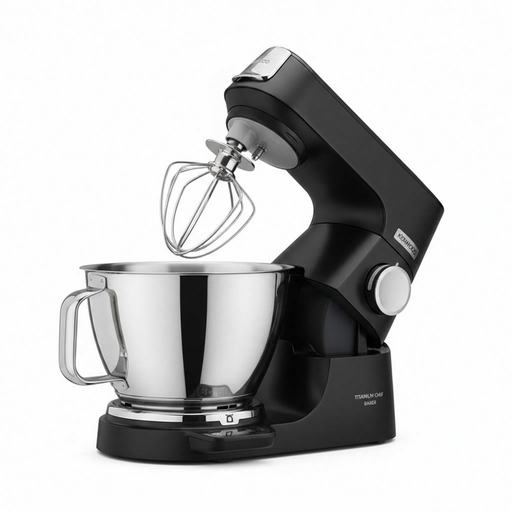
Kenwood Titanium Chef Baker KVC85, black

Kenwood Titanium Chef Baker KVC85, black

An option for a workshop involving dough preparation and a range of other recipes. Check which capacity and accessories suit your needs for the exact model.

Joybuy

Frequently asked questions

Can I use the mixing bowl’s capacity to work out how many pizzas I can make?

No. Use the dough weight in your recipe and the capacity stated by the manufacturer for the exact model and type of dough. For the model reviewed, Maxima lists a minimum of 1.5 kg and a maximum of 4.5 kg of dough; for the Artisan models in question, KitchenAid gives a maximum of 1 kg of flour, not 1 kg of finished pizza dough.

What should I check before participants use the mixer?

Read the manual for your chosen model and set up the work area according to the instructions. Maxima lists a safety guard and safety switch for the model reviewed; these do not replace suitable instruction or supervision during the workshop.

How can I keep the machine clean between workshop sessions?

Follow the cleaning instructions for the exact model and take the design of the bowl and attachments into account. The bowl on the Maxima model reviewed is not removable, so check that its cleaning method works with your routine.

Does consumer law apply if I buy the mixer for my workshop business?

Not automatically. ACM ConsuWijzer distinguishes between primarily or exclusively business use and consumer purchases; consumer protection does not apply if the appliance is used mainly for business. If you’re buying for your business, ask which purchase, warranty and service terms apply to your circumstances.

Which food safety rules are relevant if I offer food to participants?

For food businesses that prepare, process or sell food, the Netherlands Food and Consumer Product Safety Authority describes the use of a HACCP food safety plan or an applicable hygiene code. Rules on allergen information also apply to unpackaged food offered to customers. Whether and how these requirements apply to your workshop depends on how it is organised and how food is offered.
