
Cook short on space
You want to freeze dough, but first you need to check whether an extra freezer will fit, taking its width, depth and door clearance into account.


If you can set your existing freezer compartment to at least −18 °C and your wrapped portions of dough fit inside, you may not need another appliance. If you need more space, first measure the entire installation area, including ventilation clearance and the doorway. Then compare the drawer layout, freezing capacity and stated annual energy consumption.
You want to freeze dough, but first you need to check whether an extra freezer will fit, taking its width, depth and door clearance into account.
You make several dough balls at once and want to wrap, freeze and find them individually.
You need more freezer space, but want to give careful consideration to the ongoing electricity use of another appliance.
Suitable for: freezing a few portions of dough now and then, provided the space reaches at least −18 °C and the portions fit.
Bear in mind: a small compartment may not have enough room for your portions or a fresh batch to freeze.
Suitable for: a kitchen where floor width is the main constraint.
Bear in mind: a narrower model may have less capacity. Also check the temperature it can reach and its installation requirements.
Suitable for: making several dough balls ahead and storing them separately, if you have a suitable spot beside or under the worktop.
Bear in mind: the external dimensions are not the same as the space needed for installation. Follow the instructions for the exact model.
Suitable for: a kitchen with a dedicated space, if you don't want a separate appliance taking up work or walkways.
Bear in mind: make sure the space, ventilation and door are suitable for one specific model, and follow its installation instructions. A removable top panel does not automatically make a freestanding model suitable for an enclosed space.
In a compact kitchen, the first constraint is the total space available for installation. Then check whether the layout and freezing capacity suit the portions of dough you usually make.
| Concern | What to look for | Who should consider this most? |
|---|---|---|
| Will the appliance fit? | Measure the width, depth and height, as well as the doorway, ventilation clearance and route to the installation spot. | If I have little worktop or floor space, I want to make sure the door can open and the ventilation area stays clear. Around 36% of consumers are most concerned about fitting the appliance. |
| Room for portions of dough | Compare the wrapped portions with the layout and drawers. Storage capacity in litres is not the same as freezing capacity in kg per 24 hours. | When I make several dough balls ahead, I want to store them separately and freeze my usual batch. Around 29% of consumers prioritise dough portions and freezing capacity. |
| Energy consumption | For models that fit, compare the EU energy label and the stated consumption in kWh per year. | If I’m considering an extra appliance, I want to factor in its stated annual energy consumption alongside that of my existing appliances. Around 21% of consumers pay closest attention to energy consumption. |
| Maintenance and controls | For each model, check whether it has NoFrost, how easy the drawers are to access and where the controls are located. | Once I’ve found a model that fits and can freeze dough, I also want to know how much maintenance its layout and defrosting function require. Around 14% of consumers prioritise maintenance and controls. |
A freestanding model may also need space for ventilation, access to the controls and opening the door. Requirements vary by model.
Measure the entire installation area and read the instructions for the exact model before buying. For example, the Inventum VR550 manual specifies 10 cm of clearance all around and says that ventilation openings must not be covered.
If the spot isn't suitable, you may need to move the appliance or change your kitchen layout.
Storage capacity in litres and freezing capacity in kg per 24 hours describe different features. The stated capacity alone doesn't tell you how much fresh dough you can freeze at once.
Compare your wrapped portions with the drawer layout, and check your usual batch size against the stated freezing capacity.
Another appliance uses electricity. For small quantities, your existing freezer may be enough, as long as it reaches the right temperature and has sufficient space.
First check the temperature and available space in your current freezer compartment. If you're considering another appliance, compare its stated consumption in kWh per year.
The FS166020 is an example of a narrow freestanding freezer.
The VR550 is a freestanding under-counter model with drawers, worth comparing if you want to store portions of dough separately.
The VV856WIT is a freestanding under-counter model with three drawers.
The GTV15NWEB is an under-counter model with drawers and a fast-freeze function to compare.
The FNe 1404 is an under-counter model to compare if NoFrost and easy-access storage matter to you.
The BREMEN132-040BW is an under-counter model that gives you another option to compare.
This selection includes narrow freestanding models and freestanding under-counter models. Check the space required for each product and whether its freezer mode is suitable for pizza dough.
 No image available
Worth comparing if you're looking for a freestanding under-counter model with No-Frost; use freezer mode for dough.
The product listing mentions No-Frost and energy rating D. Before freezing dough, check that freezer mode can reach at least −18 °C.
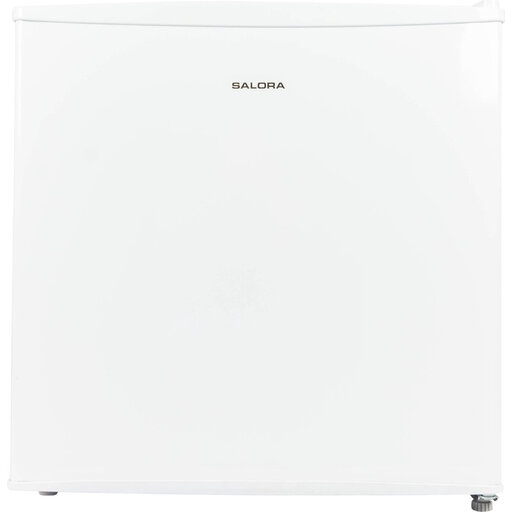 No image available
Worth comparing if you need a compact freestanding freezer for a small space.
The product name lists a capacity of 31 litres. Before storing dough, check that this model can reach at least −18 °C.
 No image available
A larger option to compare if you need more storage and have room for a taller model.
The product name lists a capacity of 122 litres, a four-star rating and No-Frost. Check the height of the installation space and use freezer mode for dough.
 No image available
A freestanding under-counter model to compare if you want to store separate portions in drawers.
The product name lists a capacity of 87 litres and energy rating B. Bear in mind that it needs manual defrosting; according to the product information, this model does not have NoFrost.
 No image available
Worth comparing if you're looking for a freestanding under-counter model with several storage compartments.
The product name lists a capacity of 60 litres. Check that it can be set to at least −18 °C for dough; the product information does not mention NoFrost or automatic defrosting.
Yes, if the compartment can reach at least −18 °C and has enough space for your portions. According to Voedingscentrum, one- and two-star freezer compartments cannot be set to this recommended temperature.
Wrap individual portions and avoid adding too many at once. Pizza Store describes a method for dough balls and notes that leftover dough that has already over-proofed may be less suitable. This is preparation advice, not a comparison of freezers.
Don't rely on the external dimensions alone. Check the instructions for the exact model: for example, the Inventum VR550 manual specifies 10 cm of clearance all around and says that ventilation openings must not be covered.
For models that will actually fit, compare the consumption in kWh per year shown on the EU energy label. Your actual electricity costs depend on your tariff and usage; an energy label alone cannot tell you what your personal costs will be.
For a typical online consumer purchase, ACM ConsuWijzer says you generally have a statutory cooling-off period of up to 14 days after delivery, subject to applicable exceptions. The seller is also responsible for the statutory guarantee if a product is faulty. According to the Netherlands Authority for Consumers and Markets, there is no general fixed two-year period for this in the Netherlands.