
Student with limited kitchen space
You don’t have suitable freezer space and want to know whether a freestanding under-counter model will fit, including room to open the door.


If you already have a freezer that can reach −18 °C and has room for individually wrapped dough balls, you may not need another appliance. If you don’t have suitable space, compare freestanding models by their external dimensions, drawer layout and annual energy consumption. A NoFrost model can reduce the need for manual defrosting, but it’s worth weighing up the pros and cons of each model.
You don’t have suitable freezer space and want to know whether a freestanding under-counter model will fit, including room to open the door.
You want to freeze dough balls individually and find them easily later. Drawer layout, suitable packaging and freezing capacity matter more than the number of litres alone.
You’re comparing the stated annual energy consumption of models that will fit in your kitchen, and first want to know whether your existing freezer space is sufficient.
Choose this if: the appliance can reach −18 °C and has enough room for the wrapped dough portions.
The trade-off: the dough portions will share the available space with other food.
Choose this if: you don’t have suitable freezer space and have room for a separate appliance.
The trade-off: external dimensions, drawer layout and defrosting requirements vary by model.
Choose this if: you need a separate freezer and want to defrost it manually less often.
The trade-off: check the dimensions, capacity and stated annual energy consumption of this type of model too.
To freeze pizza dough, the freezer needs to be set to −18 °C. The Netherlands Nutrition Centre says that freezer compartments with one or two stars can’t reach this temperature.
| What to consider | What to look for | Who it matters most to |
|---|---|---|
| Space and placement | Measure the available space and compare the height, width, depth, door-opening direction and installation instructions. | If my kitchen has little spare space, the freezer needs to fit without blocking the doorway or walkways. Around 36% of consumers put available space first. |
| Room for dough portions | Check whether the packages will fit in the drawers, whether the temperature can be set to −18 °C and what freezing capacity is stated. | I want to wrap dough balls individually and find them easily; the number of litres alone isn’t enough to go on. Around 29% of consumers put space for portions at the top of their list. |
| Energy consumption | Compare the stated number of kWh per year for models that offer enough space. | I consider the ongoing energy use of an extra appliance, and only compare this between models that are big enough. Around 21% of consumers make energy consumption their main consideration. |
| Noise and defrosting | Compare the stated noise level in dB and check whether each model has NoFrost or static cooling. | If the freezer is close to my living space or I have little time for maintenance, noise and defrosting matter too. Around 14% of consumers prioritise these points. |
According to the Netherlands Nutrition Centre, freezer compartments with one or two stars can’t be set to −18 °C. This means they don’t meet the temperature requirement for this purpose.
Check the temperature the freezer compartment can actually reach before choosing a model just because it has one.
The stated capacity doesn’t tell you whether individually wrapped dough balls or containers will fit neatly in the drawers.
Measure the space available and the packaging you plan to use, then compare the drawer layout of each model.
A freezer may fit in the space available, but the dough containers may not fit conveniently in its drawers.
Annual energy consumption, noise level and defrosting system are separate details. NoFrost doesn’t automatically mean a model is quieter or more energy-efficient.
Compare the stated number of kWh per year and dB separately, and check whether the specific model needs manual defrosting.
The VR550 is an 88-litre freestanding under-counter model with three drawers, designed for anyone who wants to keep portions neatly organised.
The FSE1074N is a freestanding under-counter model with a stated freezer capacity of 95 litres, according to Beko.
The FNe 1404 is an under-counter model with NoFrost and a stated total capacity of 92 litres, according to Liebherr.
The BREMEN132-040BW is a compact under-counter model listed in Frilec’s Dutch freezer range.
This selection includes freezers in different sizes and layouts for storing pizza dough. Check whether each model can be set to the temperature you need and whether the packaging will fit in the available drawers.
 No image available
The stated freezing capacity of 5 kg per 24 hours is useful if you want to freeze several portions at once.
NoFrost; energy rating D; 35 dB; 145 kWh per year; 84,5 × 55 × 59,5 cm; 4 stars; stated temperature −18 °C.
 No image available
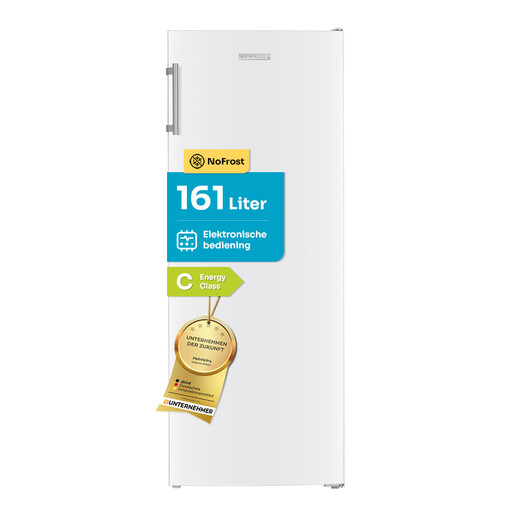
The larger stated capacity may be useful if you want to store other food as well as pizza dough; measure the space available first.
161 litres; NoFrost; energy rating C; temperature range −14 °C to −22 °C. The product title lists three freezer drawers.
 No image available
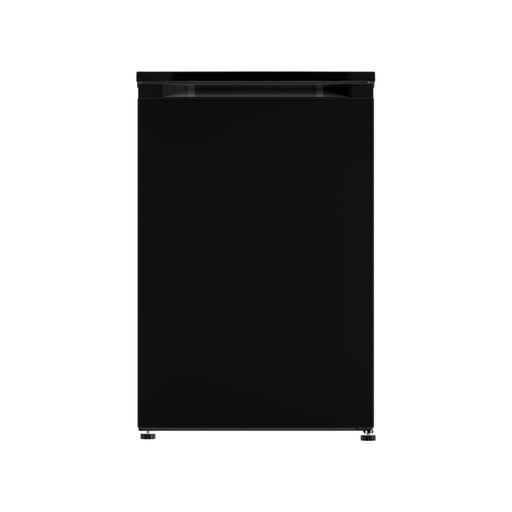
The three transparent drawers make it easy to store individual portions; check whether the temperature can be set to the −18 °C you need.
Energy rating C; freezing capacity 4,5 kg per 24 hours; 84,5 × 54,9 × 55,7 cm; reversible door. Manual defrosting is needed when ice has built up.
 No image available
The three drawers let you store dough portions separately; check whether the temperature can be set to the −18 °C you need.
Energy rating B; freezing capacity 4,4 kg per 24 hours; 55 × 85 × 58 cm; reversible door. NoFrost isn’t included, so manual defrosting may be needed.
 No image available
The stated temperature range includes −18 °C. A freezing capacity of 6 kg per 24 hours is useful if you want to freeze several portions at once.
Three drawers, one of which is transparent; 47,2 × 44,6 × 84,5 cm; reversible door; 41 dB; 195 kWh per year. NoFrost isn’t included, so bear defrosting in mind.
Only if the freezer compartment can reach at least −18 °C and has enough room for the portions. According to the Netherlands Nutrition Centre, compartments with one or two stars can’t be set to this temperature.
Wrap the dough balls individually so you only need to defrost the portions you need each time. SOTTO Pizza recommends freezing the dough after its first rise and defrosting it slowly in the fridge.
You’re entitled to a product that meets the terms of your contract; contact the retailer if it develops a fault. The Dutch government says there is no fixed statutory two-year guarantee period.
Compare the energy consumption in kWh per year on the energy label of models that meet your space and temperature requirements; the European Union explains what information the energy label provides. According to the Dutch government, you can return an old household appliance to the shop or online retailer where you buy a new, similar appliance, or take it to your local recycling centre.