
Home baker with limited space
You want to store a few dough balls and work out whether your existing freezer space is enough or a compact tabletop model would suit you. The Voedingscentrum recommends a temperature of −18 °C for frozen food storage.


You may not need a separate freezer for a few pizza dough balls. First, make use of your existing freezer space if it can be set to −18 °C and has room for individually wrapped portions. An extra appliance is worth considering mainly if you regularly run short of space. If so, compare the drawer layout and installation dimensions, freezing capacity and annual energy consumption. The Voedingscentrum recommends −18 °C for frozen food storage, while Milieu Centraal points out that two refrigeration appliances use more energy together than one larger appliance.
You want to store a few dough balls and work out whether your existing freezer space is enough or a compact tabletop model would suit you. The Voedingscentrum recommends a temperature of −18 °C for frozen food storage.
You regularly freeze fresh dough and, as well as storage space, consider how much an appliance can freeze in 24 hours. King Arthur Baking describes dividing and individually wrapping dough after its first rise.
You’re considering an extra appliance that will be on all the time and want to take its size, annual energy consumption and maintenance into account. Milieu Centraal recommends comparing the energy use of the appliances you’re considering.
The Voedingscentrum recommends storing frozen food at −18 °C; a freezer compartment with a one- or two-star rating does not reach this recommended temperature. Milieu Centraal points out that two refrigeration appliances use more energy together than one larger appliance.
| Priority | What to look for when buying | Who might consider this more important? |
|---|---|---|
| Freezing small batches of dough | Check whether the freezer can reach −18 °C and compare its stated freezing capacity in kg/24 hours with the weight of your batch. | If I freeze several fresh portions of dough at once, I want to know whether the freezer can handle that amount. Around 36% of consumers therefore prioritise freezing capacity. |
| Space and size | Measure the space available and your containers; check the drawer dimensions and the required ventilation clearance. | If my kitchen has limited space, I want enough room for my portions without an unnecessarily large appliance. Around 29% of consumers prioritise available space and suitable capacity. |
| Energy consumption | Compare the energy label and annual consumption in kWh for the exact models. | If I’m considering an extra freezer, I want to take its energy use into account, even if it won’t be opened often. Around 21% of consumers prioritise running costs. |
| Layout and defrosting | Look at the drawers or compartments and check whether the exact model uses static cooling, SmartFrost or NoFrost. | If I store dough balls separately, I want to be able to find them and avoid defrosting the freezer unnecessarily often. Around 14% of consumers make their choice mainly with organisation and ease of maintenance in mind. |
The freezer space you already have may be enough for a few portions of dough, provided it can be set to −18 °C and there’s enough room.
First, check the temperature and available space. If you’re considering an extra appliance, compare its stated annual energy consumption.
The capacity in litres doesn’t necessarily tell you whether your containers will fit in the drawers.
Measure your containers and check the layout and dimensions of the exact model before choosing.
Liebherr describes SmartFrost as a technology that reduces frost build-up; it doesn’t mean the model stays completely frost-free.
Check the technology against the full model number. Choose NoFrost only if the difference in defrosting requirements matters more to you than the model’s other features.
The features below apply to the product lines and models mentioned, not automatically to every freezer from each brand.
The VR550 is a freestanding tabletop model with a capacity of 88 litres and three transparent drawers.
The FS166020 is a compact tabletop model with a capacity of 65 litres.
The GTV15NWEB is a tabletop model with a stated capacity of 83 litres.
The Fci 1624 and FNdi 1624 show that tabletop models are available with different freezing technologies.
The BREMEN132-040BW and BREMEN138-NF-050DW are examples from the range of freestanding freezers.
Freestanding compact freezers for extra space to store pizza dough and other food.
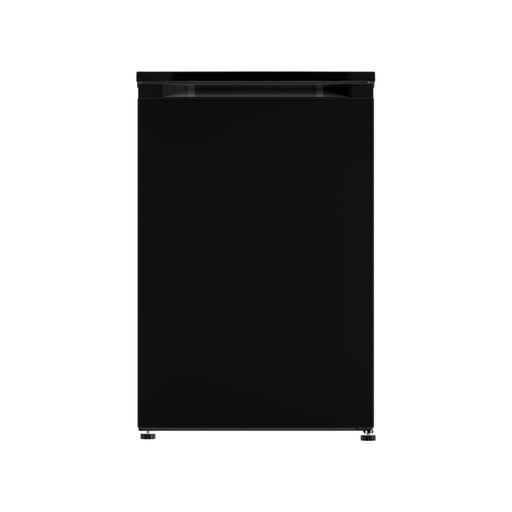 No image available
The three transparent drawers make it easy to store small portions of dough separately; check whether the model can be set to −18 °C.
85 litres capacity, freezing capacity of 4,5 kg per 24 hours and energy label C. Manual defrosting is required when around 5 mm of ice has built up.
 No image available
The three transparent drawers give you space to store portions separately; Frilec states that this model reaches a maximum of −18 °C.
87 litres capacity, freezing capacity of 4,4 kg per 24 hours and energy label B. Manual defrosting is required when frost builds up.
 No image available
This compact model has three drawers, one of which is transparent; according to the product description, the temperature can be set from −12 °C to −20 °C.
60 litres capacity and a stated freezing capacity of 6 kg per 24 hours. NoFrost is not listed as a feature of this model.
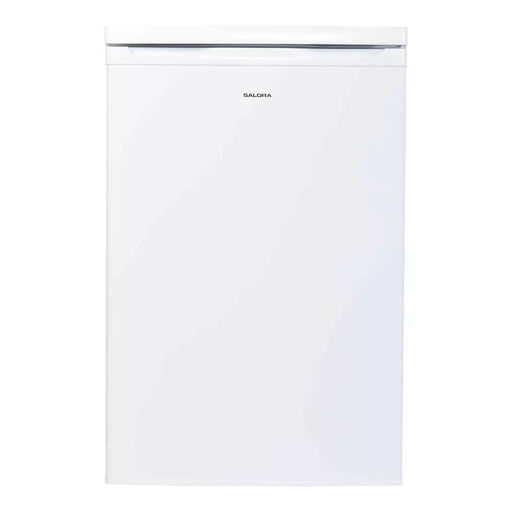 No image available
The four transparent drawers help you organise separate portions; the product description gives a temperature range of −12 °C to −20 °C.
91 litres capacity, freezing capacity of 4,4 kg per 24 hours and stated annual consumption of 166 kWh. According to the product description, this model does not have NoFrost.
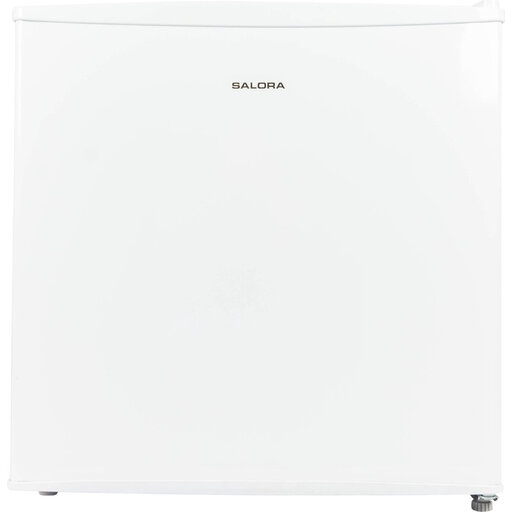 No image available
This small freestanding model could suit a limited amount of extra storage; check that it can be set to −18 °C before use.
31 litres capacity, two compartments and a stated freezing capacity of 2 kg per 24 hours. The stated dimensions are 492 × 472 × 450 mm.
After the first rise, divide the dough into portions and wrap each one separately. King Arthur Baking describes this method for homemade pizza dough; follow your recipe for the next rise after thawing.
Put a covered dough ball in the fridge ahead of time. For the dough balls in the recipes it describes, Ooni recommends leaving them in the fridge overnight; the time needed and the next rise will depend on the dough and portion size.
Only if the permitted ambient temperature for the exact model is suitable for that space. Don’t assume it’s suitable based only on the brand or the term ‘tabletop model’.
EU rules on energy labels and product information apply to household refrigeration appliances. The Dutch Government says that, in many cases, distance purchases come with a 14-day cooling-off period. Statutory warranty in the Netherlands is not limited to a fixed period of two years.