If you have a large pile of pillowcases to iron, a steam generator can mean fewer interruptions to refill the tank. For just a few cases or if you’re short on workspace and storage, a regular steam iron is often more practical. Don’t just compare the steam boost: look at continuous steam output, tank capacity, and the space and support needed for the separate base unit. Always follow the care label on your pillowcase.
Which option is right for you?
Lots of pillowcases in one session
If you want to iron a pile of pillowcases before moving house, continuous steam and a larger tank can help you avoid frequent pauses. The Consumers’ Association notes that a larger water tank is a practical advantage when you have a lot of ironing to do.
A few pillowcases for a one-off job
Your existing steam iron may be all you need for a few pillowcases. Before buying a separate base unit for a one-off job, see what you can do with the iron you already have.
Limited space while moving house
If you’re short on workspace or storage, consider the size and weight of the entire appliance, not just the iron itself. Also check that your ironing board can support the base unit.
What should you look for when choosing?
Steam generator
Best for: a larger pile of pillowcases that can be ironed, or regular ironing.
Bear in mind: it has a separate base unit that takes up space and needs to sit securely on your ironing board.
Regular steam iron
Best for: a few pillowcases or limited space to store the appliance after moving house.
Bear in mind: it has a smaller tank and produces less steam than a steam generator; the iron itself may also be heavier.
| What to consider |
What to look for when buying |
Who is this most relevant to? |
| Ironing a large pile in one go |
Compare continuous steam output in g/min and tank capacity in litres; treat a steam boost in g as a separate specification. |
If I want to iron lots of pillowcases that can be ironed one after another, I look at how many I can do before refilling. Around 31% of consumers have this as their main need. |
| A small one-off job |
Count the pillowcases you want to iron and check whether your current iron is suitable. |
For a few pillowcases, I don’t want to get out a larger appliance if my regular iron can do the job. Around 25% of consumers prioritise this most. |
| Space, transport and storage |
Check the appliance’s dimensions and total weight, the space available and the load capacity of your ironing board. |
If I’m short on space while moving house, I want to be able to set the appliance up and store it easily afterwards. Around 19% of consumers focus mainly on space and transport. |
| Suitable treatment for the fabric |
Read the ironing symbol on the specific pillowcase and check that the chosen temperature and steam setting are suitable. |
I want to iron my pillowcases according to their own care labels, not just because they’re made of cotton. Around 13% of consumers put textile care first. |
| Descaling after moving house |
Check the manual for the exact model and see which descaling method and parts are suitable. |
If I keep using the appliance after moving house, I want to know what maintenance it needs. Around 12% of consumers prioritise descaling above all. |
Common mistakes
-
Assuming a high steam boost means sustained steam output
A steam boost in grams and continuous steam in grams per minute describe different features. For a longer ironing session, the steam boost alone won’t tell you how much steam the appliance produces continuously.
Compare the two specifications separately and, if available, check test results for cotton.
-
Looking only at the iron itself
A steam generator also has a separate base unit. It can take up a lot of space and needs to sit securely on your ironing board, even if the iron itself feels light.
Measure the space available and check the board’s load capacity against the specifications for the complete appliance.
-
Assuming cotton can always withstand high temperatures and steam
The name of the fibre alone doesn’t determine how a finished pillowcase should be treated. GINETEX states that the symbol for ironing at a maximum of 110 °C means ironing without steam.
Read the care label on the specific pillowcase and set the temperature and steam accordingly.
-
Using the same descaling method for every appliance
Maintenance procedures vary by model and range. Tefal warns against putting vinegar or descaling products in the tank of its steam generators; Philips gives instructions for individual models.
Keep the manual for your exact appliance and follow the method it describes.
Brands to consider
Philips
The product ranges mentioned include the 3000 Series PSG3000/20 and PerfectCare 7000 Series PSG7200/20.
- Philips lists continuous steam output of 120 g/min for the PSG3000/20, and up to 160 g/min with a 1.5-litre tank for the PSG7200/20.
- These are manufacturer specifications, not independent test results for cotton. Compare the exact model and follow the care label.
Tefal
The Express Power SV8110E0 is worth considering if you’re looking at a steam generator with a scale collector.
- Tefal lists continuous steam output of 120 g/min, a 420 g steam boost and a removable scale collector for this model.
- These are manufacturer specifications; the right descaling method still depends on the model.
Braun
The CareStyle Compact IS 2143 white/blue is worth comparing if you’re looking for a generator that’s easy to store in a limited space.
- Braun lists continuous steam output of 125 g/min and a 420 g steam boost for this model.
- Braun’s space-saving claim compares this model with the IS 7144. It doesn’t prove that it’s smaller than every other generator or will fit on every ironing board.
Rowenta
Rowenta provides model-specific parts information for ranges including Compact Steam and Silence Steam.
- This information can help you check which parts are compatible with a chosen model reference.
- Parts information doesn’t confirm that every part is available for every version, and it doesn’t tell you how well the appliance irons.
Products at Joybuy
This selection includes steam generators for ironing several pillowcases one after another, and a regular steam iron for a smaller job.
 No image available
Philips 3000 Series steam generator PSG3000/20
Worth comparing if you have several pillowcases to iron one after another and enough space for a separate base unit.
- Continuous steam: 120 g/min
- Removable water tank: 1,4 litres
- Steam boost: 350 g
- Power: 2400 W
Check the applicable voltage and CE marking for the exact version.
View at Joybuy
 No image available
Philips PerfectCare Compact Essential GC6842/30
A steam generator worth comparing if tank capacity and a carry lock matter to you when moving house.
- Continuous steam: 120 g/min
- Tank: 1,3 litres
- OptimalTEMP and automatic shut-off
- Carry lock
Check the applicable voltage and CE marking for the exact version.
View at Joybuy
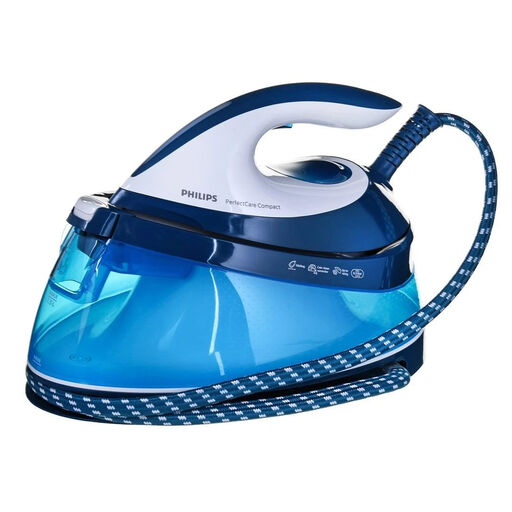 No image available
Philips GC7840/20 PerfectCare steam generator
Worth comparing for a longer ironing session if you’re looking for a larger tank and a carry lock.
- Continuous steam: 120 g/min
- Water tank: 1,5 litres
- Steam boost: 400 g
- Carry lock
Check the applicable voltage and CE marking for the exact version.
View at Joybuy
 No image available
Morphy Richards EasySteam+ MUH-ISE4B
A generator worth comparing if you need a removable tank and the listed self-cleaning features for ironing several pillowcases.
- Removable water tank: 1,8 litres
- Steam boost: 120 g
- Steam output: 70 g
- Power: 2400 W
- Self-cleaning and anti-scale technology listed
Check the applicable voltage and CE marking for the exact version.
View at Joybuy
 No image available
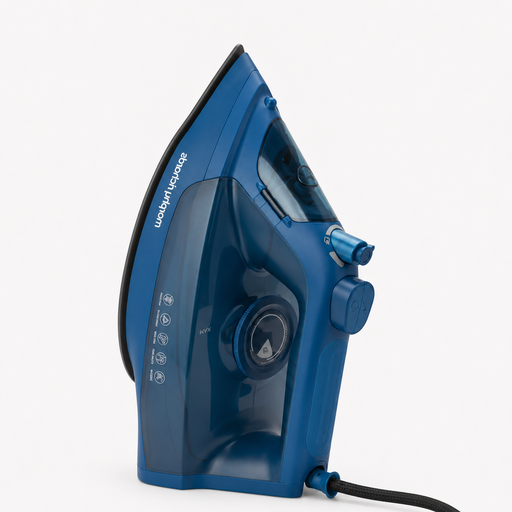
Morphy Richards Crystal Clear MDH-IRK4V
A regular steam iron worth comparing for a few pillowcases, without the separate base unit of a generator.
- Continuous steam: 50 g/min
- Water tank: 350 ml
- Power: 2800 W
- Ceramic soleplate
This is a steam iron, not a steam generator. Check the applicable voltage and CE marking for the exact version.
View at Joybuy
Frequently asked questions
Should I always iron cotton pillowcases with lots of steam and at a high temperature?
No. Check the care label on the specific pillowcase for the maximum ironing temperature; don’t rely on the word cotton alone. The GINETEX symbol for a maximum of 110 °C indicates that you should iron without steam.
Can I use a steam generator on my regular ironing board?
That depends on the board and the appliance you choose. Check the available space and your ironing board’s load capacity against the dimensions and weight of the entire appliance, including the base unit.
How do I descale a steam generator after moving house?
Follow the instructions for the exact model range and let a hot appliance cool down first. Tefal warns against putting vinegar or descaling products in the tank of its generators; Philips gives different instructions for different ranges. Don’t use these methods interchangeably.
Is CE marking required for an electric steam generator in the Netherlands?
CE marking is required for products covered by the Dutch Commodities Act Decree on Electrical Equipment. For the low-voltage rules cited, the NVWA states a nominal AC voltage of 50–1000 V; check whether the rules apply and that the exact version complies. A CE mark alone is not an independent safety test assessment.
Is two years the standard statutory warranty period in the Netherlands?
No. According to the Dutch government, there is no fixed period for the statutory warranty in the Netherlands. What you can expect from a product depends, among other things, on the product, its price and how it is used. If a product is faulty, contact the seller.


