
Vandaag of morgen in huis

Kwaliteit gegarandeerd

Welkomstaanbiedingen ontgrendelen: GRATIS bezorging | Tot 80% korting | Gratis 30 dagen JoyPlus-proefperiode
Download de app
A pill cutter can be useful when you want to split a tablet in half or into quarters. This applies to adults who have difficulty swallowing, carers, older people, and anyone taking vitamins or supplements. However, not every model is equally practical. A cheap tablet splitter may allow a tablet to move, while a blunt blade can result in crumbly halves.
The right choice is therefore not just about the price. Pay particular attention to the construction, the type of tablet and how you use the pill cutter.
Not every tablet can be split. Modified-release tablets, gastro-resistant tablets and those with a special protective coating may lose their effectiveness when broken. Capsules are generally not suitable for a standard pill splitter.
Always check the patient information leaflet and, if in doubt, ask a pharmacist or doctor for advice. Do not change the dosage of prescribed medication yourself. A pill cutter is a tool for splitting a tablet, not for deciding on a dosing schedule.
A flat surface without support can cause a round or oval tablet to slide away. This can result in an uneven split or small fragments breaking off. This can be particularly inconvenient when preparing medication for someone else.
A V-shaped pill holder keeps the tablet in place more effectively. Also check that the lid closes securely and that the tablet remains visibly in the correct position while pressure is applied.
A sharp blade is useful, but it is not the only factor to consider. Overall performance also depends on the tablet’s position, the closure and the pressure you apply. A very hard, irregularly shaped or fragile tablet may still crack.
Look for a sturdy construction, clear operation and easy cleaning. A removable blade can help with thorough cleaning, but requires extra care because the cutting edge is sharp.
If you only want to split tablets in half, a simple pill splitter with one cutting line will be sufficient. If you want to split pills into quarters, check that the pill splitter is suitable for this. With the JORDAN&JUDY model mentioned, the tablet is first split in half. You then turn one half 90 degrees and cut it again.
Quartering does not automatically produce four exactly equal pieces. The shape of the tablet and any score line both play a part. Only use the four pieces if the patient information leaflet or healthcare professional confirms that splitting is permitted.
According to the product description, the orange JORDAN&JUDY model is made from ABS plastic and has a stainless steel blade. The manufacturer describes the plastic as medical-grade material. This is a product claim made by the manufacturer and does not guarantee that every tablet will split without producing crumbs.
A metal blade can remain sharp for a long time, but should be stored clean and dry. Do not use bleach or abrasive cleaning products. Check the blade regularly and replace the pill cutter if the blade is damaged or blunt.
A portable pill cutter is practical for work, travel, visiting family or keeping in a medication box. Check that the size is suitable for the tablets you use. A compact model is easy to carry, but may provide less room for larger pills.
Also consider safety. Keep a pill cutter out of the reach of young children. Do not leave loose tablet pieces in the device and check after cutting that no fragments remain on the blade or in the holder.
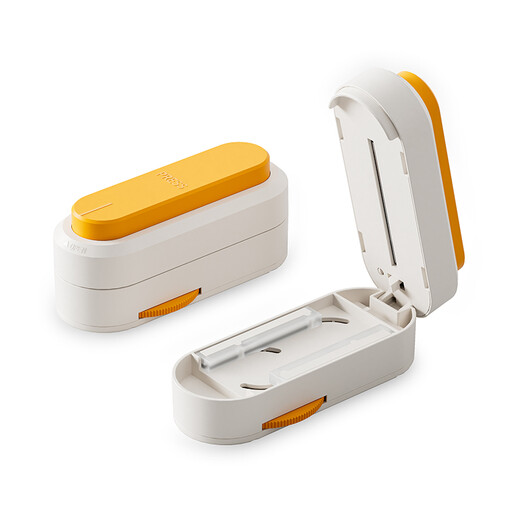
Why it suits this profile: This model is designed for easily splitting tablets in half or into quarters and, according to the product description, has a compact size for a bag, medication pouch or travel luggage.
The V-shaped holder is designed to centre the tablet. This reduces the chance of the tablet moving while the lid is being closed.
ABS housing, stainless steel blade, suitable for halves and quarters according to the product information, with no installation required.
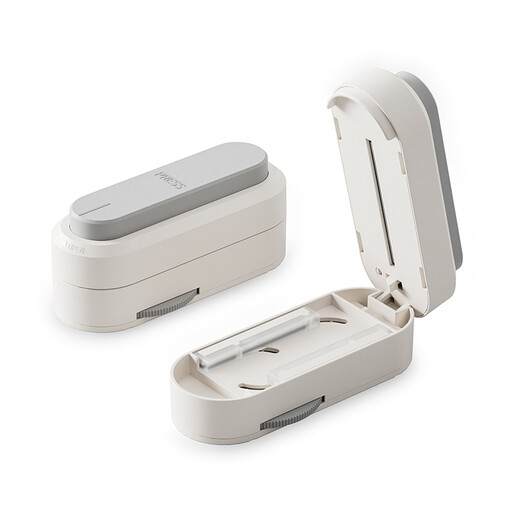
Why it suits this profile: The grey version is an alternative for anyone looking for the same product category in a neutral colour. Check the current specifications and suitability for your tablet on the product page.
By checking not only the colour but also the cutting capacity, holder and dimensions in advance, you reduce the chance of making the wrong purchase.
Portable design according to the product title and a version that is easy to identify inside a medication box.
Why it suits this profile: Carers or users who regularly split different tablets that are approved for splitting may find the quartering function and portability practical.
The combination of a V-shaped holder and a second cut for quarters addresses two common problems: slipping and awkward repositioning.
Removable blade for more thorough cleaning, suitable for use at home or on the go, and designed for vitamins, supplements and certain pills.
Use the pill cutter on a stable surface. Place the tablet in the centre, close the lid fully and press down in a controlled manner. Collect the pieces in a clean container and clean the device after use with lukewarm water and mild soap. Allow all parts to dry thoroughly before storing them.
We have put together a complete, up-to-date list of products that fully meet these strict selection criteria and the applicable European safety regulations.
No. Check the patient information leaflet or ask a pharmacist for advice. Tablets with a special release mechanism, coating or protective layer cannot always be split. Capsules generally do not fit in a standard tablet splitter.
Carefully remove any loose residue and clean the device with warm water and mild soap, unless the product information states otherwise. Dry all parts thoroughly. Do not use bleach or abrasive products. Take extra care with a removable blade to avoid cuts.
Its lifespan depends on how it is used, the type of tablet and how well it is maintained. Check regularly that the blade is still cutting properly and that the holder is not damaged. Replace the device if the blade is blunt or damaged, parts are loose or tablets are crumbling excessively.
