
Vandaag of morgen in huis

Kwaliteit gegarandeerd

Welkomstaanbiedingen ontgrendelen: GRATIS bezorging | Tot 80% korting | Gratis 30 dagen JoyPlus-proefperiode
Download de app
A pill organiser may seem like a simple product, but choosing the wrong one can quickly become inconvenient. A lid that opens in your bag, compartments that are too small or unclear day markings can make organising medication more difficult. The same applies to vitamins and food supplements.
As a Joybuy Product Recommendation Officer, I focus primarily on verifiable features: the number of compartments, dimensions, material, closure and care requirements. This helps you avoid paying solely for attractive packaging or vague marketing claims.
A simple weekly pill organiser with seven compartments works when you have one scheduled intake per day. If you take medication in the morning, afternoon, evening and at bedtime, you need a 7-day pill organiser with 28 compartments. Otherwise, different tablets may end up together.
So don't just look for “7 days” in the product title. Check how many separate compartments there actually are and whether they are clearly marked by day or time of day.
A small travel pill organiser should be easy to carry in a coat pocket, handbag or hand luggage. A loose lid or closure that does not click firmly into place can cause pills to fall out of their compartment or become mixed together.
Look for terms such as snap-lock lid, sealed design or moisture-resistant construction. These are product features, not a guarantee that a box is completely airtight. Always store medicines according to the instructions on the packaging.
A pill organiser with pill splitter can be useful for tablets that may be divided according to medical advice. However, not every tablet is suitable for splitting. Capsules, liquid-filled pills and some tablets must not be divided.
Only use an integrated blade according to the instructions, and consult a doctor or pharmacist before changing your dosage. A pill splitter is a tool, not a substitute for professional medication advice.
Choose the layout based on your daily routine:
Also check the dimensions of each compartment. A large capsule or fish oil capsule takes up more room than a small tablet. Product descriptions may state a capacity, but this depends on the shape and size of your medication.
Many pill organisers are made from PP, ABS, TPE or PET. Check the manufacturer's information about the specific material and care requirements. A description such as BPA-free pill organiser refers to the product description for that model; always check that this claim is actually listed for the product you have selected.
A smooth surface is easy to wipe clean. Do not automatically wash a pill organiser in the dishwasher unless this is explicitly stated. Residual moisture can be inconvenient for tablets and supplements. Allow the organiser to dry completely after cleaning before refilling it.
For older people or carers, clear day markings, contrasting text and easy-open lids are important. If the organiser will have a permanent place at home, measure the available space as well. For travel, the main considerations are the size, weight and a closure that stays shut while being carried.
Preferably fill your pill organiser at a set time and then check that every compartment matches the schedule. Keep the original packaging and information leaflets to hand.
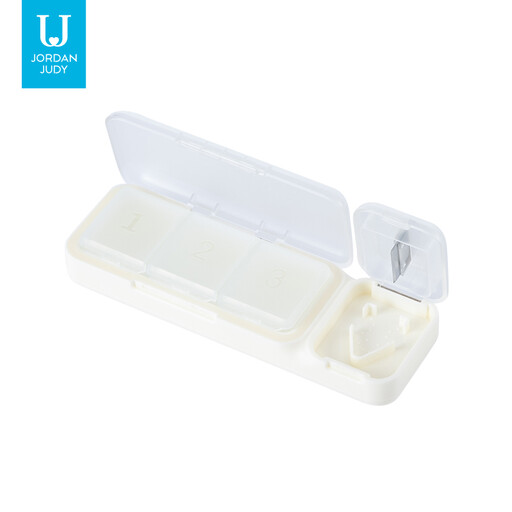
Why it suits this profile: The compact organiser has seven removable daily compartments from Monday to Sunday and, according to the product description, fits in a bag, pocket or travel bag.
The fixed weekly layout means you do not have to label separate boxes yourself. The built-in splitter is included, but should only be used when your tablet is suitable for splitting.
7 daily compartments, PP plastic and a stainless-steel pill splitter. Hand washing is recommended.
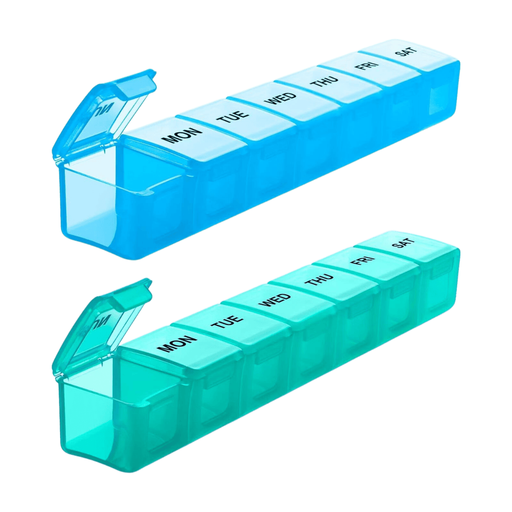
Why it suits this profile: The set contains two large weekly organisers with seven separate compartments. This is useful if you want to keep one at home and use the other while travelling.
The product description specifies a thickness of 1.6 mm, reinforced hinges and click-shut lids. This provides more concrete information about the construction and closure than an organiser with only a general quality claim.
BPA-free plastic, moisture-resistant product description and two organisers included. Check before buying that seven compartments are sufficient for your medication schedule.
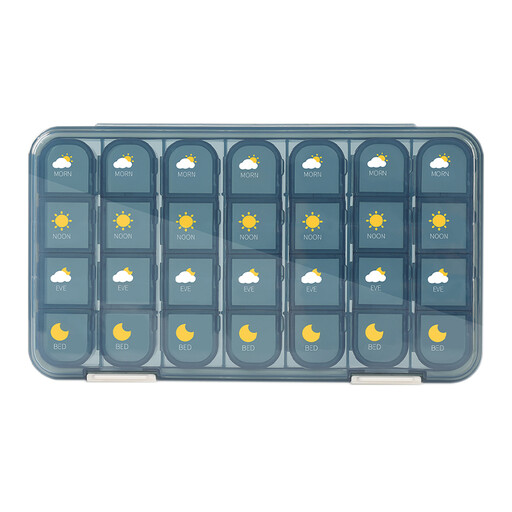
Why it suits this profile: Four compartments per day provide space for a schedule covering morning, afternoon, evening and night. The size is designed for carrying in a bag, rucksack or suitcase.
The 28 separate compartments help prevent tablets for different times of day from becoming mixed together. The manufacturer states that it has a sealed design with click-shut lids; continue to store medication according to the instructions.
28 compartments, four sections per day and a portable size. Hand washing is recommended; this model is not suitable for the dishwasher.
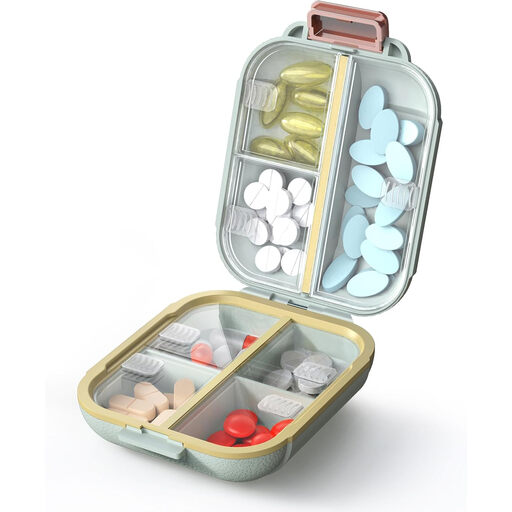
Why it suits this profile: The compact seven-compartment layout is designed for everyday portability and a clear weekly plan with one main compartment per day.
The product name mentions an airtight lid and BPA-free material. When it arrives, check that the lid closes securely and that the compartment size is suitable for your tablets.
7 compartments, compact travel size and a BPA-free product description. Suitable for a simple schedule, not for multiple times of day.
We have put together a complete, up-to-date list of products that fully meet these strict selection criteria and the applicable European safety regulations.
First check your current medication schedule and the expiry information. Then fill each compartment on a clean, dry surface and compare the contents with the prescription or information leaflet. Use day and time markings, and keep the original packaging. If you are unsure, a pharmacy can help organise your schedule.
This depends on the material, hinges, closure mechanism and how it is used. Replace the organiser when a lid no longer closes properly, a compartment develops cracks or the markings become illegible. A fixed lifespan cannot be reliably established for every model.
This can be practical, but check the storage instructions for each medicine beforehand. Some medicines must remain in their original packaging or be protected from light, heat or moisture. When flying or crossing borders, take the original packaging and relevant documents with you.
