
Vandaag of morgen in huis

Kwaliteit gegarandeerd

Welkomstaanbiedingen ontgrendelen: GRATIS bezorging | Tot 80% korting | Gratis 30 dagen JoyPlus-proefperiode
Download de app
A pill organiser might seem like a simple product, but small differences can make or break how pleasant it is to use every day. If you take medicines, vitamins or supplements with you, you want to see at a glance what you have already taken and what is still waiting. A confusing layout, a loose lid or not enough space can actually cause confusion.
So don't just look at colour and price. Instead, check the layout, closure, dimensions and information about the material. Below are the most important points to consider, along with some popular choices for different situations.
A medication organiser with only day compartments isn't always suitable if you have multiple dosing times. For daily use, you might need separate compartments for morning, afternoon and evening. If you only take vitamins at one time, a large weekly pill organiser with lots of tiny compartments is probably overkill.
So start by looking at your own routine:
A lid that comes off easily can scatter pills or supplements among your belongings. Product titles may include terms like "airtight", "moisture proof" or "air-tight lid". Treat this as a product specification from the listing, not a guarantee that the contents will stay completely dry under all circumstances.
Check whether the compartments close individually and whether the organiser is sturdy enough for your bag, coat pocket or wash bag. A moisture-resistant pill box is especially useful when you use the organiser on the go, but don't store medication in a damp bathroom for long periods.
A compact organiser is easy to carry, but small compartments don't always fit larger supplements or capsules. Fish oil capsules, for example, take up more space than small tablets. So check that the compartments are big enough for what you actually use.
Also consider how you fill the organiser. A narrow opening can be tricky with larger tablets. For some medicines, it is also wiser to keep the original packaging and patient information leaflet. If in doubt, ask your pharmacist whether the medicine can be stored outside its original packaging.
A pill organiser with compartments should match the number of days and dosing times. A model with seven compartments is clear for a simple weekly plan. An organiser for three times a day offers more structure for a fixed daily schedule.
Also check whether the days or times are clearly marked on the product. A layout that is only labelled in small letters can be less practical when you are out and about. Removable parts are handy if you only need to take a few days' worth.
Look at the information about the material used. For the portable model with seven compartments, the product title mentions BPA-free material, for example. That is a verifiable product feature from the listing. Other models mainly mention plastic storage.
Pay attention to the following points:
A medicine organiser does not replace safe storage. Keep medicines out of reach of children and follow the storage advice on the packaging or from the pharmacist.
For a pill box for travel, weight and size are important. A small model fits in a coat pocket, handbag or wash bag. A larger weekly organiser is better suited for home, where you can set out the whole week's schedule at once.
A good practical choice depends on the balance between capacity and portability:
Do not place the organiser in direct sunlight or in a warm spot. The correct storage conditions vary by product; the medication's packaging remains the guide.
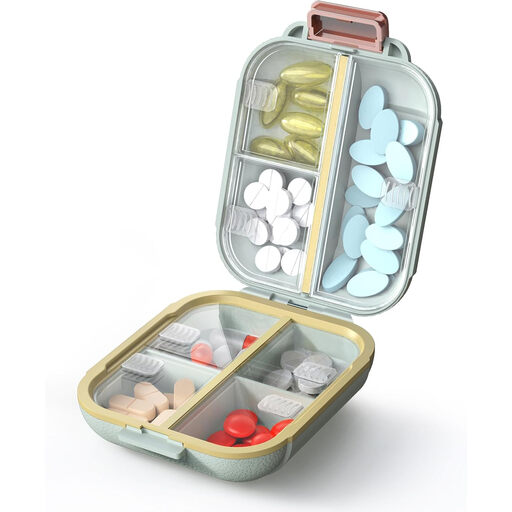
Why this fits the profile: This compact model has seven compartments and is designed for daily use or a short trip. The product title mentions an airtight lid and BPA-free material.
The seven separate compartments allow a simple weekly layout, so you are not working with one large, confusing compartment.
Seven compartments, portable size and, according to the product title, BPA-free material.
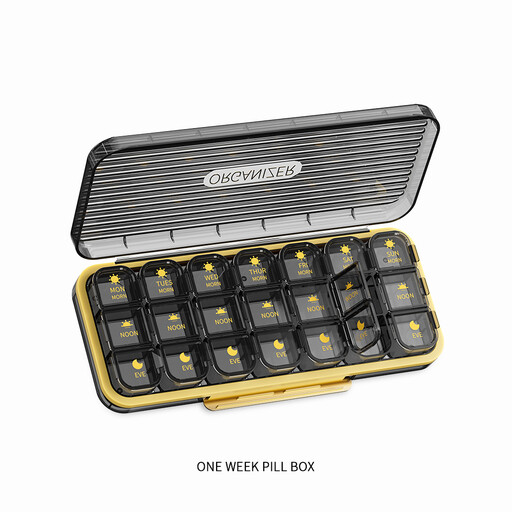
Why this fits the profile: This model is designed for a fixed schedule with three dosing times per day over seven days. The layout therefore appeals to shoppers who are mainly looking for clarity and structure.
The three-way split per day prevents morning, afternoon and evening doses from ending up in the same compartment.
Layout for seven days, three times per day and removable portable compartments according to the product description.
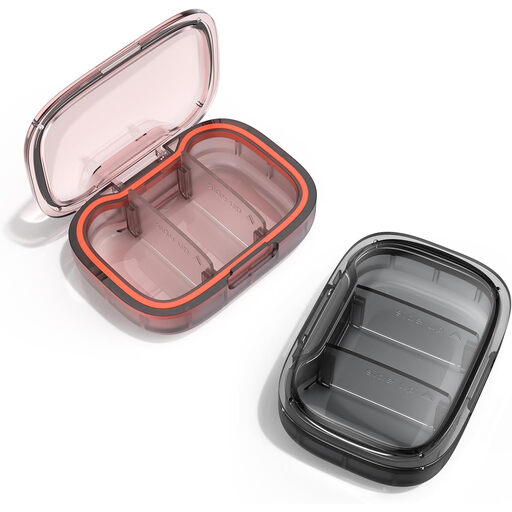
Why this fits the profile: The set contains two small organisers, each with three compartments. That is practical if you want to keep one at home and a second in your bag or at work.
Two separate organisers reduce the need to carry a large weekly organiser everywhere. The three compartments keep different doses separate.
Two pieces per pack, three compartments per organiser and, according to the product title, a moisture-resistant case.
We have put together a full, up-to-date list of products that fully meet these strict selection criteria and comply with current European safety regulations.
Not always. Some medicines must stay in their original packaging or be protected from light, heat or moisture. Check the patient information leaflet and, if in doubt, ask your pharmacist for advice. Only use an organiser when the storage advice allows it.
First, empty the organiser completely. Clean it according to the manufacturer's instructions, usually with a slightly damp cloth and a mild cleaning agent. Let all compartments dry completely before refilling them. Any remaining water can damage the contents.
That depends on the length of your trip and your dosing schedule. For a fixed weekly plan, a weekly pill organiser is clear. For a short trip, a smaller portable pill organiser is often easier. When travelling, also take the original packaging, patient information leaflet and any necessary documents if that is relevant for your medication.
