
Vandaag of morgen in huis

Kwaliteit gegarandeerd

Welkomstaanbiedingen ontgrendelen: GRATIS bezorging | Tot 80% korting | Gratis 30 dagen JoyPlus-proefperiode
Download de app
A pill organiser might seem straightforward, but the wrong model can quickly become a nuisance. Small compartments don't fit large capsules, a lid can pop open during travel, and unclear markings make it difficult to tell days or dosage times apart. This applies to people who take daily medication, as well as those using vitamins, fish oil and nutritional supplements.
The right choice therefore starts not with colour or price, but with how you intend to use your medication organiser.
Fish oil capsules and large vitamins take up more space than standard tablets. A compact pill organiser can therefore fill up quickly. Always check whether the product description explicitly mentions large compartments or capacity for capsules.
A 7-day pill organiser with one compartment per day is practical for a simple routine. If you take different medications in the morning, afternoon and evening, you'll be better off with a weekly pill organiser with multiple compartments per day. Otherwise, different dosage times end up mixed together.
Small print, slippery lids or hinges that require a lot of force can make filling and opening difficult. Look for clearly marked days, a lid per compartment and the way the organiser opens. For on-the-go use, a secure closure is important, but it still needs to be easy to operate.
Choose the layout based on your routine:
Also check whether the compartments are large enough. A product may have many compartments, but that can mean less space per compartment.
Many pill organisers are made from PP, ABS, TPE or BPA-free plastic. This mainly tells you about the material used; it's not a guarantee that medication will stay protected in all conditions. A waterproof pill organiser or moisture-resistant pill holder can be useful in a bag, but always check exactly what the manufacturer means by "waterproof" or "moisture-proof".
Store medication according to the advice on the packaging. A pill organiser does not automatically replace the original packaging, patient information leaflet or storage instructions.
A pill organiser with a pill cutter can be suitable when a tablet may be split according to the patient information leaflet or the advice of a doctor or pharmacist. Not every tablet or capsule can be split. Do not use a cutter for capsules or liquid-filled pills.
For older people and those with limited hand strength, wide lids, clearly visible labels and compartments that open smoothly are useful features to look out for. Also check whether an organiser fits in a coat pocket, handbag or carry-on luggage.
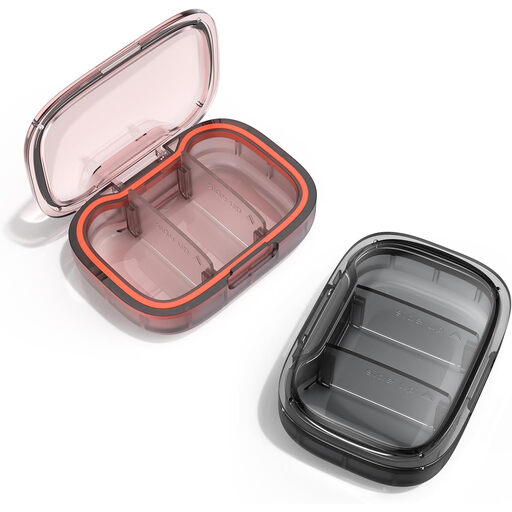
Why this fits the profile: A set of two compact boxes is suitable for a simple daily layout, for example for vitamins, fish oil or a limited amount of medication at home and on the go.
The three compartments allow for different portions, so not everything ends up loose in one compartment. The moisture-resistant description is practical for normal transport, but is not intended as an invitation to submerge the box.
Two pieces; three compartments per box; compact size for a bag or coat pocket.
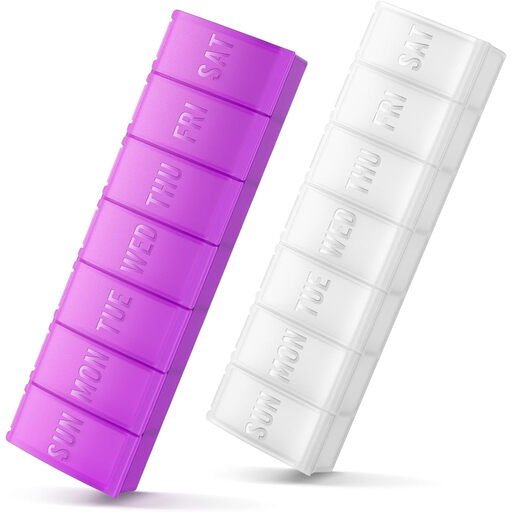
Why this fits the profile: This set of two weekly organisers is aimed at users who want a full weekly layout and larger compartments for vitamins, fish oil and daily tablets.
According to the product description, this model has large compartments, engraved day markings and a BPA-free plastic housing. Do check whether the capacity per compartment matches your supplements.
Seven daily compartments; set of two; BPA-free plastic according to the product description; designed for larger capsules.
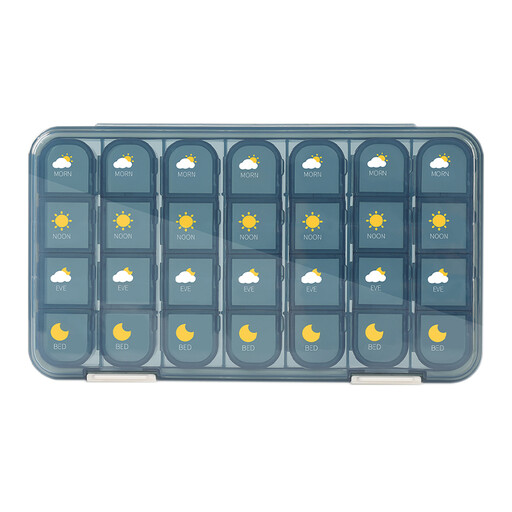
Why this fits the profile: The layout with four compartments per day suits complex routines with multiple dosage times and is also useful for carers who want to organise a week in advance.
Four separate compartments per day prevent morning, afternoon, evening and night portions from getting mixed up automatically. The closures should be checked carefully before transport.
28 compartments; four times per day; ABS, PP and TPE materials according to the product description; sealed design for transport.
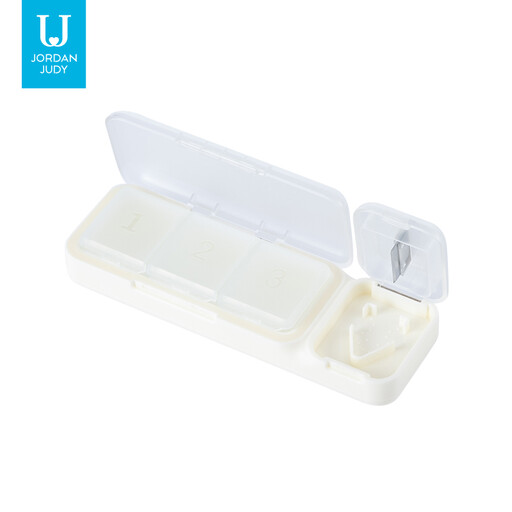
Why this fits the profile: The mini model fits in a handbag, pocket or travel bag and combines seven daily compartments with a built-in tablet splitter.
The day markings reduce confusion when travelling. Only use the pill cutter for tablets that may be split according to a doctor, pharmacist or patient information leaflet; do not use for capsules or liquid-filled pills.
Seven compartments; built-in cutter; PP plastic; small size for daily travel.
We've put together a full, up-to-date list of products that fully meet these strict selection criteria and comply with current European safety regulations.
Fill a pill organiser preferably at a set time and check each compartment against the label or dosage schedule. Keep the following points in mind:
That depends on the material, hinges, closures and daily use. Check the organiser regularly for cracks, loose lids, faded markings and moisture in the compartments. Replace the product when it no longer closes properly or becomes difficult to clean.
This is not always suitable. Medication and supplements can have different storage requirements. Check the packaging and ask a pharmacist for advice if in doubt. Only use the compartments when the contents remain clearly identifiable and the storage time in the organiser is appropriate.
Not every travel pill organiser is waterproof. Terms like "moisture-proof" or "waterproof" come from the product description, but do not automatically mean the organiser can be submerged for long periods. Therefore, keep the organiser dry and transport prescribed medication according to current travel and storage advice.
