
Vandaag of morgen in huis

Kwaliteit gegarandeerd

Welkomstaanbiedingen ontgrendelen: GRATIS bezorging | Tot 80% korting | Gratis 30 dagen JoyPlus-proefperiode
Download de app
A pill organiser may seem like a simple product, but small design details can make all the difference to how well it works. A lid that’s difficult to open, unclear compartments or too little space can become a daily frustration. This matters not only if you take medication, but also if you want to organise your vitamins or supplements by day.
So, when choosing one, look beyond colour and price. Pay particular attention to the compartments, fastening, dimensions and material. Below, you’ll find the key things to consider, along with some suitable options for different needs.
A small pill case fits easily into a bag or coat pocket, but its compartments aren’t always large enough. Large vitamins, fish oil capsules or several tablets for each dose can take up a lot of space. So check the dimensions of the individual compartments, not just the outside of the case.
A 7-day pill organiser is handy for a regular weekly routine, but check that it has enough capacity for each day. An organiser with separate compartments can also be useful if you want to keep different dose times apart.
A snap fastening should stay closed in your bag, but also open without too much force. A very stiff lid can be impractical for older people or anyone with limited hand strength. Check the product description to see if it says anything about how the fastening works.
A separate lid for each day means you don’t have to open all the compartments at once. This makes a pill organiser easier to use, especially if you fill it in advance.
Terms such as waterproof, airtight or moisture-proof can mean different things. A product description may mention a moisture-resistant design, but that doesn’t automatically mean you can submerge the pill organiser. Always store medicines and supplements in a dry place and follow the instructions on the packaging.
For a travel pill organiser, a secure fastening and a protective case are often more important than a marketing claim about water resistance.
First, choose between a daily and a weekly layout:
Check that the days are clearly marked and easy to read. Hard-wearing labels can be useful for everyday use, but also make sure the compartments are large enough for your tablets.
Many models are made from PP or BPA-free plastic. BPA-free tells you something about the type of plastic used, but it doesn’t automatically indicate how long the complete product will last. Hinges and fastenings are worth checking too.
A pill organiser should be easy to clean. If the manufacturer allows it, use a damp cloth or mild soapy water. Let every compartment dry completely before refilling it. Avoid harsh cleaning products unless recommended.
A pill organiser with a splitter can be useful if the patient information leaflet says a tablet can be split. Not every tablet is suitable. Capsules, liquid-filled capsules and some modified-release tablets may need to be taken whole. If you’re unsure, ask a pharmacist or doctor for advice. A pill splitter is no substitute for professional advice about dosage.
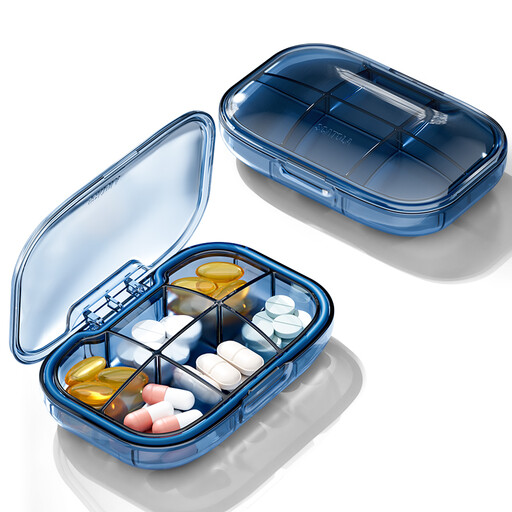
Why it suits this user: This model comes as a set of two and has six separate compartments. It’s a good fit if you’re looking for a simple organiser for medicines at home, at work or on a short trip.
The six compartments make it easier to organise your tablets than a single open compartment. Just check beforehand that six compartments are enough for your routine.
Set of two, six compartments per box and a plastic design, according to the product information.
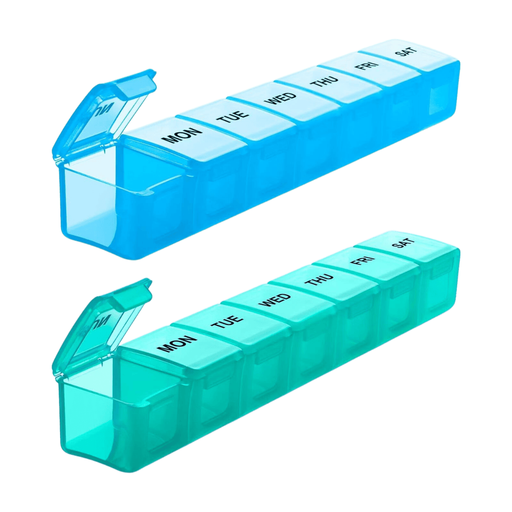
Why it suits this user: The extra-large compartments are designed to hold a week’s worth of vitamins, supplements or medicines. That’s useful if you take several tablets or larger ones.
The weekly layout and large compartments help prevent them from becoming overfilled. The product description says the design is moisture-resistant; still, keep the organiser dry.
Two organisers, seven daily compartments, BPA-free plastic and a length of approximately 23 cm, according to the specifications.
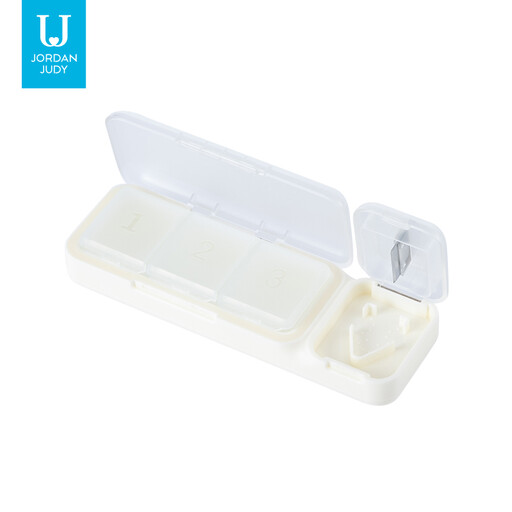
Why it suits this user: This compact model is designed for everyday use and travel. Its seven daily compartments and built-in splitter suit a regular routine, provided the tablet in question can be split.
The daily compartments keep tablets from getting mixed up. The splitter is included, but don’t use it for capsules or tablets that shouldn’t be split.
Seven labelled daily compartments, a compact size and a stainless-steel blade, according to the product information.
Before ordering, check that:
We’ve put together a complete, up-to-date list of products that meet these strict selection criteria and the applicable European safety regulations.
Its lifespan depends on the plastic, hinges and fastening, as well as how often you open it. Replace it if a compartment no longer closes properly, the material cracks or the labels become unreadable. A damp or damaged inside is another reason to choose a new pill case.
It depends on the storage instructions. Some products need to stay in their original packaging or be protected from light and moisture. Check the patient information leaflet and ask a pharmacist for advice if you’re unsure. A pill organiser is mainly intended to make your daily routine easier to manage, not to replace official packaging information.
A small pill organiser is handy for hand luggage, but check the rules of your airline and destination beforehand. If you take prescription medicines, it may be a good idea to bring the original packaging and a list of your medicines. A securely fastened travel-size organiser helps stop tablets from rattling around, but it isn’t automatically waterproof.
