
Livraison le jour même et le lendemain

Qualité garantie

Débloquez vos offres de bienvenue: Livraison GRATUITE | Jusqu'à -80 % | 30 jours d'essai gratuits à JoyPlus
Téléchargez l'application
A pill organiser can help you keep daily medication, vitamins, supplements or fish oil in order. However, not every pill organiser meets the same practical requirements. A lid that is difficult to close, compartments that are too small or an unclear day-by-day layout can cause confusion.
So don’t focus only on colour and price. Pay particular attention to the layout, dimensions, closure and material. Read on to find out which common pitfalls are easy to overlook and which types of pill organiser suit different needs.
A simple seven-compartment weekly pill organiser is suitable if you want to prepare one dose per day. If you take medication or supplements at different times, four compartments per day may be more practical. Without a clear layout, morning and evening tablets could get mixed up.
A loose lid may be fine for use at home, but less convenient in a bag or suitcase. When choosing a pill organiser for travel, look for a click closure, seal or other design that helps prevent the contents from mixing. A sealable pill organiser isn’t automatically moisture-proof, so always check exactly what the product description says.
Terms such as “waterproof”, “airtight” or “BPA-free” are only useful if the product listing explains them clearly. For the models discussed here, some features are included in the product name or listing. This doesn’t amount to independent certification. For example, some models are described as using BPA-free material, according to the product information, but a detailed material or test report isn’t always provided.
Also, don’t use a pill organiser to change your medication schedule. Follow your prescription and store medicines as directed by your pharmacy, doctor or the packaging.
Choose a layout that suits your routine:
Also check the actual dimensions of each compartment. A large exterior doesn’t necessarily mean that every compartment can hold several capsules or larger tablets.
A pill organiser with compartments should stay securely closed during normal use. Check whether the lids close individually and whether the markings are easy to read. For travel, a click closure, double closure or silicone seal can be useful.
According to the product description, the JORDAN&JUDY weekly organiser has a portable sealed design with click lids. This may help keep pills separate in each compartment, but always follow the manufacturer’s or pharmacy’s storage instructions for medicines that are sensitive to moisture.
Many models are made from PP, ABS, TPE or similar plastics. Don’t just check the material name; look at the care instructions too. According to the product information, the JORDAN&JUDY 28-compartment organiser can be hand-washed and isn’t suitable for the dishwasher. A smaller model, on the other hand, may need to be cleaned with a dry cloth only.
Every centimetre counts when you’re choosing a compact pill organiser. Compare its dimensions with your bag, coat pocket or washbag. An organiser that seems convenient at home may turn out to be too large when you’re out and about.
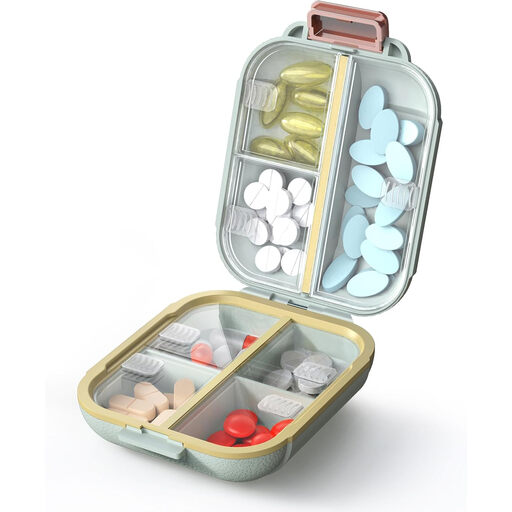
Why it suits this need: This compact pill case is ideal if you want to start with a simple weekly layout and need something that takes up little space.
The seven separate compartments mean you don’t have to keep all your tablets loose in one box. The product listing describes an airtight lid and BPA-free material; check the closure when it arrives.
Seven compartments, a compact size and suitable for carrying with you every day.
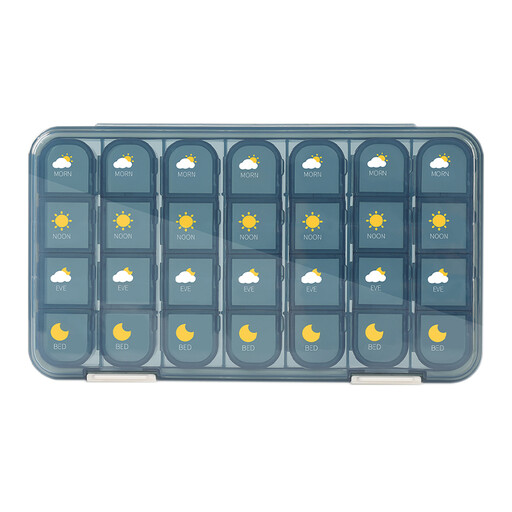
Why it suits this need: The layout is ideal if you want to prepare several doses a day.
The 28 compartments are arranged across four daily doses and seven days. The individual click lids are designed to help prevent the contents from mixing during travel.
28 compartments, ABS, PP and TPE materials, and dimensions of approximately 23,1 × 13 × 3 cm.
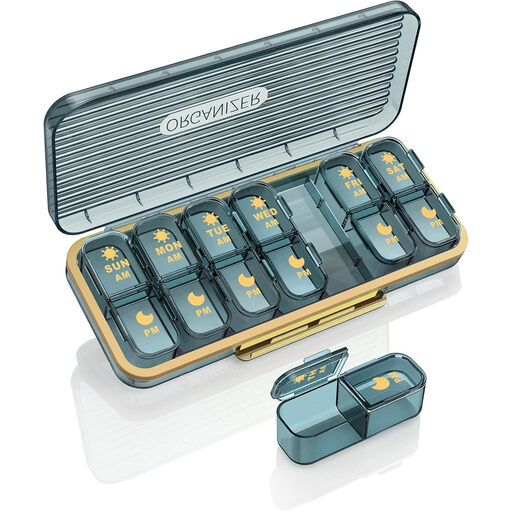
Why it suits this need: The morning and evening layout is ideal if you want to prepare a week’s supply for two set times of day.
The separate morning and evening compartments reduce the chance of putting two daily doses in the same compartment.
Seven days, two clearly marked times of day and a portable design, according to the product information.
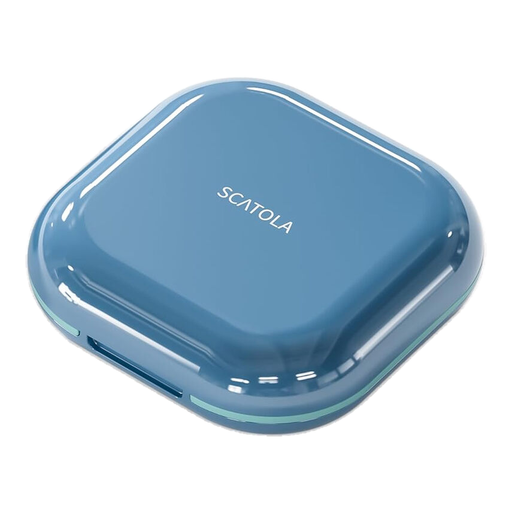
Why it suits this need: This small model fits in a handbag, coat pocket or travel case when you only need to take a few doses with you.
The four compartments keep different doses separate, without the need to carry a large weekly organiser.
Four compartments, a compact travel size and suitable for vitamins or medication, according to the product listing.
We’ve put together a full, up-to-date list of products that meet these strict selection criteria and comply with the applicable European safety regulations.
First, read your prescription and check the days and times you need to take each dose. Fill one medicine or supplement at a time, then check each compartment again. Keep medicines with different storage requirements separate. If you’re unsure which tablets are which, write their names on the packaging or in a separate list.
Its lifespan depends on the material, how often you use it and how you clean it. Check regularly that the lids still close properly, the compartments aren’t cracked and the markings are still legible. Replace the organiser if a closure comes loose or if you can no longer keep pills dry and separate.
That depends on how long you’ll be travelling and how many doses you need to take. If you’re travelling with prescribed medication, it’s best to bring the original packaging and any relevant documentation. A compact pill organiser can be handy for everyday use while you’re away, but it doesn’t replace the original labelling or storage advice.
