
Livraison le jour même et le lendemain

Qualité garantie

Débloquez vos offres de bienvenue: Livraison GRATUITE | Jusqu'à -80 % | 30 jours d'essai gratuits à JoyPlus
Téléchargez l'application
A pill organiser may seem simple, but small design choices determine whether it is convenient to use every day. A compartment that is too small, a lid that is difficult to open or unclear day markings can quickly cause confusion. This applies to adults taking vitamins, older people with several doses a day, carers and travellers.
When choosing one, therefore, do not focus only on colour or price. Pay particular attention to the layout, material, closure and how you intend to use the organiser.
A 7-day pill organiser is useful when you want to arrange one or more doses per day clearly. If you take medication in the morning, afternoon and evening, seven large compartments may not be enough. An organiser with several compartments per day or a modular system may be more suitable.
For vitamins, fish oil or supplements alone, a simple pill organiser with compartments may be more practical. Look at how many capsules fit into one compartment, rather than focusing only on the number of days stated on the packaging.
A lid should close securely, but it should also open without requiring much force. This is particularly important for older people or anyone with limited hand strength. A click closure that feels tight at first can become frustrating with daily use.
Also check whether the day labels remain clearly visible. The product pages for some models mention engraved or embossed labels. These are less reliant on stickers, which can come loose or fade.
Words such as “waterproof” or “moisture-proof” do not automatically mean that a medicine box is suitable for submersion, a damp bathroom or long-term storage in direct sunlight. Treat such terms as a product feature mentioned in the description, not as a guarantee for every situation.
Store medicines according to the instructions on the packaging or from your pharmacy. A pill organiser is primarily intended for convenient, temporary use. If you are unsure about storing medicines outside their original packaging, it is best to ask your pharmacist.
First, consider how you intend to use it:
A large pill box is not automatically more convenient. An oversized model takes up more space and may be harder to carry. Compare its dimensions with your bag, wash bag or hand luggage.
With a BPA-free pill organiser, the product information states that bisphenol A is not present in the material used. This does not automatically say everything about the overall safety of the material or its suitability for the long-term storage of every type of medicine.
Also look for:
Do not use aggressive cleaning products unless the manufacturer expressly permits them. A damp interior can be inconvenient when filling the organiser, so allow each compartment to dry thoroughly.
A travel pill organiser should stay closed in your bag without being difficult to open. Check whether the compartments close individually and whether you can recognise the days or dosing times at a glance.
When travelling, it is sensible to take the original packaging, patient information leaflet and any medication details with you. Use the organiser as a planning aid, but do not assume that its closure protects medication against every external influence.
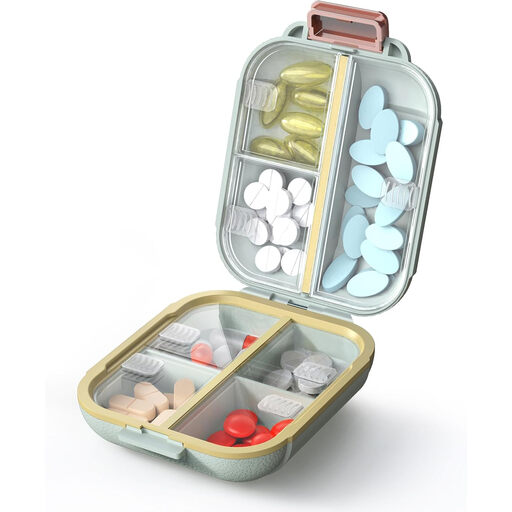
Why it suits this profile: This compact model is designed around one clearly organised compartment per day, making it suitable for people buying a medication organiser for the first time.
The seven separate compartments make organising the week clearer than using one shared compartment. However, check beforehand that the capacity is suitable for your tablets.
Seven compartments, a compact travel-friendly design and, according to the product description, BPA-free material with an airtight lid.
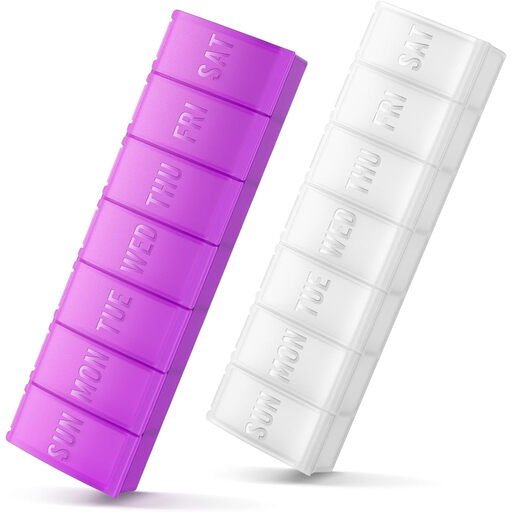
Why it suits this profile: A sturdy case, large compartments and permanent day markings are ideal for anyone who values a clear, robust weekly organiser.
The product description mentions etched day labels and a design that is easy to open. This reduces the risk of fading stickers or awkward operation.
BPA-free medical-grade plastic according to the product information, large compartments and a set of two.
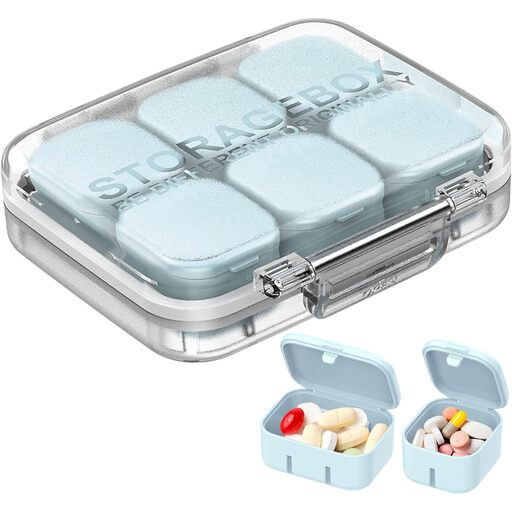
Why it suits this profile: This model is worth considering for travellers or users who want to plan more than one week ahead and are looking for a flexible layout.
The 4/6 grid layout can be adapted to suit your preferred arrangement. Before buying, check how the modules are assembled and which compartment size you need.
According to the product title, suitable for up to ten days and designed as a portable model for vitamins, fish oil and supplements.
We have put together a complete, up-to-date list of products that fully meet these strict selection criteria and the applicable European safety regulations.
Fill the organiser at a set time, for example at the beginning of the week. Then check each compartment against the packaging or your dosing schedule. For carers, it can be helpful to note the day and dosing time on a separate list where they are easy to see.
Clean the organiser with a slightly damp cloth if this is specified in the product information. Only fill dry compartments and do not mix different tablets unless you are certain that this is suitable. Keep medicines out of the reach of children and pets.
This depends on the material, hinges, closure and how often you use it. Replace the organiser when a lid no longer closes, a compartment becomes damaged or the labels are no longer readable. Claims about a specific lifespan come from the manufacturer’s product information and are not a general guarantee.
It can be practical for planning, but when travelling it is best to take the original packaging and patient information leaflet with you as well. Additional rules may apply to some medicines. When travelling internationally, ask your pharmacist for advice or check the latest government information.
Choose larger compartments if you take several capsules or large softgels each day. A standard weekly model may not provide enough space. Compare the stated dimensions and capacity with the amount you actually take each day.
