
Vandaag of morgen in huis

Kwaliteit gegarandeerd

Welkomstaanbiedingen ontgrendelen: GRATIS bezorging | Tot 80% korting | Gratis 30 dagen JoyPlus-proefperiode
Download de app
A pill organiser might seem like a simple product, but small design choices determine whether it works well in practice. A lid that comes loose in your bag, compartments that are too small for fish oil capsules, or fading day labels can quickly become frustrating.
For adults, seniors, carers and travellers, there are three main pitfalls to watch out for:
Also pay attention to how product claims are presented. A mention such as “extra strong” or “lasts for years” isn’t a universal guarantee. Instead, check the stated materials, dimensions, closure and layout.
For one dose a day, a pill organiser with 7 compartments may be sufficient. If you take something in the morning, afternoon and evening, you’ll be better off with a weekly pill organiser with 21 compartments. For four doses a day, 28 compartments are clearer.
Note the difference between:
A large compartment prevents capsules from getting stuck. In the product information of some roomy models, for example, you’ll see a capacity of up to 12 fish oil capsules or 13 larger vitamins per compartment. Always check this against the actual shape and size of your supplements.
Many models are made from PP, ABS, TPE or BPA-free plastic. BPA-free refers to the type of plastic used, but it doesn’t automatically mean that every medicine can be stored outside its original packaging indefinitely. If in doubt, ask your pharmacist which storage method is suitable for your medication.
A practical closure should:
For seniors or people with limited hand strength, wide lids and easy-to-open closures can be more comfortable. Hinges and closures with extra sturdy construction may last longer according to the product description, but treat such claims as the supplier’s specifications rather than independently proven durability.
A waterproof pill organiser sounds appealing for travel, but check exactly what’s being promised. “Moisture proof”, “sealed” or “air-tight lid” in product descriptions usually refers to protection against moisture or a sealing lid. That’s not the same as an official waterproof rating.
For everyday carrying, these points are important:
Don’t use a pill organiser as a replacement for the original packaging when the label, patient information leaflet or specific storage conditions are important. Keep medicines out of reach of children and fill the compartments carefully according to your own schedule.
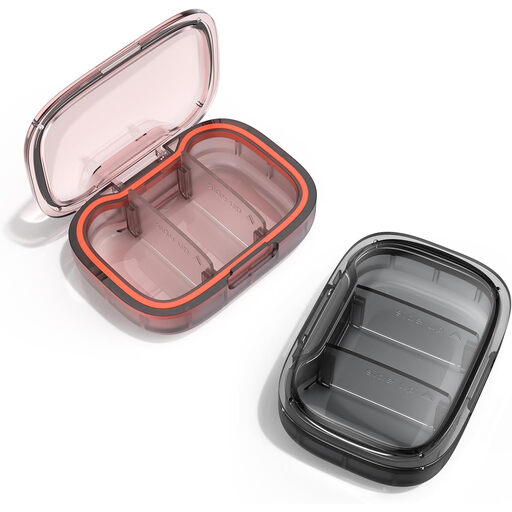
Why this fits the profile: This compact model comes as a set of two and is designed for daily carrying in a pocket, handbag or small travel bag. The three compartments are suitable for a limited amount of medication, vitamins or supplements.
The three separate compartments limit mixing of different doses. The description also mentions a moisture-resistant casing; nevertheless, keep the organiser dry.
Set of two, three compartments and a small portable size for short outings.
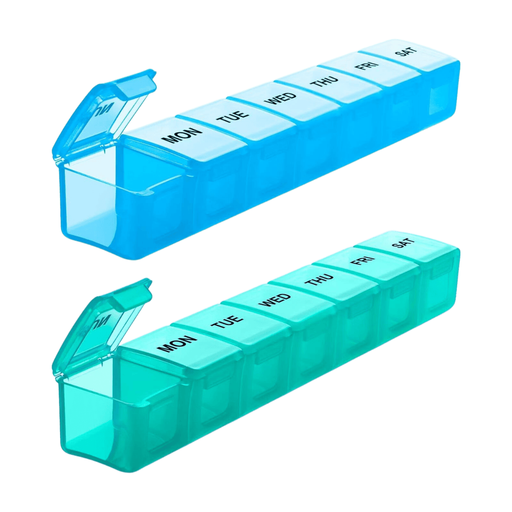
Why this fits the profile: The seven roomy compartments are designed for users who want to sort their vitamins, supplements or medication for a full week in advance. The set includes two organisers.
The product description mentions large compartments, reinforced hinges and day labels that won’t peel off. This helps with larger capsules and a fixed weekly schedule.
BPA-free plastic according to the product information, seven roomy compartments and a closure that is described as easy to open.
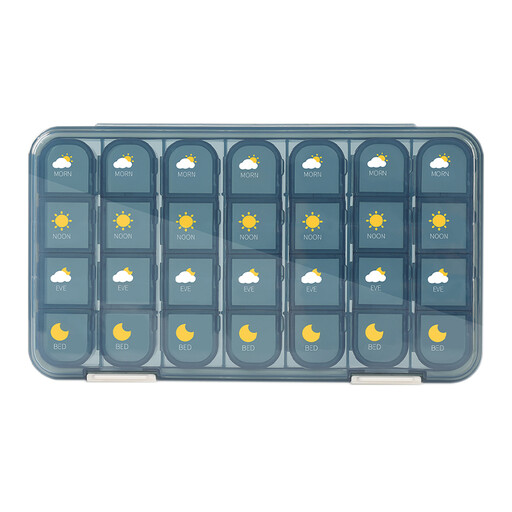
Why this fits the profile: With four compartments per day, this model is aimed at users with multiple dosing times. According to the product information, the size is suitable for a bag, rucksack or suitcase.
The 28 marked compartments reduce the chance of morning, afternoon, evening and night doses getting mixed up. The sealed closure is designed to keep the contents in place during transport.
28 compartments, ABS, PP and TPE materials according to the product information and a portable design.
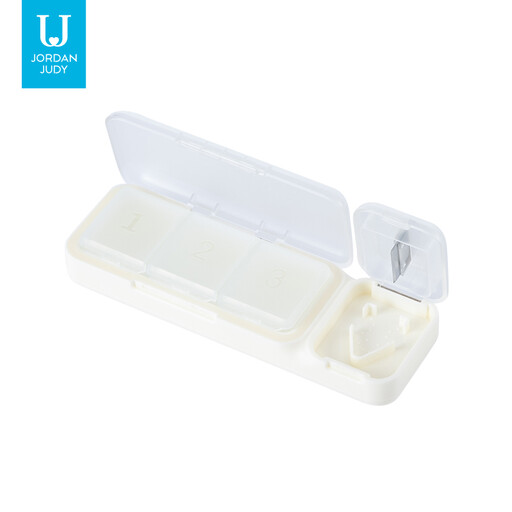
Why this fits the profile: This small model combines storage with a built-in pill cutter and, according to the product description, fits in a pocket, handbag or travel luggage.
The organiser has seven daily compartments, offering more structure than a single storage compartment. The cutter is only suitable for tablets designed to be split; capsules and liquid capsules must not be split.
Seven compartments, compact size and a built-in cutting mechanism with a stainless steel blade according to the product information.
We’ve put together a full, up-to-date list of products that fully meet these strict selection criteria and comply with current European safety regulations.
A pill organiser for vitamins or a pill organiser for fish oil doesn’t need the same layout as a pill box for multiple prescriptions. So first look at the quantity per day, the number of dosing times and the size of your capsules.
Not always. Some medicines must stay in their original packaging because of light, moisture, shelf life or clear labelling. Ask your pharmacist whether your chosen medicine can be stored in a pill organiser.
That depends on the material, closure, use and cleaning. In particular, check that the lids still close properly and that the day labels remain readable. Replace the organiser as soon as a compartment is damaged or regularly opens on its own.
No. A pill cutter isn’t automatically suitable for capsules, liquid capsules or tablets with a special release mechanism. Consult your doctor or pharmacist before splitting a tablet or adjusting your dosage.
