
Home baker making a single cake
You want to choose an oven setting that suits your recipe and use a cake tin that will actually fit. Bosch describes conventional top-and-bottom heat as an alternative for delicate bakes.


First, choose an oven with enough room for your cake tin, then check that it has the settings your recipe requires. The Consumers' Association recommends comparing the internal dimensions with your largest oven dish. Bosch describes conventional top-and-bottom heat as a useful alternative for delicate bakes, while fan-assisted cooking can dry food out more quickly. A freestanding oven suits a kitchen without a suitable built-in space; with a built-in oven, you’ll also need to check the housing dimensions and installation requirements.
You want to choose an oven setting that suits your recipe and use a cake tin that will actually fit. Bosch describes conventional top-and-bottom heat as an alternative for delicate bakes.
You may be looking for a freestanding model and want to check both the worktop space and usable internal dimensions in advance. The Consumers' Association recommends comparing the oven cavity with your largest oven dish.
You want to fit larger tins or bake more, so you may be considering a built-in oven with suitable internal space and usable shelf positions. Siemens and ETNA specifications describe the functions and dimensions of individual models.
Choose this option: if you don’t have a suitable built-in space and want to place the oven on your worktop.
Keep in mind: the capacity in litres won’t tell you whether your cake tin will fit; check the internal dimensions.
Choose this option: if you have a suitable housing space or are fitting out a kitchen and want to weigh up the room available for larger tins.
Keep in mind: measure both the housing space and usable internal dimensions, and check the installation requirements.
Choose this option: if you need a microwave function as well as an oven.
Keep in mind: according to the Consumers' Association, combination microwave ovens often don’t have a bottom heat setting and may offer fewer shelf positions. Check the functions of the exact model.
| What to consider | What should you check? | Who should consider this? |
|---|---|---|
| Oven settings and cake | Check the settings on the exact model and follow the recipe and instruction manual for temperature, positioning and cooking time. | If you mainly bake cakes, you’ll want a setting that suits your recipe. Around 36% of consumers prioritise the oven setting and cake quality. |
| Suitable tin and space | Measure your cake tin and compare it with the internal dimensions; also check the available worktop space or the required housing dimensions. | If your kitchen is short on space or you want to use a tin you already own, the physical fit is crucial. Around 29% of consumers prioritise this. |
| Room for more baking | Check the height of your tins and the space available at each shelf position; don’t assume that a claim about multiple levels means tall tins will fit at the same time. | If you want to make more or larger bakes for a bigger picnic, usable space matters. Around 21% of consumers prioritise baking capacity. |
| Energy use and maintenance | Where relevant, compare energy use per standard programme, the cleaning method and the terms of any additional services. | If you’re also considering ongoing use, cleaning or extra services, you’ll want to know what they offer in practice. Around 14% of consumers prioritise these running and maintenance considerations. |
The stated capacity won’t tell you whether your cake tin will fit in the oven with enough room around it.
Measure your largest tin and compare its dimensions with the usable internal space before choosing a model.
According to the Consumers' Association, combination microwave ovens often lack bottom heat and may have fewer shelf positions. This could matter if baking cakes is your main reason for buying an oven.
Check the available oven settings and shelf positions on the exact model.
If a product is faulty in the Netherlands, the retailer is already responsible for offering a solution. A paid add-on service is a separate consideration only if its terms offer something beyond those rights.
Before paying, read the terms to see what additional rights or services are actually included.
Freestanding mini ovens, such as the TO 2068, are worth considering if you’re looking for a standalone appliance.
Built-in models such as the HBF011BA2 are worth considering if you have a suitable housing space.
Built-in ovens such as the HB457G0B3F give you a model to compare in terms of oven settings and shelf positions.
The OM272ZT built-in oven is designed for an existing or planned oven housing space.
The OV307S is an example of a smaller freestanding fan oven.
This selection includes freestanding and built-in ovens with features you can weigh up when baking cakes. The Dutch Government states that electrical appliances placed on the market in the EU must carry a CE marking; check the marking on the specific appliance.
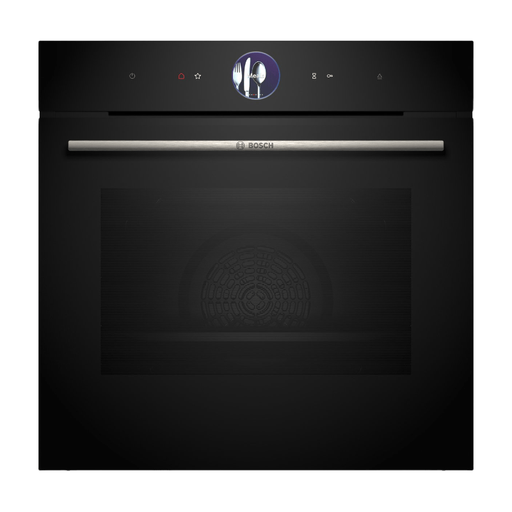 No image available
A built-in model to consider if you want to compare fan cooking with top-and-bottom heat.
The product description lists a 71-litre capacity and five shelf positions. You’ll need a suitable housing space, adequate ventilation and installation by a qualified electrician.
 No image available
A freestanding model to consider if you’re looking for convection heating and a baking rack with multiple shelf positions.
The product information lists a 35-litre capacity, a four-tier baking rack and a built-in thermometer. Check the dimensions and whether your cake tin will fit at the shelf height you want.
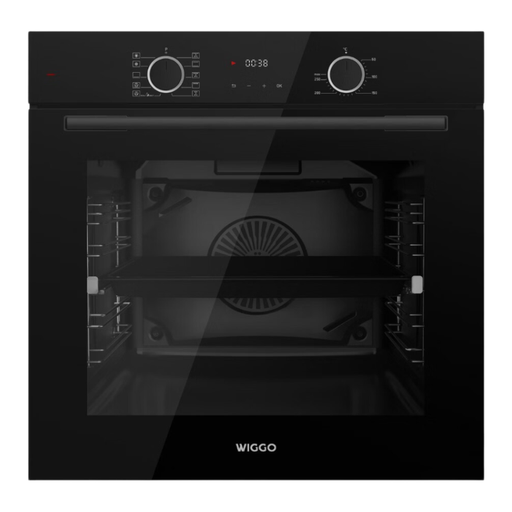 No image available
A built-in option to consider if you want to be able to use both convection and top-and-bottom heat.
The product description lists ten functions and four included accessories, including a baking tray. Check that the stated housing dimensions are suitable for your kitchen.
 No image available
A built-in model to consider if you want to compare fan cooking with top-and-bottom heat.
The product description lists a 71-litre capacity and 3D fan cooking; the product information says you can bake on up to three levels. Check whether your tins will fit at the same time and whether the housing dimensions are suitable.
 No image available
A freestanding model to consider if you’re looking for convection and a choice of oven settings.
The product description lists a 30-litre capacity, 1200 W and a temperature range of 100–230 °C. The appliance also has two hotplates, so it needs a flat, heat-resistant surface and adequate ventilation.
No. First, follow your recipe and your oven’s instruction manual. Bosch explains that fan cooking circulates heat, but can also dry food out more quickly; conventional top-and-bottom heat is a useful alternative for delicate bakes.
Compare the tin’s dimensions with the usable internal space and check that there’s enough room on the shelf. For a built-in oven, also check the required housing dimensions; the capacity in litres alone won’t give you the answer.
Consider the ingredients and their storage instructions. The Netherlands Nutrition Centre advises throwing away foods that normally need to be chilled if they’ve been kept unrefrigerated for more than two hours. Apply this advice to chilled fillings or toppings.
Not for that alone: if a product is faulty in the Netherlands, the retailer is already responsible for offering a solution. The Dutch Government explains this responsibility; compare the terms of a paid extended warranty with the rights you already have.
Yes. According to the Dutch Government, electrical appliances placed on the market in the EU must carry a CE marking. Check the marking on the specific appliance; a brand or model name on its own doesn’t prove that it’s present.