
If you’re unsure about tumble drying
You want to clean your blanket without damaging the fabric or finish with an unsuitable drying programme. The care label tells you which options are suitable.


First, check the care label on your picnic blanket: being machine washable doesn’t automatically mean it’s suitable for tumble drying. If tumble drying is allowed and you’re short on drying space, compare the drying capacity and the duration of the full programme. If tumble drying is prohibited or you have enough room to air-dry it, washing and hanging it up may be a better option. The Dutch Consumers’ Association reports that a combined cotton programme takes almost seven hours on average. Milieu Centraal points out that a washer-dryer uses more energy when drying than when washing and drying separately.
You want to clean your blanket without damaging the fabric or finish with an unsuitable drying programme. The care label tells you which options are suitable.
You may be looking for one appliance that washes and, only if the care label allows it, dries. Check the drying capacity, not just the washing capacity.
Compare the full programme duration with the time you have available. If the blanket needs to be hung up, factor in the time it will take to air-dry as well.
Choose this when: the care label allows tumble drying and the load is within the drying capacity.
Bear in mind: a long full cycle and the energy used for drying.
Choose this when: the blanket is machine washable but the care label says not to tumble-dry it, or you’d rather air-dry it.
Bear in mind: you’ll need a suitable place and enough time for the blanket to dry.
Choose this when: you have room for two appliances and regularly tumble-dry other laundry that’s suitable for it.
Bear in mind: the appliances need separate space, and you’ll have to move the laundry from one to the other.
| What to consider | What should you look for? | Who is this important for? |
|---|---|---|
| Washing and drying instructions | Check the permitted washing temperature and drying instructions on the care label of your blanket. | If I want to care for the fabric and finish according to the label, I’ll first check whether tumble drying is allowed; around 31% of consumers say blanket care is their top priority. |
| Load capacity | Compare the blanket’s size and weight with the washing and drying capacities of the exact model. | If you want to avoid washing a blanket only to find you can’t dry the intended load, check both capacities; around 25% of consumers put load capacity first. |
| Time before the working week | Check the duration of the full programme. If you’re hanging the blanket up to dry, allow time for that too. | If I need the blanket before the working week, I’ll check the full cycle time or allow for air-drying; around 25% of consumers say the finishing time is their top priority. |
| Energy use when drying | Compare the figures for the full wash-and-dry cycle on the exact models, and consider how often you’ll use the drying function. | If you’re weighing up the expected use of the drying function against running costs, check the figures for the full cycle; around 19% of consumers put running costs first. |
A machine-washable blanket may still have a ‘do not tumble-dry’ instruction. A drying programme doesn’t override the care label.
Check the care label on your blanket before choosing a washing or drying programme.
A washer-dryer may be able to wash more laundry than it can dry in one continuous cycle. So a higher washing capacity doesn’t guarantee that the same load will dry in one go.
Compare both capacities with the load you want to process. Bear in mind that some items may need to be dried separately or hung up.
According to the Dutch Consumers’ Association, a combined cotton programme takes almost seven hours on average. The duration may vary depending on your programme and load.
Plan around the full cycle you’ve selected. If the blanket needs to be hung up, allow time for that drying too.
Figures for washing alone don’t tell you how much energy a full wash-and-dry cycle uses.
Compare the label information for the full cycle and take into account how often you actually tumble-dry laundry that’s suitable for it.
Bosch lists a washing capacity of 10,5 kg and a drying capacity of 6 kg for model WNG254A7NL. This model can be a useful reference when comparing a larger washing load with the separate drying limit.
Samsung lists a washing capacity of 9 kg and a drying capacity of 6 kg for model WD90HG6U94BEU3.
For the freestanding BM5DFT4841A, Beko lists a washing capacity of 8 kg, a drying capacity of 5 kg and a depth of 57 cm.
AEG lists both condenser models and the LWR9506BN4 heat pump washer-dryer, with stated capacities of 10 kg for washing and 6 kg for drying.
LG lists a washing capacity of 9 kg and a drying capacity of 6 kg for the F4DR3096N3W.
This selection includes washer-dryers and a set of separate appliances. Tumble drying is only an option if the care label on your blanket allows it; compare the drying capacity with the load you want to dry.
 No image available
For anyone looking for one appliance to wash and, if the care label allows it, tumble-dry.
Stated capacity: 9 kg for washing and 5 kg for drying. Use the separate drying capacity as your guide when planning a drying load.
 No image available
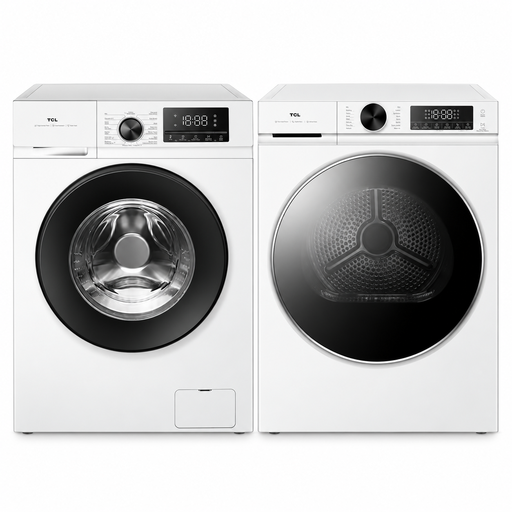
For anyone considering two separate appliances instead of one washer-dryer.
The product name lists a washing machine and a heat pump tumble dryer, each with an 8 kg capacity. Check the blanket’s care label and the capacity of the appliance you plan to use for drying it.
 No image available
For anyone looking for one appliance for washing and permitted tumble drying.
The product name lists an 8 kg washing capacity and a 6 kg drying capacity. Check that your blanket’s drying load is within the relevant capacity.
 No image available
For anyone looking for one appliance to wash and, if the care label allows it, dry as well.
The product name lists a 9 kg washing capacity and a 6 kg drying capacity. Bear the drying capacity in mind when running a continuous cycle.
 No image available
For anyone looking for one appliance with the generous washing and drying capacities stated in the product name.
The product name lists an 18 kg washing capacity and an 11 kg drying capacity. These capacities don’t tell you whether your blanket can go in the tumble dryer; follow its care label.
No. Being machine washable doesn’t automatically mean a blanket can go in the tumble dryer. According to the product information, the Quechua blanket described by Decathlon Netherlands can be washed at a maximum of 30 °C, but must not be tumble-dried. Follow the care label on your own blanket.
The drying capacity may be lower than the washing capacity. For example, Bosch lists a maximum washing capacity of 10,5 kg and a drying capacity of 6 kg for the WNG254A7NL. Compare both capacities with the load you want to process.
It depends on the programme and the load. According to the Dutch Consumers’ Association, a combined cotton programme takes almost seven hours on average. Check the duration of the full cycle for your chosen model, rather than just the duration of a quick wash programme.
If you want to wash and dry, compare the figures for the full wash-and-dry cycle, not just those for washing. The European Commission outlines information for washer-dryers including energy and water consumption, and cycle duration.
Follow the installation instructions for the exact model. The Dutch Consumers’ Association recommends, among other things, a level, sturdy surface, removing the transit bolts and correctly connecting the water supply and drain.