
Vandaag of morgen in huis

Kwaliteit gegarandeerd

Welkomstaanbiedingen ontgrendelen: GRATIS bezorging | Tot 80% korting | Gratis 30 dagen JoyPlus-proefperiode
Download de app
Pickled vegetables are a handy way to add flavour to a sandwich, salad, barbecue or international dish. But gherkins, pickled vegetables and other pickles vary widely in flavour, size, ingredients and how they’re used. A large jar isn’t automatically better value, and an eye-catching label tells you little about how much veg you’ll actually get.
As a Joybuy Product Recommendation Officer, I focus on the practical details in product information. That helps you separate marketing claims from facts you can check, so you can choose the right option for you – whether that’s sweet and sour gherkins, pickled cucumber, pickled onions, kimchi, atjar tjampoer or pickled jalapeños.
A 720 ml jar may look generous, but some of its contents are water, vinegar and spices. So check the drained weight when it’s available. g'woon Sour Onions, for example, come in a 320-gram jar with a drained weight of 190 grams. That gives you a more realistic idea of how many onions you’ll be serving.
The term pickles covers a range of flavour profiles. Sweet and sour gherkins often contain sugar as well as vinegar, while Turkish and Russian pickles may have a fresher, more spiced or saltier flavour. A product with chilli or jalapeño can also be considerably hotter than ordinary pickled cucumber.
So check the order of ingredients. Ingredients are listed from highest to lowest quantity. Also check the sugar and salt content per 100 grams, especially when comparing different brands.
Mustard seeds, sulphites, sesame and possible fish or shellfish ingredients are found in various types of pickled vegetables. For example, g'woon Sweet And Sour Gherkins contain mustard. Jixiangju pickled radish lists sesame and sulphites, while product information for Jongga Kimchi says it may contain fermented anchovy or prawn sauce.
Always check the latest label. Products often need to be refrigerated after opening. Don’t use damaged packaging, even if the best-before date hasn’t passed.
First, think about how you’ll use your pickled vegetables:
A strong flavour doesn’t always work as a neutral side. A classic gherkin may be more practical for everyday use, while a product with chilli, cumin, garlic or Sichuan pepper may be a better match for a particular recipe.
The vegetable content matters in products made with a mix of ingredients. According to the product information, Green Dragon Sour Pickled Green Mustard is made up of 85% mustard greens. The label for Sum & Sam Atjar Tjampoer lists 56% vegetables, including white cabbage, carrot, pepper, onion and leek.
Also look out for added ingredients such as sugar, sweeteners, preservatives, colourings and food acids. These aren’t necessarily a problem, but they can affect flavour, allergen information and nutritional value.
A small pack is handy if you only use pickled vegetables now and then. A larger jar may suit families, barbecues or regular use better. Compare not only the price per pack, but also the price per 100 grams or per drained weight, if available.
Check the instructions for pouches. According to the product description, Van Holten’s Hot Mama Pickle can be stored outside the fridge before opening; once opened, it should be eaten straight away or refrigerated in its brine. Always follow the instructions on the packaging.
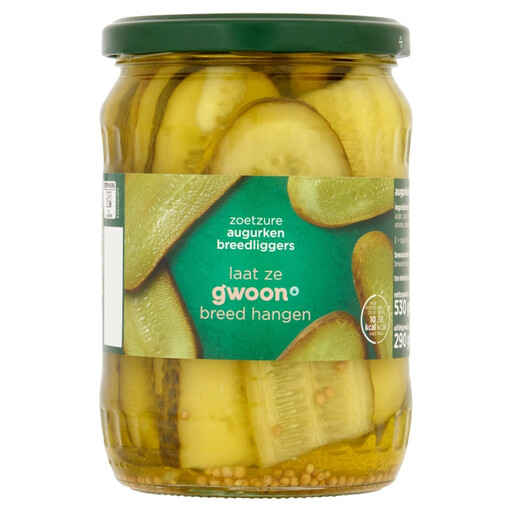
Why it suits this profile: A versatile jar for sandwiches, salads, snacks and everyday meals. Its sweet and sour flavour is familiar and works in all sorts of dishes.
The ingredients and nutritional information are clearly listed. Per 100 grams, the product contains 7.5 grams of sugar and 0.7 grams of salt, making it easy to compare with other sweet and sour gherkins.
530 grams, a sweet and sour flavour, and mustard seeds listed as an allergen.
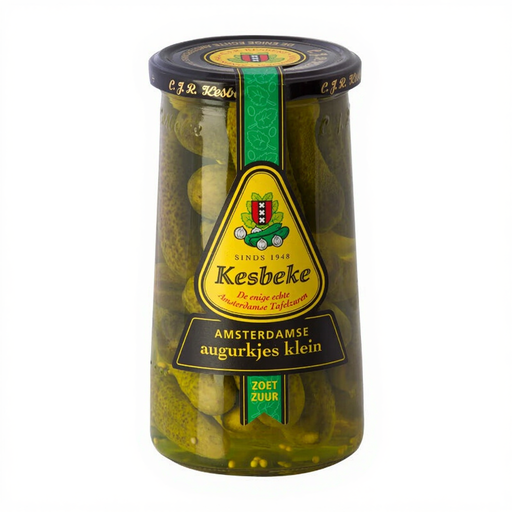
Why it suits this profile: A generous jar of pickled cucumber for fans of classic Dutch pickles with bread, stamppot, cheese or snacks to share.
The product information lists cucumber, vinegar, salt, mustard seeds and natural flavourings. The stated salt content is 0.25 grams per 100 grams.
720 ml, 17 kcal per 100 grams and a classic vinegar base.
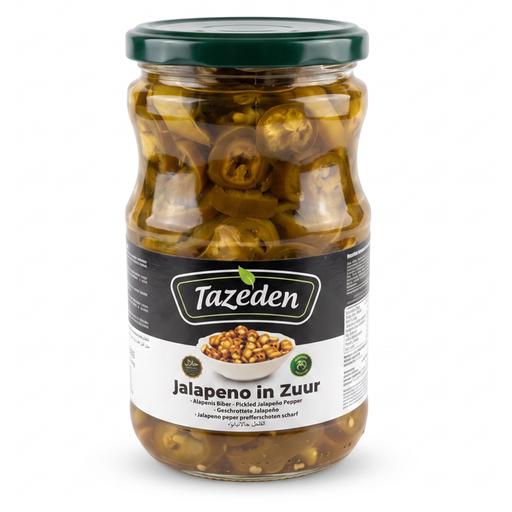
Why it suits this profile: A good choice if you like a spicy addition to burgers, wraps, tacos, pizza, salads and mezze.
The product description clearly states that it’s spicy, sour and crunchy. With 4.9 grams of salt per 100 grams, it’s worth keeping an eye on portion size.
600 cc pack, 27 kcal per 100 grams and suitable for hot and cold dishes.
We’ve put together a complete, up-to-date list of products that meet these strict selection criteria and current European safety requirements.
Gherkins are usually pickled cucumbers, often flavoured with vinegar, salt, sugar and spices. Pickled vegetables are a broader category that also includes pickled onions, carrots, cabbage, radish, jalapeños and mixed vegetables.
Always follow the label. Many jars need to be refrigerated after opening and kept tightly sealed. Use clean cutlery and keep the vegetables covered by the liquid as much as possible. Check the smell, colour and packaging before eating the product.
Pickled ginger and pickled radish go well with sushi and rice dishes. Kimchi is a good match for noodles, rice and Korean dishes. According to its product description, Green Dragon pickled mustard greens can be served as a side dish or added to stir-fries and noodles. For an Indonesian meal, atjar tjampoer is a natural choice, with its mix of cabbage, carrot, pepper, onion and leek.
