
Vandaag of morgen in huis

Kwaliteit gegarandeerd

Welkomstaanbiedingen ontgrendelen: GRATIS bezorging | Tot 80% korting | Gratis 30 dagen JoyPlus-proefperiode
Download de app
A jar of pickled vegetables may seem easy to choose. Yet gherkins, pickled peppers, pickled chillies, kimchi and Asian pickled vegetables vary considerably in flavour, ingredients, size and storage convenience. A large jar can be impractical for a small household, while a small pouch may offer poor value if you cook regularly.
As a Joybuy Product Recommendation Officer, I focus primarily on verifiable information: ingredients, allergens, nutritional values, net and drained weight, origin and storage instructions. Marketing language tells you less than what is actually stated on the label.
A 1,700 ml jar sounds appealing for barbecues, catering or large families. For occasional use, a smaller pack may be more practical. Also pay attention to the drained weight: the amount of vegetables left after draining. For Kesbeke Pickled Cucumbers in a 1,700 ml jar, the stated net weight is 1,500 g and the drained weight is 900 g. This gives you a more realistic idea of how many gherkins you are actually buying.
The heat level of pickled peppers is not always expressed on a standardised scale. A product description may call something mildly spicy, while your own taste experience may differ. Check the type of pepper, the ingredients list and the product description. For example, Sera Meksika Biber Tursusu contains hot peppers, while Sera Biber Tursusu is described as mildly spicy.
Sweet-and-sour gherkins often contain sugar in addition to vinegar and salt. Kvass Russian Pickled Cucumbers lists 9.1 g of sugar and 0.70 g of salt per 100 g. Sera Sus Biber Tursusu contains 3.935 g of salt per 100 g. Compare the nutrition table rather than relying solely on the front of the jar.
Not all pickled vegetables are made in the same way. Vegetables pickled in vinegar generally develop their sour flavour through vinegar or food acids. With fermented vegetables, such as certain types of kimchi and pickled cabbage, fermentation processes play a role. The product description and ingredients list provide more clarity than general wording on the packaging.
Sera Lahana Tursusu is described in the product information as fermented and pickled cabbage containing cabbage, water, salt and vinegar. Green Dragon Sour Pickled Green Mustard lists 85% mustard greens and acids such as acetic acid and citric acid. These products are suitable for different uses, but they are not necessarily prepared in the same way.
Always read the complete ingredients list, particularly for kimchi, Asian pickled vegetables and spicy snacks. Potential points to watch for include:
JONGGA Kimchi Napa Cabbage Cutted states that the product may contain fermented anchovy or shrimp sauce. Bibigo Kimchi Ambient 150 g does not list any of the 14 major EU allergens in the supplied product information, but, like other products, advises checking the current packaging.
Under the EU Food Information Regulation, allergens must be clearly indicated. The packaging remains the definitive source, as recipes and labels may change.
Unopened jars and pouches can often be stored in a cool, dry place away from direct sunlight. After opening, storage advice varies by product. Many products should be refrigerated and kept tightly sealed. Whenever possible, keep the vegetables submerged in the brine and use clean utensils. Always check the best-before date and the instructions on the packaging.
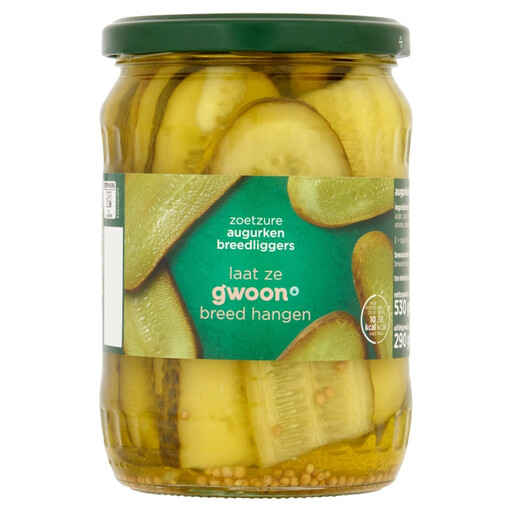
Why This Fits Their Persona: An accessible everyday jar for sandwiches, salads, sharing boards and regular meals.
The pack is larger than a snack-size portion, but not so large that it becomes excessive for everyday use. The nutrition table lists 7.5 g of sugar and 0.7 g of salt per 100 g.
530 g net weight; sweet-and-sour flavour; contains mustard as a declared allergen.
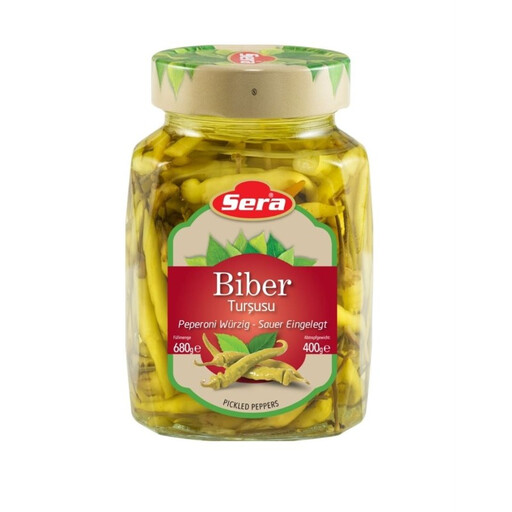
Why This Fits Their Persona: For lovers of Turkish pickles and pickled peppers to serve with mezze, grilled dishes and salads.
The product information explicitly states that it has a mildly spicy flavour and comes in a 680 g jar. Check the complete ingredients list on the current packaging.
Product originating from Türkiye according to the product information; suitable for sharing and multiple meals.
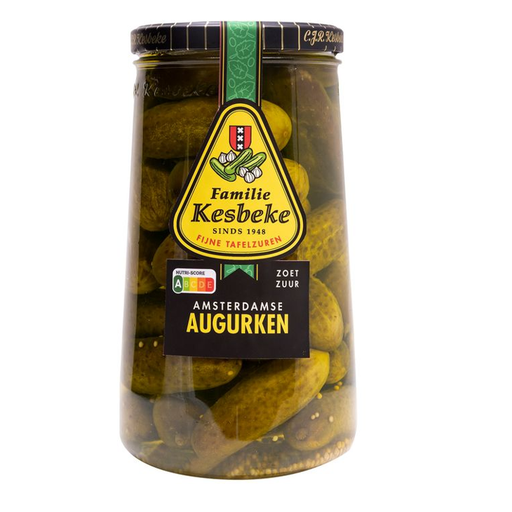
Why This Fits Their Persona: For catering businesses, large households, barbecues and regular consumers of Dutch table pickles.
The stated drained weight of 900 g prevents you from judging the product solely by its generous volume. Refrigerate the jar after opening.
1,500 g net weight; 900 g drained weight; sweet-and-sour brine with mustard seeds.
Browse a current selection of spicy fermented vegetables and compare flavour, size, ingredients and uses.
No. Pickled vegetables may be prepared with vinegar, citric acid or lactic acid. Some kimchi and cabbage products are fermented, but check the product description and ingredients list to confirm.
This varies by product. Follow the instructions on the packaging, refrigerate the jar or pouch when indicated and keep the vegetables submerged in the liquid. Do not use packaging that is damaged or contents with an unusual smell, colour or texture.
Check the drained weight, packaging and shelf life. A large jar such as the 1,700 ml Kesbeke is suitable for high-volume use, while portion packs such as 80 g kimchi are more convenient for sampling, lunch or a small household. Also check for allergens such as mustard and sulphites before serving.
