
Vandaag of morgen in huis

Kwaliteit gegarandeerd

Welkomstaanbiedingen ontgrendelen: GRATIS bezorging | Tot 80% korting | Gratis 30 dagen JoyPlus-proefperiode
Download de app
Pickled vegetables make a handy side dish with rice, noodles, congee, soup or a quick salad. However, jars, pouches and single-serve packs can vary considerably in flavour, salt content, ingredients and convenience. If you choose based only on an appealing product name or a large pack size, you could end up with something that’s too salty, needs using up quickly or doesn’t suit the dish you had in mind.
This guide will help you compare pickled vegetables using verifiable product information. That way, you can find the right option for an Asian meal, an Eastern European salad or a ready-to-serve side dish.
A large jar or multipack may cost less per portion. However, once opened, the product often needs to be refrigerated and used within a short time. For one person or a household that doesn’t eat pickled vegetables regularly, small, individually packed portions may be more convenient.
So, check:
Marketing terms don’t necessarily tell you how sour, spicy or salty a product is. Check the ingredients and nutritional information instead. Salt is relatively high in the nutrition table for many Asian pickled vegetables. This makes them useful as a flavouring, but less suitable for eating in large quantities.
A product with chilli, sesame oil, garlic or Sichuan pepper may also taste noticeably stronger than plain pickled vegetables. So, check whether you’re looking for Chinese pickled mustard greens, sweet and sour vegetable salad or a spicy variety.
You can usually eat ready-to-eat Asian vegetables straight from the pack. Some are intended mainly as a condiment, while others work better in soup, a stir-fry or a salad. Also check whether the pack includes extra seasoning sachets or sauce, and whether the contents need to be eaten straight after opening.
Chinese pickled mustard stems, zhacai and pickled mustard greens often refer to pickled parts of mustard plants, but their texture and seasoning can vary. A product containing around 89 to 94% mustard stem has a different composition from a mixed vegetable salad with cucumber, carrot and pepper.
Look out for terms such as:
Read “fermented” as a description of the production process. It doesn’t automatically guarantee a particular flavour or nutritional value.
Compare the nutritional information per 100g. For example, the product information provided shows salt levels of up to around 5.0–5.75g per 100g for some mustard vegetable products. This is worth bearing in mind if you use the product often.
Also check the allergens:
Always use the latest packaging as your guide. Recipes, allergen information and packaging details can change.
Individual 70g or 80g packs are handy for lunch, student meals and a single serving of rice or noodles. An 820ml or 900ml jar is a better fit for a family or a meal where several people will have salad as a side dish.
In particular, check:
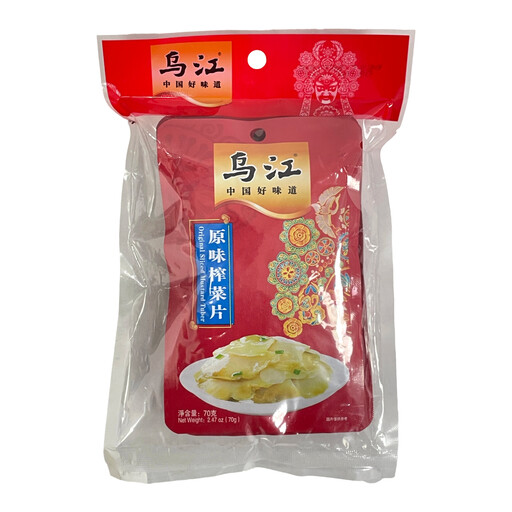
Why it suits this profile: The four individual 70g pouches are a convenient choice for smaller households, students or anyone wanting to try pickled mustard stems for the first time.
The single-serve packs help prevent a large quantity being left unused after opening. According to the product description, it’s ready to eat.
280g in total, with 94% mustard tuber according to the product information. A good match for rice, noodles or congee.
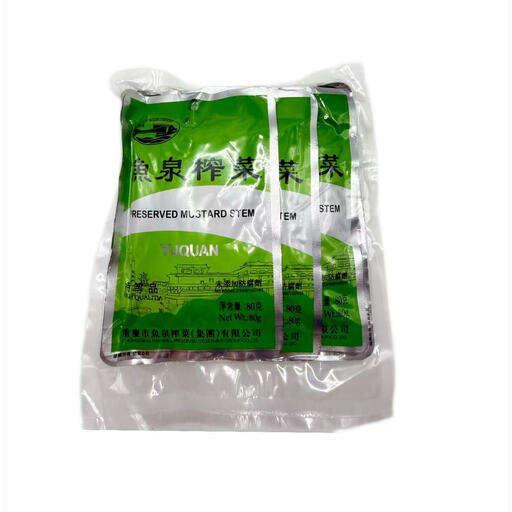
Why it suits this profile: The shredded texture, five individual portions and 89.05% mustard stem make this a good choice for anyone who pays close attention to ingredients and texture.
The product information clearly states the amount of mustard stem. That makes it easier to compare the ingredients instead of relying on the name alone.
80g per portion, ideal with congee, rice and noodles; the label lists mustard and sesame.
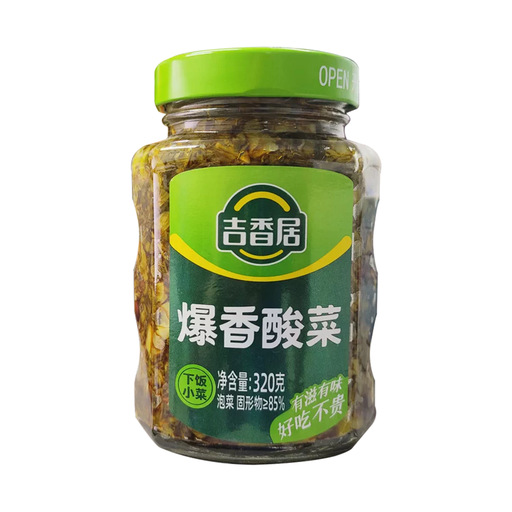
Why it suits this profile: The combination of mustard greens and yardlong beans, with chilli, ginger and garlic, is ideal for Chinese stir-fries, soups and noodle dishes.
The product information suggests several ways to use it. So, it’s not just a side dish to serve on its own – you can also add it to hot meals.
320g, with a bold seasoning, and suitable for stir-fries, soup and noodles. The label lists soya, wheat and sulphites.
We’ve put together a full, up-to-date list of products that meet these strict selection criteria and the current European safety requirements.
According to the product descriptions, many products in this category are ready to eat. Still, check the label, especially for products with a separate seasoning sachet or sauce. After opening, the instructions may say to eat the contents straight away or keep them refrigerated.
It depends on the product. Some single-serve packs are intended to be used in one go. For jars, follow the instructions on the packaging; they often need to be refrigerated after opening. The use-by date doesn’t necessarily apply in the same way once the packaging has been opened.
Yes. Chinese pickled mustard greens add a salty, savoury flavour to cold noodles and salads. For a milder, sweet and sour vegetable salad, choose a mixed variety with cucumber, pepper, carrot and vinegar. If you’re using it with salad dressing, consider the total salt and sugar content.
