
Vandaag of morgen in huis

Kwaliteit gegarandeerd

Welkomstaanbiedingen ontgrendelen: GRATIS bezorging | Tot 80% korting | Gratis 30 dagen JoyPlus-proefperiode
Download de app
Are you looking for pickled mustard tuber for rice, noodles or congee? Then you’ll quickly come across zhacai: a Chinese pickled vegetable with a firm bite and a salty, savoury flavour. The range may seem straightforward, but packs vary widely in salt content, portion size, seasoning and use.
A wrong choice becomes obvious when you eat it: a product can be too salty for everyday use, too spicy for the family, or simply inconveniently large. With the points below, you can compare pickled mustard stem, Chinese pickles and other ready-to-eat Chinese vegetables in a practical way.
Words like “original flavour”, “light” or “mild spicy” don’t always tell you enough about the final taste. Always check the ingredients list too. Chilli, garlic, oil, sugar, soy sauce and spices can significantly change the flavour profile.
A mild variety can still be quite salty. For example, Wujiang Light Preserved Mustard Tuber states 7.0 grams of salt per 100 grams. That’s a more concrete point of comparison than the name on the front.
Pickled vegetables are preserved with salt. That means small portions are often enough as a side dish or flavour enhancer. Compare the salt content per 100 grams, not just the amount in the packet.
The values in the range vary. WuJiang Spicy Pickled Mustard Tubers states 3.4 grams of salt per 100 grams, while Jixiangju Reduced-Salt Preserved Mustard Tuber Heart states 11 grams of salt per 100 grams. “Reduced-salt” does not automatically mean the product is low in salt in absolute terms.
An 800-gram pack can be good value if you regularly make rice, noodles, bao or stir-fries. For occasional use, individual 70 or 80-gram packets are often more convenient. Once opened, pickled mustard tuber should generally be kept refrigerated and consumed promptly, according to the product information.
First, check the nutrition table and ingredients. Look out for:
A product with a lot of oil is not the same as a simple pickled mustard stem. For example, Ji Xiang Ju Crunchy Choy Sum contains oil, chilli and radish, and states 17.7 grams of fat per 100 grams. That suits a richer flavour enhancer, but is less suitable if you’re looking for a simple, dry topping.
Zhacai is sold as strips, slices, chunks or a whole pickled heart. The shape affects how you use it:
The product description may mention a crunchy texture, but the experience also depends on preparation and storage. Rinsing can reduce the salty taste, but it usually makes the flavour milder too.
For a first try, sizes of 70 to 100 grams are manageable. If you cook rice and noodles often, multipacks or a larger bag may be better. Always check the net weight: “80g × 4” means 320 grams in total.
Store unopened packets according to the label in a cool, dry place. Once opened, refrigeration and prompt consumption are usually recommended. For exact shelf life and storage instructions, refer to the packaging.
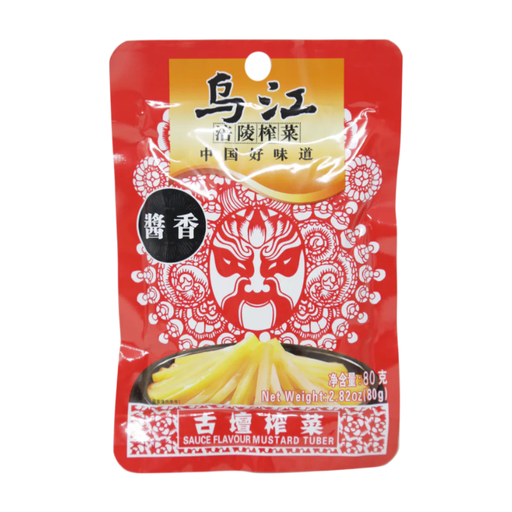
Why this fits the profile: The 80-gram portion is manageable for anyone trying zhacai for the first time. The soy sauce flavours work well with rice, noodles and as an ingredient in a stir-fry.
The net weight is clear, and the product information states 4.8 grams of salt per 100 grams. This lets you compare the taste and nutritional values in advance.
80 grams, ready to serve and, according to the product description, suitable as a side dish or cooking ingredient.
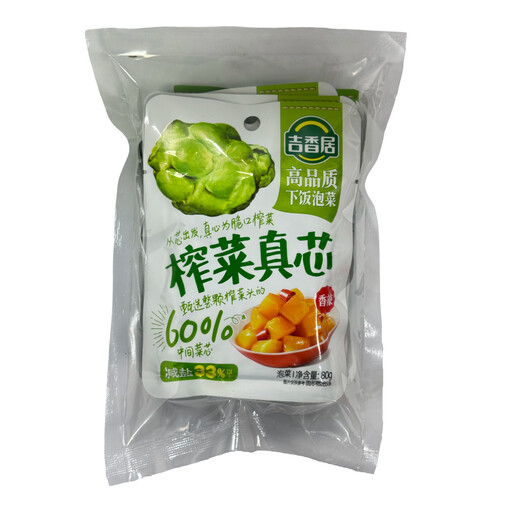
Why this fits the profile: The five individual portions are ideal for households that want to serve a ready-to-eat Chinese side dish several times a week.
The portions limit unnecessary long-term storage after opening. The product information also states 4.1 grams of salt per 100 grams, so you can compare with confidence.
400 grams total, individual packs and, according to the product description, suitable for congee, rice and stir-fries.
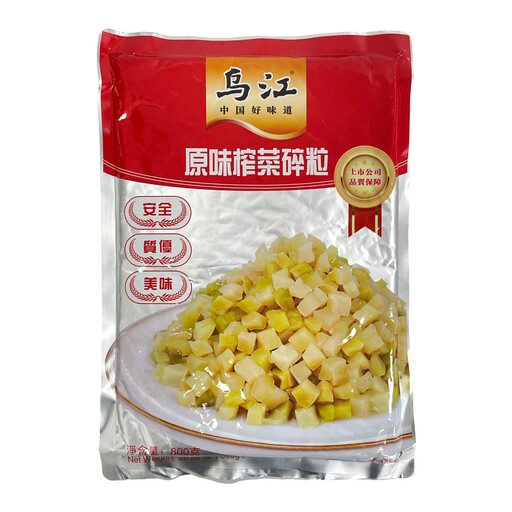
Why this fits the profile: The large size suits cooks who frequently make rice, noodles, bun fillings or stir-fries and use Chinese pickled vegetables regularly.
You’re not paying for small individual packets when you use the product heavily. The ingredients list 94% pickled mustard tuber, and the packaging states a salt content of 5.4 grams per 100 grams.
800 grams, crunchy chunks and suitable for direct consumption, noodles, rice, congee and fillings.
We’ve put together a full, up-to-date list of products that fully meet these strict selection criteria and comply with current European safety regulations.
Zhacai can be eaten straight from the packet as a Chinese side dish. For a milder flavour, you can briefly rinse the vegetable and drain it well. Use small amounts with:
A Sichuan pickled vegetable with chilli works well with spicy meals. A soy sauce variety has a darker, more savoury profile. If you want little heat, choose an original or light variety and add chilli yourself.
Zhacai is the Chinese name often used for pickled mustard tuber or pickled mustard stem. The cut and seasoning vary by product. So check the ingredients and nutritional values rather than just the name.
No, the product is ready to eat straight away according to the product descriptions. Rinsing is a practical option if you want to tone down the salty taste. Drain the vegetable afterwards before mixing it into rice, noodles or a stir-fry.
This varies by packet. The product information generally advises storing an opened packet in the fridge and consuming it promptly. Always follow the instructions on the label and use a clean spoon or fork when serving.
