
Vandaag of morgen in huis

Kwaliteit gegarandeerd

Welkomstaanbiedingen ontgrendelen: GRATIS bezorging | Tot 80% korting | Gratis 30 dagen JoyPlus-proefperiode
Download de app
A packet of pickled mustard tuber might seem straightforward at first glance: open and serve. Yet Chinese pickled vegetables vary greatly in salt content, size, seasoning and packaging. If you only look for words like "crunchy", "traditional" or "authentic", you could end up with a product that is too salty, doesn't suit your dish, or needs to be used up quickly after opening.
With this practical buying guide, you can compare zha cai, pickled mustard stem and other Chinese mustard vegetables on the points that actually matter for households in the UK.
An 80g pack is handy for one or two meals, but a multipack can be better value and more practical per portion. Don't just look at the front; check the net weight and the number of individual packets. A product with 80g × 4, for example, contains 320g in total.
Pickled vegetables are preserved with salt. The salt content can vary significantly from product to product. In the available product information, this ranges from 3.4g of salt per 100g for WuJiang Spicy Pickled Mustard Tubers to 11g per 100g for Jixiangju Reduced-Salt Preserved Mustard Tuber Heart. "Reduced-salt" is therefore a product description, not a guarantee that the product is low in salt.
One Chinese pickled vegetable comes in thin strips, another in chunks or slices. Some varieties contain chilli, garlic, oil or Sichuan pepper; others are mainly salty and savoury. According to the brands' own product descriptions, terms like "crisp", "mild spicy" and "traditional" are used to describe texture and flavour. So check the ingredients list rather than just the front of the packet.
Always compare the same unit: salt per 100g. This makes small packets and multipacks easier to compare. A high salt content can provide a pleasant contrast in a rice dish, but it can overpower when you use the vegetable in soup, stir-fry sauce or noodles.
If you prefer a milder flavour, you can choose a product with a lower stated salt value or briefly rinse the mustard tuber. For the Wujiang Light Preserved Mustard Tuber, the product information explicitly states that rinsing can reduce the salty taste.
Check whether, besides mustard stem, the product also contains chilli, sesame, soya, wheat, radish, oil, sweeteners or flavour enhancers. Mustard is listed as an allergen in several varieties. According to the product information, the Weijute multipack contains mustard, sesame and soya, among other ingredients. If you have an allergy or dietary requirement, the label on the packet you receive is the definitive guide.
Individual packets are ideal for lunch, travel, or a household that doesn't eat Chinese side dishes every day. A larger pack, such as 350g or 800g, is better suited to regular cooking, but requires more attention to storage after opening. Once opened, store products according to the label, usually in the fridge, and use them as soon as possible.
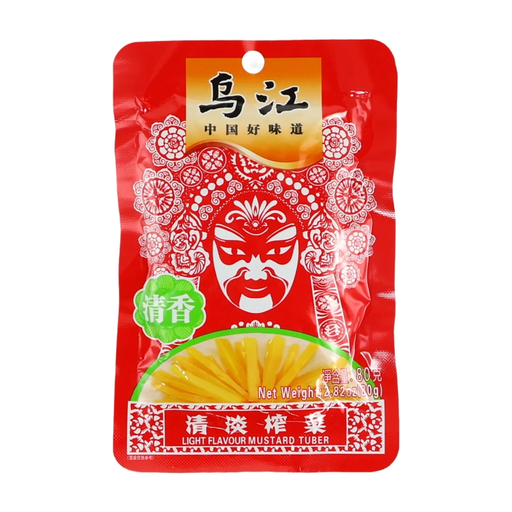
Why this fits the profile: The 80g portion is manageable for anyone wanting to try zha cai for the first time with rice, noodles or congee.
The product information mentions a milder, lightly salted variety and states 7.0g of salt per 100g. Rinsing before serving is possible.
80g per bag, crunchy texture and ready to eat; suitable as a side dish or ingredient.
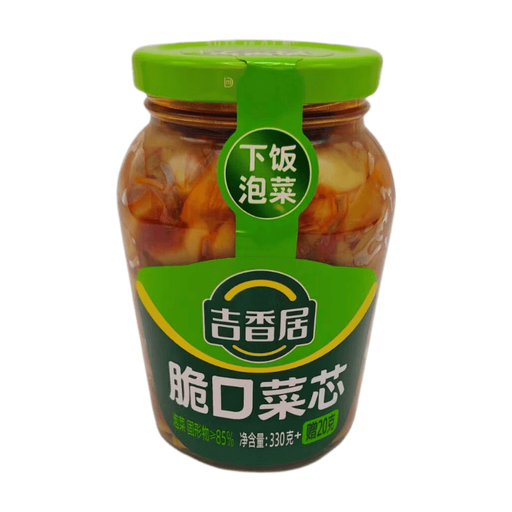
Why this fits the profile: The larger pack suits those who regularly enjoy a spicy pickled vegetable alongside their meals.
The product information states 350g, chilli oil and radish. This makes the flavour profile clearer than with a neutral variety.
Crunchy mustard tuber with oil, chilli and spices; can be used with rice, noodles, hotpot or stir-fry dishes.
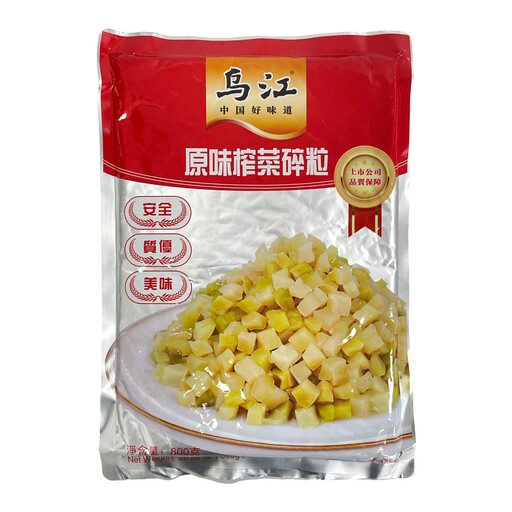
Why this fits the profile: The large size is aimed at households that use pickled mustard stem frequently in meals or as a filling.
The net weight of 800g is clearly stated. The stated salt value is 5.4g per 100g, so you can adjust portions to suit your dish.
94% pickled mustard tuber according to the product information; ready to eat and suitable for rice, noodles, congee and bun fillings.
We've put together a full, up-to-date list of products that fully meet these strict selection criteria and comply with current European safety regulations.
Zha cai usually refers to pickled mustard tuber or the thickened part of the mustard plant. Online shops also use terms like pickled mustard stem, mustard tuber and Chinese mustard vegetable. The exact cut and seasoning vary from product to product.
You don't need to if you like the flavour as it is. Rinsing can help if the vegetable is too salty. Pat the pieces dry afterwards if you want to use them in a stir-fry. Always check the usage instructions on the packet as well.
That depends on the product and the label. Many varieties need to be kept in the fridge after opening and consumed as soon as possible. Individual portion packs help reduce waste; large packs are more practical for frequent use but require more attention after opening.
