
Vandaag of morgen in huis

Kwaliteit gegarandeerd

Welkomstaanbiedingen ontgrendelen: GRATIS bezorging | Tot 80% korting | Gratis 30 dagen JoyPlus-proefperiode
Download de app
Pickled mustard greens add a salty, sour and savoury kick to rice, noodles, soup and stir-fries. However, not all packs are the same. One variety is intended as a ready-to-eat side dish, while another serves as a cooking base for Sichuan dishes. If you only look for words like “traditional”, “crunchy” or “spicy”, you could end up with a product that is too salty, doesn’t suit your recipe, or needs to be used up quickly once opened.
This buying guide from the Joybuy Product Recommendation Officer will help you compare labels and product types in a practical way.
An 800g pack can be handy for a restaurant or a household that cooks Chinese dishes often. For occasional use, portion packs of 70 to 100g are often more manageable. Once opened, many products need to be kept refrigerated and consumed as soon as possible. So check not only the price per kilo, but also how often you’ll use it and the storage instructions.
Suancai usually refers to sour, fermented mustard greens that are often used in soups and fish dishes. Zhacai is typically pickled mustard tuber or stem, often finely chopped and suitable as a topping for congee, rice or noodles. The naming can vary by brand and market. So look at the ingredients, cut shape and preparation method.
Pickled vegetables are preserved with salt and can therefore contain relatively high levels of salt. In the product information provided, the stated salt content ranges from 2.5g to 9.07g per 100g. That’s a big difference. Use a salty variety as a seasoning in small amounts, or rinse the product briefly if the pack allows it. According to the product information from Chuan Lao Hui, a quick rinse is intended to reduce the salty taste.
The cut shape determines how much preparation is needed. A ready-to-use finely chopped product can be served straight away, whereas coarse leaves need to be cut or briefly stir-fried first.
Look out for words like ready to eat, “serve directly” or “cooking recommended”. A product like Chuan Lao Hui is described as ready to use, but the instructions recommend a quick stir-fry followed by at least 5 to 10 minutes of simmering in certain dishes. Jixiangju Open-Flavor Pickled Mustard also contains a separate sachet of seasoned oil and is described as suitable for simple preparation or further seasoning.
For a quick lunch, choose a ready-to-eat side dish. For suancai fish, soup or a stir-fry, a variety without too much extra oil or sweetener is often easier to adjust to your own taste.
Check before you buy:
A product labelled “no artificial colours” does not automatically mean it is free from other additives. Read the full ingredients list. For vegans, a product is only suitable when the ingredients and packaging mention no animal-derived components, or when it is explicitly labelled as vegan. Check this for each item.
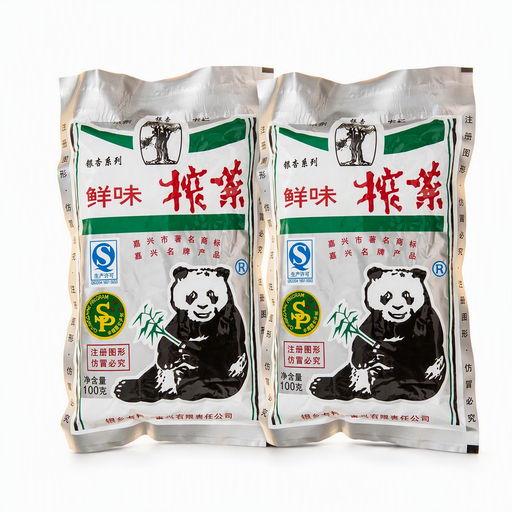
Why this suits the profile: The two 100g packs are handy for trying zhacai for the first time without buying a large stock. According to the product information, it is suitable with porridge, noodles and rice.
The portion pack limits waste after opening. The product information does list salt, flavour enhancer and preservative; check this if you want to limit additives.
Two separate 100g portions; stated nutritional value of 25 kcal and 5g salt per 100g.
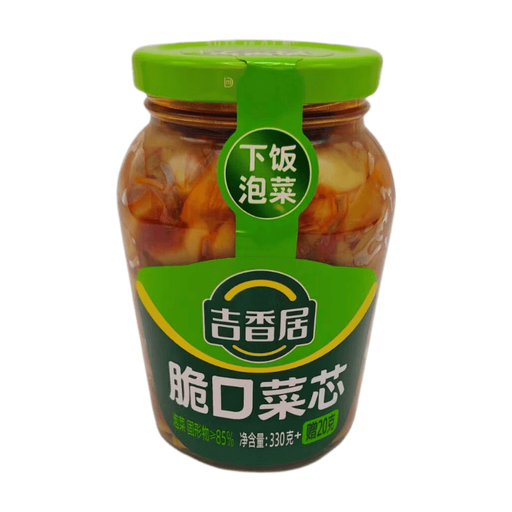
Why this suits the profile: According to the description, this pack combines pickled mustard tuber with oil, chilli, radish and spices. That suits anyone looking for a distinctive, ready-to-eat flavour and a crunchy texture.
The use is clear: serve directly, with rice or noodles, in a hotpot dip or as part of a salad. The stated 5.8g salt per 100g means small portions are advisable.
350g; ready-to-eat; combination with chilli and radish; according to the product information, no allergens listed.
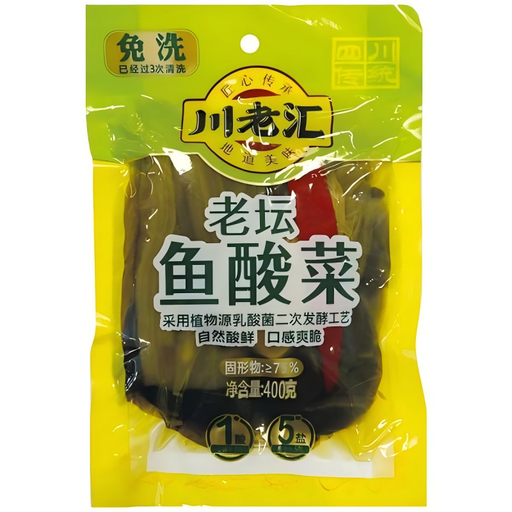
Why this suits the profile: The product information is specifically aimed at suancai yu, Sichuan fish with pickled greens. At 400g, this variety is practical for a full pan of soup or several cooking sessions.
The use and preparation instructions are clearly described. The stated salt content is 9.07g per 100g; a quick rinse and careful portioning are therefore important.
400g; suitable for soup and fish dishes; stated nutritional value of 20 kcal per 100g; ready for further cooking.
Store unopened products according to the label, usually in a cool, dry place away from direct sunlight. Once opened, keep packs in the fridge and use them quickly. Always check the packaging, especially for products with oil, spices or a separate sauce sachet.
For pickled greens for noodles, you can chop the greens finely and add them directly. For pickled greens for rice, a quick stir-fry works well to let excess moisture evaporate. For a soup or stew, you can rinse suancai first and then let it simmer. Add extra soy sauce or salt later; the pickled greens already provide plenty of flavour.
We’ve put together a full, up-to-date list of products that fully meet these strict selection criteria and comply with current European safety regulations.
Suancai is usually sour, fermented mustard greens, often made from leaves and used in soup or Sichuan fish dishes. Zhacai typically refers to pickled mustard tuber or stem, often crunchy and finely chopped. Always check the ingredients list and product description, as names can vary between products.
Not always. For a ready-to-eat side dish, rinsing can weaken the flavour. For a salty cooking variety, a quick rinse can help reduce excess salt. Gently pat or squeeze the moisture out of the greens before frying or adding them to a dish.
This varies by product. Follow the instructions on the label: many varieties need to be refrigerated after opening and consumed quickly. Do not use the product if the packaging is damaged, or if the smell, colour or texture is noticeably different.
