
Workshop host who wants to teach milk texturing
You want participants to make a small espresso-based drink and learn to froth milk themselves. A steam wand and enough time for each turn are important.


If you want to teach participants how to make espresso and froth milk, choose a manual espresso machine with a steam wand. If the priority is serving drinks quickly, a more automatic milk system may be a better fit. Check that the coffee and milk quantities can be adjusted to suit your small-format recipe, and that you have room for the complete set-up and cleaning. A latte or cappuccino programme won’t automatically make a piccolo latte.
You want participants to make a small espresso-based drink and learn to froth milk themselves. A steam wand and enough time for each turn are important.
You want to include coffee-making without requiring every participant to learn the same milk-frothing technique. Compare automatic milk systems with the preparation and cleaning they still require.
You’re sharing the worktop with cooking equipment. Measure the whole set-up, including any grinder and milk jug, rather than just the machine.
Choose this option if: participants will make espresso and froth milk themselves as part of the lesson.
Bear in mind: there are extra steps and cleaning between turns; you may need a separate grinder.
Choose this option if: participants will make espresso but don’t all need to froth the milk themselves.
Bear in mind: coffee is still made using a portafilter; check the terms of use for your workshop too.
Choose this option if: the cookery lesson is the main focus and participants want to make a milk-based drink with fewer manual coffee-making steps.
Bear in mind: participants get less practice with a portafilter or steam wand; check that the quantities suit your recipe.
Choose this option only if: simple coffee-making matters more than practising with ground coffee.
Bear in mind: a pod machine won’t steam the milk for you; consider the entire preparation process.
First decide which steps participants will do themselves and which recipe you want to make. The Consumentenbond describes espresso machines as different types, including portafilter machines, fully automatic machines and pod machines.
| Consideration | What to look for when buying | Who is this important for? |
|---|---|---|
| Milk texture for a small drink | Check how the milk is textured and whether you can adjust the coffee and milk quantities to suit your recipe. | I want participants to froth the milk themselves or have precise control over its texture; around 33% of consumers put milk texture at the top of their buying concerns. |
| Speed when participants take turns | Go through a complete preparation and cleaning cycle; don’t compare just the stated heat-up time. | When participants are making drinks one after another, I want to know how many steps each turn involves; around 27% of consumers prioritise serving speed. |
| Learning to make espresso | Decide whether participants need to practise with a portafilter, and check how the specific model is operated. | I want dosing and espresso-making to be part of the lesson, even if it takes longer; around 20% of consumers see this practice as a priority. |
| Space and the complete set-up | Measure the worktop and allow for any extra equipment and space for cleaning. | When cooking equipment shares the worktop with the coffee set-up, I want to know how much room everything will need together; around 20% of consumers prioritise the complete set-up. |
A programme name doesn’t tell you whether its coffee and milk quantities are right for your small drink.
Decide on the workshop recipe and check whether you can adjust the quantities on the specific machine.
The stated width doesn’t tell you how much extra room you’ll need for coffee, milk preparation and cleaning.
Map out the complete set-up on the available worktop.
A separate grinder or milk jug can take up extra space, so include them in your layout.
Heat-up time doesn’t cover the full process of preparing coffee, making the milk and cleaning the parts.
Compare the whole process for the number of participants you expect.
The Sage manual consulted specifies home use. This matters if you’re organising a paid or business workshop.
Before buying, ask about the terms for the specific model and how you intend to use it.
De’Longhi describes the Dedica Style EC685.BK EX:4 as a manual machine for a small worktop; the manufacturer gives its width as 15 cm.
The Bambino Plus combines a portafilter with milk texturing that, according to Sage, can be operated automatically or manually.
The fully automatic EP3349/70 is an option when participants want to make a milk-based drink with fewer manual coffee-making steps.
The Classic E24 is a good fit for a lesson where participants use a portafilter and steam wand.
This selection includes manual machines with a steam wand and a fully automatic option for a workshop where participants make a milk-based drink with fewer manual steps. Check the relevant electrical conformity documentation for the specific model; Business.gov.nl describes CE marking as part of the requirements for electrical equipment.
 No image available
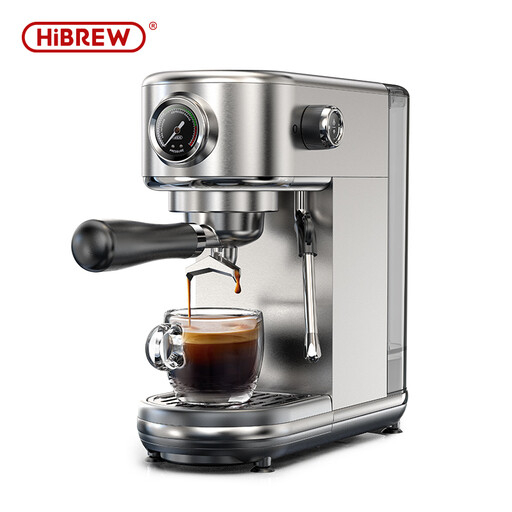
A good fit for a workshop where participants make espresso and froth milk themselves; check that the controls suit your recipe and lesson format.
The product name specifies 20Bar, a steam wand, a cup warmer and a removable 1.1 l water tank.
 No image available
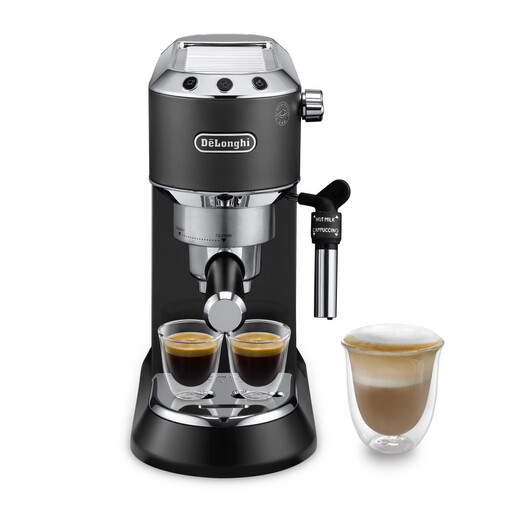
A good fit for a lesson where participants work with a portafilter and steam wand themselves; check how the preparation steps fit your workshop recipe.
The product name specifies 20Bar and a stainless steel finish.
 No image available
A good fit for a workshop where participants make coffee and froth milk themselves; check the specific model and allow space for the complete set-up.
The product name specifies a manual espresso machine in black.
 No image available
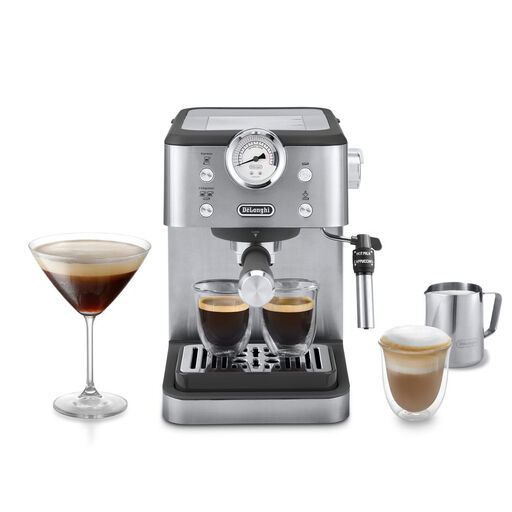
A good fit for a cookery-focused workshop where participants don’t need to do as many milk-making steps by hand; check that the quantities suit your small-format recipe.
The product name specifies the 5500 Series, model EP5547/90 and LatteGo.
 No image available
A good fit for a lesson where participants make espresso and froth milk by hand; check that the steps and quantities suit your recipe.
The product name specifies a metal finish, 15 Bar and manual cappuccino preparation.
First decide which small-format recipe you want to make during the lesson. A Dutch coffee specialist describes a piccolo as around 90 ml, made with ristretto and steamed milk. Treat this as a recipe example, not a required machine setting. Check that the machine’s coffee and milk quantities suit your recipe.
Check that the electrical specifications for the exact model are suitable for the available connection, and follow the manual for placement and cleaning. The Sage manual consulted is for the Bambino Plus; for another model, refer to its corresponding manual.
Compare how each model’s milk-contact parts are cleaned and what its descaling instructions require. These tasks vary from machine to machine, so check the manual for the specific model and include the necessary steps in your schedule between workshop sessions.
According to the NVWA, food safety rules also apply to private individuals who occasionally sell food or drink. The NVWA says businesses that prepare, process or sell food must follow a HACCP food safety plan or an applicable hygiene code, and inform customers about allergens, including milk. The requirements that apply depend on the circumstances of the sale and the business.