What should you look for when choosing?
Portafilter machine with manual steam wand
A good fit if: you want to texture the milk yourself and would rather use one main appliance.
Bear in mind: you’ll need space for the jug, access to the water tank and time to practise steaming by hand.
Portafilter machine for manual microfoam
A good fit if: you want to learn to control the milk preparation yourself; Sage lists a manual steam wand for the Bambino SES450BSS4EEU1.
Bear in mind: the space required for the complete set-up, including room for a separate grinder if needed.
Capsule machine with separate milk frother
A good fit if: easy espresso-making is important and you have room for a second appliance.
Bear in mind: the Essenza Mini doesn’t make hot, frothed milk; Nespresso lists this model as 8.4 cm wide.
Machine with automatic milk function
A good fit if: you want to do less frothing by hand; Sage lists automatic temperature and texture settings for the Bambino Plus SES500BSS4EEU1.
Bear in mind: check that the shot and milk volumes suit your small glass, and how much space you’ll need for cleaning.
For a piccolo on a small worktop, consider the complete set-up: the machine, how you’ll prepare the milk, and how you’ll fill and clean it. The table helps you compare the main considerations at a glance.
| Consideration |
What should you check? |
Who should pay particular attention? |
| Total worktop space |
Measure the width, depth and height, as well as the space needed to operate the machine; allow room for milk accessories and refilling. |
If my worktop space is limited, I want to know whether the complete set-up will fit; around 36% of consumers put the total space required first. |
| Milk texture |
Check whether the model can prepare milk for a small glass and whether you can control the amount yourself. |
If you want to make a small amount of finely textured milk yourself, look for control over the frothing; around 29% of consumers prioritise this. |
| Ease of preparation |
Consider every step, from making the espresso to pouring the milk, including how the milk function works. |
If I want to keep the number of steps to a minimum every day, I compare capsule operation with the work involved in steaming by hand; around 21% of consumers put convenience first. |
| Coffee system and maintenance |
Compare the coffee and accessories you’ll need, as well as how the milk components need to be cleaned. |
If you want to understand the supplies and cleaning routine involved in everyday use, compare the coffee system and milk components; around 14% of consumers prioritise both. |
Joybuy products
This selection mainly features portafilter machines for preparing milk by hand, as well as a capsule machine with a milk frother.
 No image available
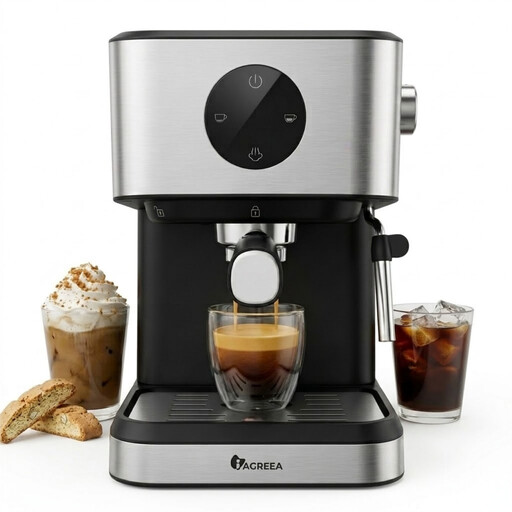
IAGREEA espresso machine with pressure gauge and steam wand
An option for anyone who wants to prepare espresso and milk by hand; allow space for a jug and take time to practise using the steam wand.
The product name lists a pressure gauge, a 1.1L reservoir and a cup-warming plate.
View at Joybuy
 No image available
IAGREEA 20 Bar espresso machine with steam function
A good fit if you want to prepare espresso and milk yourself; allow for the jug and the space needed to operate the machine when measuring your worktop.
The product name lists a 50 Oz reservoir and a cup-warming plate.
View at Joybuy
 No image available
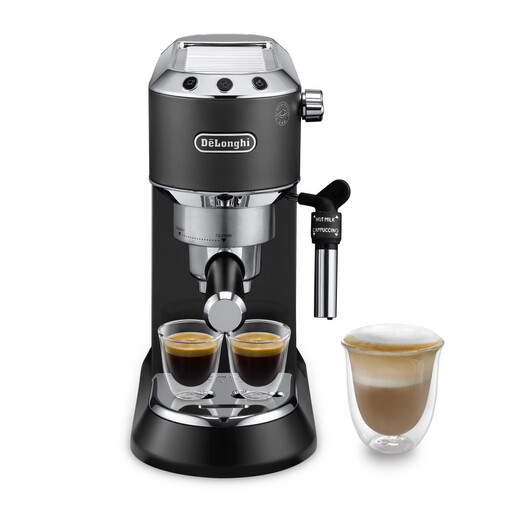
De’Longhi Dedica Style EC685.BK, black
An option for anyone looking for a manual espresso machine with a milk function; also measure the space for a jug and access to the water tank.
View at Joybuy
 No image available
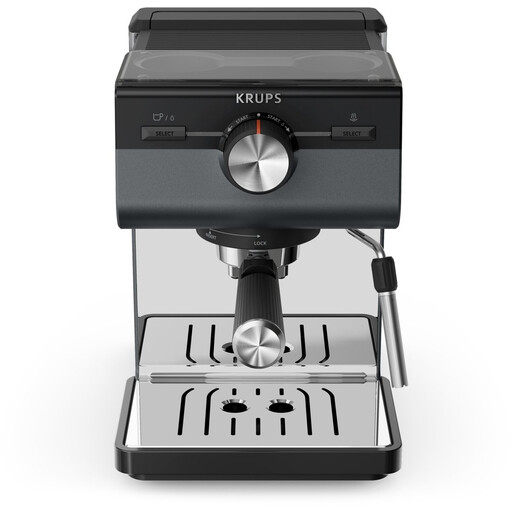
Krups Authentic+ C40 XP384G portafilter espresso machine
An option for anyone who wants to prepare espresso and milk themselves; allow space for the milk accessory and cleaning after use.
The product name lists a milk frother.
View at Joybuy
 No image available
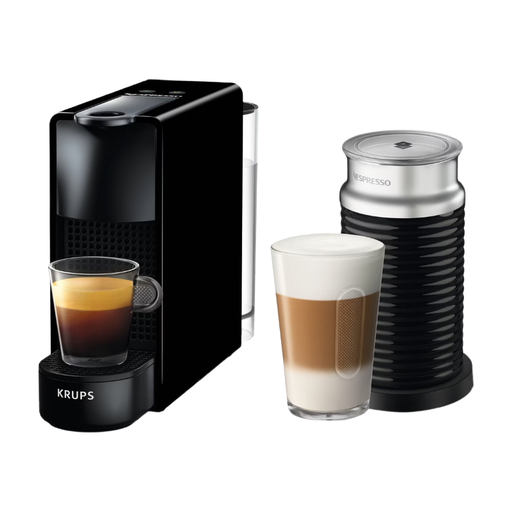
Nespresso Krups Essenza Mini XN1118 with milk frother
A good fit for anyone who wants to make espresso easily and prepare milk separately; also set aside space for the milk frother.
The product name lists a capsule machine and a milk frother.
View at Joybuy
Frequently asked questions
How can I tell whether a machine is suitable for my piccolo glass?
Check whether you can dose the espresso and milk separately so the amounts suit your glass. Perfect Daily Grind describes a piccolo as around 20–30 ml of espresso with 40–60 ml of steamed milk, although recipes can vary.
Do I need to allow extra worktop space for a slim portafilter machine?
Yes. Allow space for a jug under the steam wand and for refilling the water. De’Longhi lists the Dedica Style EC685.BK EX:4 as 149 × 330 × 305 mm; these are the machine’s dimensions, not those of the complete set-up.
How should I maintain parts that come into contact with milk?
Follow the instructions for the exact model and include the milk components in your cleaning routine. Consumentenbond explains that a steam wand, a separate frother and an automatic milk system each involve different cleaning steps.
Does a two-year manufacturer’s warranty cover all my rights in the Netherlands?
No. According to the Dutch government, there is no fixed statutory warranty period in the Netherlands: you’re entitled to a product that works as it should and can contact the retailer if it develops a fault. A manufacturer’s warranty is in addition to this and doesn’t replace that right.
What should I know about European product rules for an espresso machine?
If applicable harmonised EU rules for electrical equipment require a CE marking, the manufacturer is responsible for compliance and for affixing the mark. The European Union explains that a CE marking isn’t an independently issued quality certificate; check the documentation for the exact model.


