For piano music in a kitchen-diner, a single fixed Wi-Fi speaker is a good fit if you listen at home through a supported service and have a stable Wi-Fi network. A compatible stereo pair is worth considering if you have two suitable positions and want to hear the left and right channels separately. A portable Bluetooth speaker suits you if you move it around often, but it will need charging and won’t automatically offer the same network features. For wireless models, also check that the version on offer carries the CE mark.
Which listening setup is right for you?
At-home listener
You want to start playing music while cooking or eating without having to manage a Bluetooth connection every time. A Wi-Fi speaker is a good fit if your network is stable and your music service is supported; the Consumers’ Association highlights the importance of a good Wi-Fi network.
Listener looking for stereo sound
You have room for two compatible speakers and want to hear the separate channels in piano recordings. Sonos describes using two Era 100 SL speakers as a pair; check support for the exact models.
Moving between the kitchen and table
You want to take your speaker with you or move it further away from spills, and are happy to charge it as a trade-off. Sony lists a battery and a Stereo Pair function for the SRS-ULT30.
What should you look for when choosing?
Start with how you play music and where you’ll place the speaker. Then decide whether you want one device, two speakers as a stereo pair or a portable option.
One fixed Wi-Fi speaker
A good fit if: you mainly listen at home, have Wi-Fi and want to play music through a supported app or service.
The trade-off: you need a fixed spot and a stable network; one speaker doesn’t create a stereo pair with separate left and right channels.
Two compatible speakers as a stereo pair
A good fit if: you have room to the left and right of your usual listening spot and the channel layout of piano recordings matters to you.
The trade-off: you need two suitable speakers and two practical positions; grouping speakers for multi-room listening isn’t automatically the same as stereo.
Portable Bluetooth speaker
A good fit if: you regularly move your speaker between the kitchen, dining table and other spots.
The trade-off: it still needs charging, and Bluetooth playback isn’t the same as streaming directly over Wi-Fi.
| What to consider |
What should you check? |
Who is this important to? |
| Music source and connection |
Check whether the exact model supports your app or service, Bluetooth or the physical input you want. Wi-Fi playback requires a stable network. |
I want to start piano music from the app I usually use, without first connecting another device. This is why around 28% of consumers say source and connection compatibility is the deciding factor. |
| One speaker or stereo |
Check whether the exact models support stereo pairing and whether both positions will stay clear of cooking areas and walkways. |
If I want to hear the left and right parts of a recording separately, I need two suitable positions. This is why around 22% of consumers choose primarily based on whether they can set up a stereo pair. |
| Placement and protection |
Measure the available space and follow the manual. Only rely on the exact model’s rating for protection against water. |
While cooking, I want to put the speaker somewhere out of the way and suitable for its intended location. Around 22% of consumers give the kitchen location and the protection needed the most weight. |
| Moving it and power |
Check how the model is charged and whether the stated way of using it suits how often you’ll move it. |
I want to listen to music at the table or somewhere else too, and I’m happy to charge the speaker to do so. Around 17% of consumers say portability is the deciding factor. |
| Controls and microphone |
Check the exact version and whether you mainly want to use app controls, buttons on the device or voice control. |
I want to get music playing easily and decide for myself whether a built-in microphone suits my preferences. Around 11% of consumers choose primarily based on the controls and microphone options. |
Pitfalls to avoid
-
Confusing multi-room playback with a stereo pair
Playing music on several speakers at once doesn’t confirm that those speakers deliver the left and right channels.
Before choosing two speakers for piano recordings, check that the exact models can work as a stereo pair.
A stereo pair requires a second compatible speaker and space for both positions.
-
Mistaking a USB-C port for a direct audio input
According to Sonos, the Sonos Era 100 needs a separate adapter for line-in; its USB-C port doesn’t power the speaker.
Before buying, check the source, input and adapter needed for the exact model.
A separate adapter may be needed for a physical audio source.
-
Assuming ‘moisture-resistant’ means it has an IP rating
A general description doesn’t tell you what protection a specific model offers. Sony lists an IP66/IP67 rating for the SRS-ULT30; this doesn’t automatically apply to other speakers.
Choose a position in line with the manual and base any expectations of water protection on the exact device’s specifications.
-
Treating a discontinued range as a current new-buy option
IKEA says the SYMFONISK range has no longer been available since 1 January 2026. Older recommendations for the range don’t prove that it can still be bought new.
Check that a model is actually being offered as a new product before adding it to your shortlist.
Brands to compare
Sonos
The Era 100 and Era 100 SL are compact home speakers for anyone considering Wi-Fi, Bluetooth or adding a second speaker later.
- According to Sonos, the Era 100 SL supports Wi-Fi, Bluetooth and use as a stereo pair.
- The Era 100 SL doesn’t have built-in voice control. Sonos lists a separate line-in adapter for a physical source; the SL isn’t the same model as the Era 100.
Denon
The Home 150 is a fixed listening option; HEOS may be useful if you already use that system.
- Denon lists Wi-Fi, Bluetooth, AirPlay 2, HEOS and three preset buttons for the Home 150. Denon describes one Home 150 as a mono speaker.
- The Home 150 NV is a different version without built-in microphones. Check which version you’re looking at.
Sony
The ULT FIELD 3 is a portable Bluetooth option for anyone who moves between listening spots.
- Sony lists a battery, USB-C, IP66/IP67 and a stereo-pairing function for the SRS-ULT30.
- Sony lists Bluetooth, but no Wi-Fi playback for the SRS-ULT30. The stated battery life is a manufacturer specification, not a listening test in a kitchen-diner.
JBL
The Authentics 200 is a fixed home option with Wi-Fi and Bluetooth.
- JBL lists Wi-Fi, Bluetooth, control via the JBL One app and multi-room playback.
- Multi-room support doesn’t prove that every other speaker can work as a stereo partner; check compatibility for the exact pair.
Marshall
The Acton IV is worth considering if controls on a fixed Bluetooth speaker and physical audio inputs matter to you.
- Marshall lists AUX and RCA inputs, along with controls for volume, bass and treble.
- The product page described is for the US market. Check the Dutch version and availability before relying on that product information.
Joybuy product picks
These Joybuy picks include portable Bluetooth speakers, a soundbar and PC speaker sets. They are different types of setup, and not all are Wi-Fi speakers or stereo pairs. For wireless models, check that the version on offer carries the required CE mark; the Dutch Authority for Digital Infrastructure specifically lists wireless speakers among the equipment to which this marking applies.
 No image available
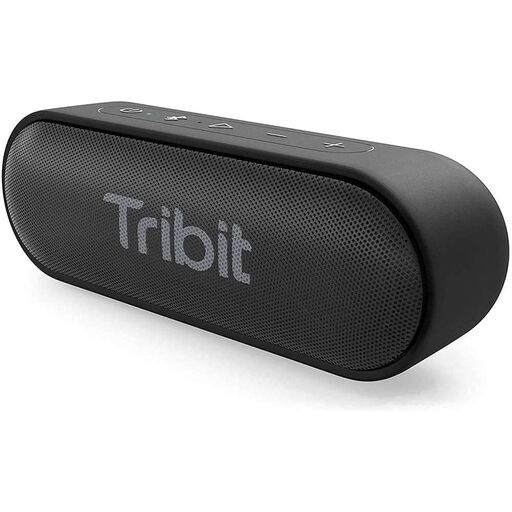
Tribit XSound Go BTS58, black, 2026 Version
A portable Bluetooth speaker for playing music from a connected device and listening in places where portability matters.
Bluetooth 5.0; 16 W output power; IPX7 according to the product description. Close the charging-port cover fully before contact with water and dry the port before charging. Check that the version on offer carries the CE mark.
View at Joybuy
 No image available
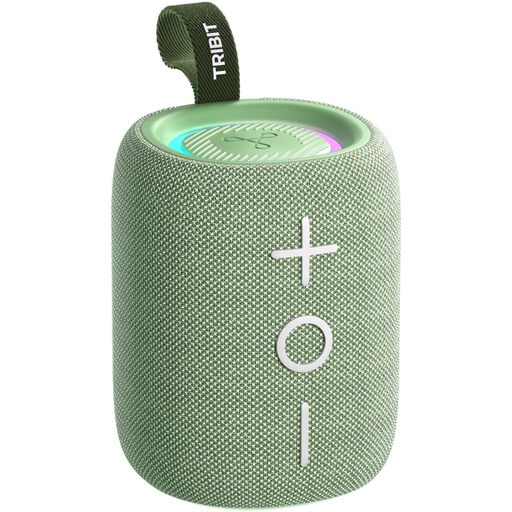
Tribit StormBox Mini Plus BTS33, green
A portable Bluetooth speaker for anyone who wants to play music from a connected device and take it from place to place.
Bluetooth 5.4 and IPX7 according to the product description. Close the charging-port cover fully before contact with water and dry the port before charging. Check that the version on offer carries the CE mark.
View at Joybuy
 No image available
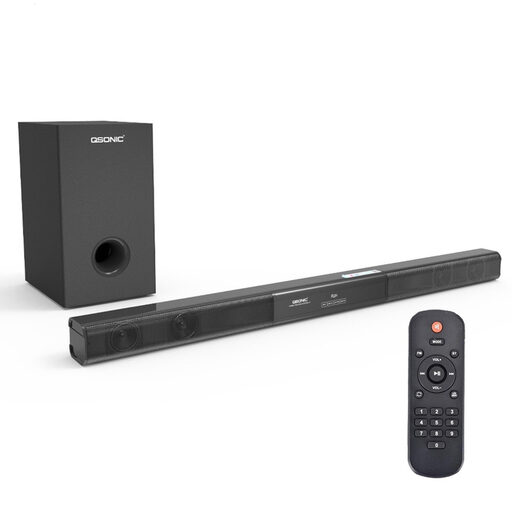
2.1 Bluetooth soundbar with subwoofer
An option for anyone looking for a TV-focused soundbar setup that, according to the title, also supports Bluetooth.
Bluetooth 5.0; coaxial, AUX and USB inputs; wired 5.25-inch subwoofer. The subwoofer needs to be connected separately as part of the setup. Check that the version on offer carries the CE mark.
View at Joybuy
 No image available
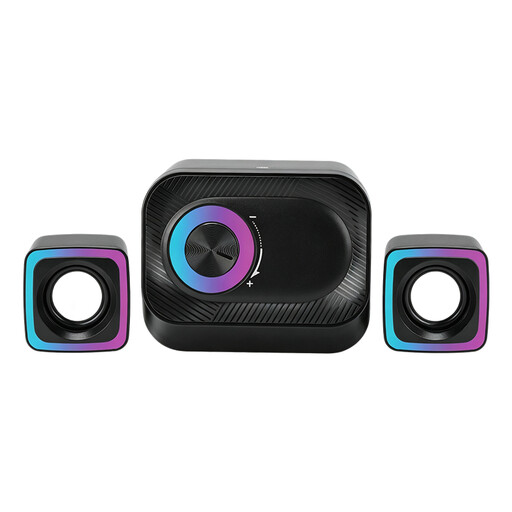
Wired three-piece PC speaker set with RGB lighting
A wired set for a dry indoor space where you can position one main unit and two satellite speakers.
The product description lists a volume control and RGB lighting. Use the set indoors only, in a dry place, and keep it away from liquids.
View at Joybuy
 No image available
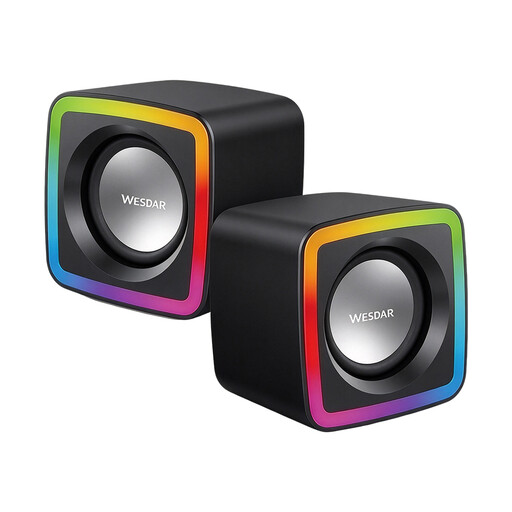
Compact RGB gaming speakers, stereo set for PC
A stereo set for a dry spot where two compact speakers can sit side by side.
The product description lists dimensions of approximately 72 × 73 × 65 mm per speaker. Use the set on a dry surface and keep it away from moisture and liquids.
View at Joybuy
Frequently asked questions
Can you turn any two wireless speakers into a stereo pair?
Don’t assume you can: check stereo-pair support for the exact models. Sonos, for example, describes a pair of two Era 100 SL speakers; Sony lists a Stereo Pair function for the SRS-ULT30.
What should you check before setting up a Wi-Fi speaker?
Check that the intended spot has a stable Wi-Fi network, a plug socket and support for the way you want to play music. According to the Consumers’ Association, after you give it a command in the app, a Wi-Fi speaker plays music directly over the network.
Does every online purchase in the Netherlands come with exactly a two-year guarantee?
No. The legal guarantee isn’t automatically exactly two years for every product. ACM ConsuWijzer explains that you’re entitled to a product that meets the standard you could reasonably expect, and that the seller is responsible for providing a solution if a product is faulty. Online purchases also generally come with a 14-day cooling-off period after delivery, subject to exceptions.
What product marking must a wireless speaker for the Dutch market carry?
The Dutch Authority for Digital Infrastructure specifically lists wireless speakers as equipment that must carry the CE mark. Check the marking on the version on offer and follow the manual; a declaration for one model doesn’t by itself confirm the marking on every unit supplied.


