Choose a video camera for a photography lesson based on the distance you’ll be filming from. Make a test recording to check that the smallest control or demonstration looks sharp and large enough on screen. For spoken explanations, you’ll also need a suitable microphone and a way to monitor the audio. For long, static lessons, test the recording time and power supply; if you often change position, a compact gimbal camera could be a good fit. Always check model-specific features in your own filming setup.
Who is this buying guide for?
Teacher demonstrating fine details
You show settings, buttons or techniques close up. Check that the lens, working distance, focus and framing suit the smallest demonstration on your table. Canon, DJI and Panasonic publish model-specific information on features including lenses and focusing.
Teacher giving spoken explanations
You talk while demonstrating and want to know how to connect a microphone and monitor the recorded audio before you buy. Canon lists a microphone input and headphone output for the EOS R50 V.
Teacher making long or mobile recordings
You record a lesson in one take or regularly change position. For long recordings, check the settings and power supply; if you’ll be moving around, compare the portability, field of view and stabilisation of the camera you’re considering.
What should you look for when choosing?
Start with the smallest demonstration you want to film. Then check that the audio, recording time and freedom of movement suit your lesson.
| What to consider |
What to look for when buying |
Who should prioritise it? |
| Filming small details clearly |
Compare the focusing distance and field of view. Try filming the smallest detail from the camera position you plan to use. |
If I’m demonstrating a control or photographic technique close up, I want the detail to look sharp and large enough on screen. Around 31% of consumers rank clearly visible details in demonstrations as their top purchasing priority. |
| Recording spoken explanations |
Check that there’s a connection for your microphone and that you can listen back to the recorded audio. |
When I’m talking and demonstrating at the same time, I want to record clear explanations and be able to monitor the audio. Around 31% of consumers rank clear explanations as their top purchasing priority. |
| Recording a long lesson |
Test your chosen recording settings, power supply and available storage with a test recording. |
For a long lesson that I want to record in one take, I want to avoid interruptions and check the settings and power supply in advance. For around 25% of consumers, uninterrupted recording comes first. |
| Changing filming positions |
Compare the weight, stabilisation and field of view with the close-up you want. |
If I’m alternating between filming the teacher and the demonstration table, I want to move the camera easily and keep the framing consistent. Around 13% of consumers say that filming on the move is their top purchasing priority. |
Things to watch out for when buying
-
Choosing based on resolution or megapixels alone
A high resolution doesn’t, by itself, tell you whether the smallest detail will look sharp and large enough on screen from your planned filming distance.
Make a test recording of your own demonstration and check the working distance, focus and field of view.
-
Assuming a camera body is a complete lesson setup
A body-only version doesn’t automatically include the same lens as a lens kit. You may also need a microphone, storage, tripod or power supply for your setup.
Check the exact version and work out which components you need for your recording, and what’s included, before you buy.
If a lens, memory card or other essential component is missing, you’ll need to arrange it separately before your lesson setup is ready.
-
Confusing digital zoom with optical zoom
Digital and optical zoom are different ways of making a subject appear larger on screen. DJI specifies digital zoom for the Osmo Pocket 3, while Panasonic lists 24× optical zoom for the HC-VX3.
Assess how much usable detail you can capture from your filming distance instead of comparing zoom figures alone.
Camera brands to consider
The features mentioned apply to specific models and versions; they aren’t a general assessment of a brand.
Canon
The EOS R50 V is a mirrorless camera to consider if you want to combine interchangeable RF or RF-S lenses with control over the audio for spoken lessons.
- Canon lists a microphone input and headphone output for the EOS R50 V.
- Canon doesn’t list sensor-shift stabilisation for this model. Check that your chosen lens and version suit your working distance and filming setup.
Sony
The ZV-E10 II gives you an E-mount option if you want to use interchangeable lenses for different fields of view.
- For the specific lens kit, Sony lists the E PZ 16–50 mm F3.5–5.6 OSS II.
- The body-only version doesn’t include this lens. Also check that you’re looking at the ZV-E10 II, not the older ZV-E10.
Nikon
The Z 30 is a mirrorless camera to consider for a longer lesson filmed mostly from a fixed position.
- Nikon lists up to 125 minutes of uninterrupted filming and support for an external microphone for the Z 30.
- The maximum recording time isn’t guaranteed for every setting, temperature or power supply. Test your chosen setup in advance.
Panasonic
The HC-VX3 is a camcorder to consider if you want to switch between a wide view and a zoomed-in shot during a demonstration without changing lenses.
- Panasonic specifies 24× optical zoom for the HC-VX3.
- The stated 25 mm-equivalent wide angle applies under the listed recording-format conditions. Check that these suit your recording.
DJI
The Osmo Pocket 3 is a compact gimbal camera to consider if you change position while filming.
- DJI specifies a fixed 20 mm-equivalent lens and a focusing distance from 0.2 m.
- It uses digital zoom, and footage is stored on an inserted microSD card. Check that the fixed field of view and focusing distance show your smallest detail clearly enough.
Joybuy products for a photography lesson
This selection of Joybuy products is intended for filming photography lessons. For each version, check that it offers the close-up detail, audio setup and filming position you need.
 No image available
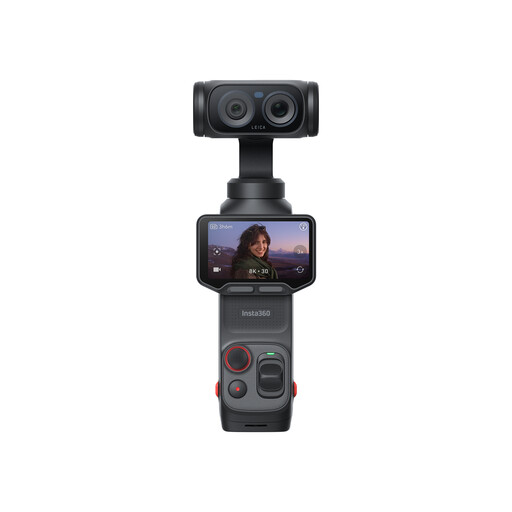
Insta360 Luna Ultra Standard Bundle, Cosmic Black
An option to consider if you want to frame details at different distances; check that the stated lens and zoom suit your filming distance.
View at Joybuy
 No image available
DJI Osmo Pocket 3 Creator Combo
This compact gimbal camera is an option if you change position while filming. DJI specifies a fixed 20 mm-equivalent lens, a focusing distance from 0.2 m and microSD storage for the Osmo Pocket 3; the product title mentions 4K/120fps and an included microphone.
View at Joybuy
 No image available
Sony ZV-E10 with 16–50 mm zoom lens, black
The included 16–50 mm zoom lens makes this version worth considering if you want to adjust the framing between the teacher and the demonstration table. The product description says that an SD card and adapter/charger aren’t included.
View at Joybuy
 No image available
Sony ZV-1 compact camera
A compact camera to consider if you want to film the teacher and demonstration table from a fixed position. Check that the microphone connection and zoom on your version suit your audio setup and framing.
View at Joybuy
Frequently asked questions
How can you check whether small camera buttons will show up clearly?
Record a test clip of the smallest detail from the height and distance you plan to use. Compare the focusing distance and framing of the exact camera or lens. DJI specifies a focusing distance from 0.2 m for the Osmo Pocket 3, but that alone doesn’t guarantee the subject will appear large enough.
What should you have ready for a long recording?
Test the settings you plan to use for the lesson, and check the power supply, storage and audio. Sony warns that prolonged HDMI streaming can raise the camera’s temperature; you may also need a suitable capture solution and cables. Streaming requirements don’t automatically apply to local recording.
Can you publish a lesson featuring identifiable staff or students without checking first?
Not without checking which rules apply and the legal basis for recording. According to the Dutch Data Protection Authority, the GDPR applies to footage made and published on behalf of an organisation for professional or commercial purposes; a legal basis is required. There are also considerations relating to the employment relationship, so assess each situation individually.
As an online retailer, are you automatically entitled to the same warranty as a consumer when you buy?
Don’t assume so. The Netherlands Chamber of Commerce explains that businesses generally have different protections from consumers, although a small business may sometimes be able to rely on consumer law under certain conditions. Before placing a business order, check the contract and the seller’s warranty and service terms.


