For fine wood grain and carving marks, a mirrorless camera with a suitable macro lens gives you more choice over magnification. For example, Nikon specifies 1:1 magnification for the NIKKOR Z MC 50mm f/2.8, while Canon gives a maximum of 1:2 for the RF 35mm F1.8 MACRO IS STM. If you want quick close-ups without a separate lens, a compact camera is an alternative: OM Digital Solutions describes a close-up mode for the Tough TG-7 that lets you shoot from as close as 1 cm. For textured details, a stable setup, focus bracketing and room for lighting also matter.
Who is this choice relevant to?
Maker capturing fine wood details
You want to photograph grain, carving marks or small joints so they’re clearly visible, so pay attention to lens magnification and the space between the lens and the subject. Nikon and Canon specify magnification for their particular macro lenses.
Photographer of textured miniatures
You want raised and recessed details to appear sharp, and can keep the miniature still for a focus bracket. Canon and OM Digital Solutions describe methods for focus bracketing or combining images.
Maker of quick product photos
You want to switch between overview and detail shots without changing lenses, and would benefit from a repeatable setup. OM Digital Solutions describes a close-up mode for the TG-7; Canon recommends using a tripod for consistent product photos.
What should you consider when choosing?
Mirrorless camera with a macro lens
Choose this option if: you want to capture tiny details at a larger scale or match a lens to different miniatures.
Bear in mind: the camera body and macro lens are separate components. Check the mount, what’s included in the bundle and whether there’s room for lighting.
Compact camera with a close-up mode
Choose this option if: you want to take overview and detail shots without having to choose a separate macro lens.
Bear in mind: the lens isn’t interchangeable. Check that it can capture the composition you want and that there’s room for lighting at close range.
| What to consider |
What to look for |
Who is this for? |
| Fine wood grain |
Compare the maximum magnification of the exact lens or test the framing; also allow room for lighting. |
If I want to capture grain or carving marks at a larger scale, I look at both magnification and the space in front of the lens. Around 33% of consumers prioritise fine details. |
| Sharpness across textured details |
Check whether the camera supports focus bracketing and whether images are combined in the camera or afterwards. |
If you want to show both foreground and recessed details of a stationary miniature in focus, a stable setup and a suitable focus bracket can help. Around 27% of consumers prioritise sharpness across multiple depths. |
| Colour and repeatable framing |
Check the white balance settings and whether you can keep the camera and lighting in a fixed position. |
When photographing several wooden pieces, I want to keep colour and composition consistent, even when the lighting changes. Around 20% of consumers prioritise consistency. |
| Complete setup |
Check exactly which lens is included and whether it fits the camera body; weigh up a fixed lens against the option to expand your kit. |
If I want to get started without choosing a separate lens, it’s important that the setup suits my close-up photography needs. Around 20% of consumers prioritise simplicity and an all-in-one solution. |
Common buying mistakes
-
Assuming a camera body or standard kit is a complete macro setup
The magnification figures mentioned apply to specific lenses, not automatically to every camera body or kit lens.
Check the lens mount, everything included in the bundle and the magnification of the exact lens supplied.
You may need a separate, compatible macro lens to get the close-ups you want.
-
Looking only at the minimum focusing distance
A short distance alone doesn’t tell you how large a detail will appear in the final image. Shooting very close can also leave less room for lighting.
Compare magnification and the usable space in front of the lens, and check both a detail shot and an overview.
-
Expecting focus stacking without a stable setup
For focus bracketing, the framing needs to stay consistent enough between shots for the images to be combined.
Secure the camera and miniature, and check how the exact camera model captures or combines the focus bracket.
You may need a tripod and extra time to take the sequence of shots.
Camera brands to consider
Nikon
The Z system is an option if you want to pair a compatible camera body with a separate macro lens.
- Nikon specifies 1:1 magnification for the NIKKOR Z MC 50mm f/2.8.
- According to Nikon, the front of the lens is about 5 cm from the subject at maximum close-up. Check that there’s still room for the lighting you need.
- This lens is not the same as a standard zoom lens supplied with a camera.
Canon
The EOS R system gives you a choice of RF lenses; the EOS R50 is compatible with RF and RF-S lenses.
- Canon specifies a maximum magnification of 1:2 for the separate RF 35mm F1.8 MACRO IS STM.
- Canon states that the EOS R50 does not have in-body image stabilisation. Lens choice and a stable setup are separate considerations.
OM SYSTEM
The Tough TG-7 is a compact camera for anyone who wants to shoot close-ups without choosing a separate macro lens.
- The manual describes shooting from as close as 1 cm in the relevant mode and supports focus bracketing.
- The fixed lens limits your choice of magnification and working distance. Check that the framing you want and the space for lighting suit your miniature.
Sony
The E-mount is an option if you already have a compatible Sony APS-C camera body or want to choose a separate macro lens.
- Sony specifies 1:1 magnification for the SEL30M35 APS-C macro lens.
- Check the usable space in front of the lens, and only compare distance figures when it’s clear they’re measured from the same point.
Joybuy product picks
Joybuy product picks for cameras for photographing wooden miniatures.
 No image available
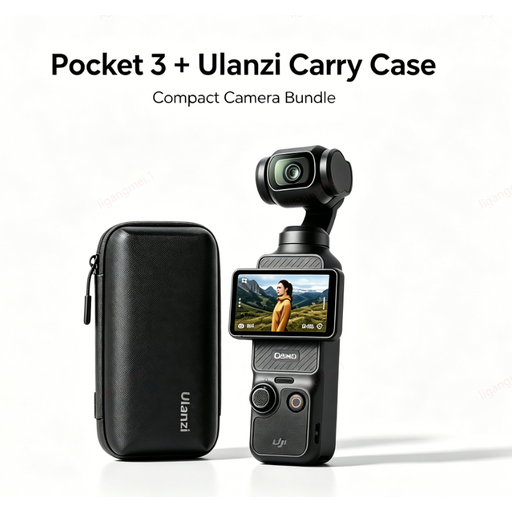
DJI Pocket 3 camera with Ulanzi storage case
A camera bundle to consider when comparing options for photographing wooden miniatures; check that its close-up capabilities suit the details you want to capture.
Joybuy
 No image available
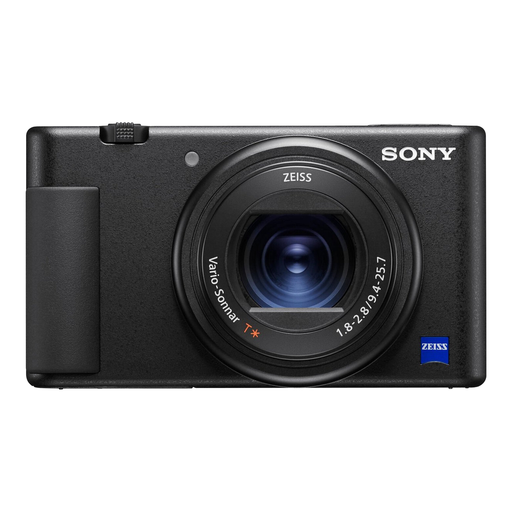
Sony ZV-1 compact camera
This compact camera is another option to compare; check that its close-up capabilities suit the framing you want for small wood details.
The product information lists 20 Mpx and JPEG and RAW photo formats.
Joybuy
Frequently asked questions
Do you always need a macro lens to photograph a wooden miniature?
No, it depends on the framing you want. For fine details, compare the magnification of the exact lens or test the framing. For an overview, check whether the whole miniature fits in the frame from the distance available.
How can I get several parts of a textured miniature in focus?
Keep the camera and miniature still, and use focus bracketing if the exact camera model supports it. Then check whether the images are combined in the camera or need to be merged afterwards.
How can I keep the colour and framing consistent across several photos?
Use a fixed camera setup and check the white balance if the colour of the light changes. Canon recommends using a tripod for consistent product photos; follow the manual for the camera and lens you’re actually using when cleaning and storing them.
Is there always a two-year statutory guarantee period for cameras in the Netherlands?
No. According to the Dutch government, there is no fixed statutory guarantee period in the Netherlands; you’re entitled to a product that meets what you can reasonably expect from it. If there’s a problem, contact the seller.
Do I have a cooling-off period when I buy a camera online?
For distance purchases from a business, the Dutch government generally provides a 14-day cooling-off period. According to the same guidance, this rule does not apply to online purchases from private individuals. Check who the seller is and which terms and conditions apply.


