What should you consider when choosing a camera?
Your current camera with an adjusted set-up
Best when: your current camera already gives you the crop you want, and the main things to address are the lighting, background or consistent positioning.
Trade-off: a fixed, well-lit set-up can help manage shadows and reflections, but it won’t change your lens’s magnification.
Compact camera with a close-up mode
Best when: you want to take close-ups without changing lenses and your chosen crop leaves enough room for both the subject and the lighting.
Trade-off: the lens isn’t interchangeable. OM SYSTEM lists a microscope mode for the TG-7 and focusing from 1 cm for the micro-adventure kit mentioned.
Mirrorless camera with a kit zoom
Best when: you mainly take overview shots and medium-sized close-ups, and want the option to choose a different lens later.
Trade-off: a kit zoom isn’t automatically a 1:1 macro lens; check the magnification and focusing distance at the zoom setting you use.
Mirrorless camera with a dedicated macro lens
Best when: you need small engravings, cutting edges or other details to appear large in the frame.
Trade-off: check the lens mount and leave room for lighting. Canon lists 0.5× magnification for the RF 85mm F2 Macro IS STM, while Nikon lists 1:1 for the Z MC 50mm f/2.8.
For consumers photographing tools against a white background, the main considerations depend on the smallest crop you need, your lighting set-up and whether you mainly want overview shots or a simple set-up.
| Consideration |
What to look for when buying |
Who is this important to? |
| Capturing small details clearly |
Compare maximum magnification, the focusing distance at the zoom setting you’ll use, and the crop you need. |
If small engravings or cutting edges need to be legible, I want to know how large they’ll actually appear in the frame. Around 33% of consumers prioritise the visibility of these details. |
| White background, reflections and colour |
Check whether you can adjust the lighting, assess the background separately and set the white balance consistently. |
When photographing shiny metal against a white background, I want to control shadows and colour, not just buy a new body. Around 27% of consumers give lighting and colour top priority. |
| Consistent overview shots |
Check the included lens, the available shooting distance and whether you can position the camera in the same place each time. |
For a range of tools in different sizes, I want to frame whole objects consistently. Around 20% of consumers prioritise consistent overview shots. |
| Keeping the whole set-up simple |
Check exactly what’s included in the kit and first decide whether your current camera will do the job with an adjusted set-up. |
I want a useful set-up without having to use an extra lens before I need one. Around 20% of consumers give simplicity top priority. |
Cameras at Joybuy for this type of photography
Cameras at Joybuy for photography, with an emphasis on flexible framing and product shots. For each model, check whether the lens and focusing distance suit the smallest crop you need.
 Image unavailable
Komery W6 digital camera
The stated optical zoom may suit you if you want to take different crops; for small engravings, check the magnification and focusing distance.
12× optical zoom; 64 MP; 4K video.
View at Joybuy
 Image unavailable
DJI Osmo Pocket 3
A camera whose description also mentions still photos; check whether the field of view and focusing distance suit your dedicated photo table.
1-inch CMOS sensor; 4K video up to 120 fps; 3-axis stabilisation; 2-inch rotatable touchscreen.
View at Joybuy
 Image unavailable
Sony ZV-E10 + 16–50mm Zoom, black
The kit zoom may suit you if you want to frame tools of different sizes; check the focusing distance for small details.
16–50mm kit lens; 24.2 MP APS-C sensor; 2-inch vari-angle screen; Product Showcase setting for focusing on a subject. According to the product description, an adapter and charger aren’t included.
View at Joybuy
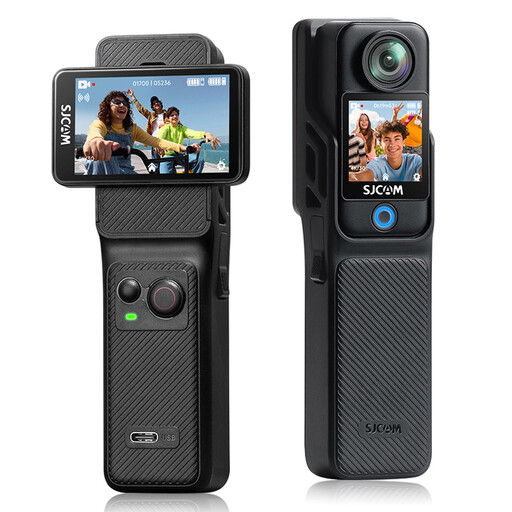 Image unavailable
SJCAM C400 action camera
The product description mentions still photos; check whether the wide-angle crop suits the tools you want to photograph against a white background.
Photos up to 16 MP; 154° wide-angle lens; 6-axis electronic stabilisation; waterproof to 30 m with housing.
View at Joybuy
 Image unavailable
Sony Alpha A6100 + 16–50mm f/3.5–5.6 OSS II
The kit lens offers a zoom range for different compositions; check whether the focusing distance suits the smallest details you want to capture.
24.2 MP APS-C sensor; touchscreen; electronic viewfinder.
View at Joybuy
Frequently asked questions about photographing tools on white
Do I always need a macro lens to photograph tools on white?
No, not for every crop. A kit zoom may be suitable for whole objects; for very small details, compare the magnification of the exact lens. Canon lists 0.5× for the RF 85mm F2 Macro IS STM, while Nikon lists 1:1 for the Z MC 50mm f/2.8.
How do I set up a simple white-background photo set-up?
Start with a clean background and controlled lighting. For a series of shots, position the camera in a fixed place and check shadows, reflections and white balance in test images. The right set-up won’t automatically make every small detail fill the frame.
What should I check about the kit contents and care?
Check which lens and accessories come with the exact kit, and whether the macro lens you want is sold separately. Keep the background and tools clean, and follow the instructions for your camera model when cleaning it.
What are my rights when buying a camera online in the Netherlands?
According to the Dutch government, when you buy at a distance the seller must provide information about the product and the cooling-off period, among other things. This is usually 14 days. If a product is faulty, the seller is your point of contact for a solution. Your statutory rights and how they apply depend on the circumstances of the purchase.


