Who is this choice for?

Collector of fine details

You want to capture perforations, printing and small features in sharp focus. So compare the lens magnification or close-up capabilities, rather than looking only at the number of megapixels. For example, manufacturers specify 1:1 magnification for the Sony E 30 mm F3.5 Macro and the Nikon NIKKOR Z MC 50mm f/2.8.

Quick cataloguer

You photograph several stamps in a row on the same small table and want a simple, repeatable setup. A stable support helps keep the camera still; Nikon recommends using a tripod for macro photography.

Colour-accurate documenter

You want to be able to compare photos, so you look for even lighting, a camera positioned parallel to the stamp and a consistent white balance. The Canadian Heritage Information Network of the Government of Canada recommends even lighting and a stable overhead shot for documentation.

What should you look for when buying?

Your current phone

Choose this option: if you mainly want to take overall shots and would like to try the equipment you already have first. Apple describes automatic macro switching on supported iPhones.

Bear in mind: macro capabilities vary by device. Check that the whole stamp and the corners of the image stay sharp, and that the phone doesn’t block the light.

Macro compact camera

Choose this option: if you want a dedicated camera with a built-in close-up or microscope mode, without having to swap to a separate macro lens. The OM SYSTEM TG-7 and PENTAX WG-90 specify shooting from 1 cm in the relevant modes.

Bear in mind: a short focusing distance doesn’t guarantee that the whole stamp will fit in the frame. Taking photos up close can also leave less room for lighting.

Mirrorless camera with macro lens

Choose this option: if you want to select a lens specifically for detailed shots and can create a fixed setup. Nikon and Sony specify 1:1 magnification for the macro lenses mentioned.

Bear in mind: check the lens mount, the lens included, the working distance and the space available for a tripod and lighting. A mirrorless camera kit doesn’t automatically include a macro lens.

What to consider What to look for Who is this important for?
Fine details Compare the magnification of the exact lens or macro mode. Test both a complete stamp and a cropped detail. If small features matter more to you than speed or simplicity, detail-focused consumers make up around 33% of the group.
Stable setup Measure the space available and check that a mount or tripod can hold the camera parallel above the stamp without blocking the light. If you want to photograph lots of stamps in a row on the same small table, this is a priority for around 25% of consumers who value a repeatable setup.
Equipment and costs Try a phone with a macro feature first. If you’re buying a camera kit, check which lens is included and whether you’ll need any extra equipment for your shots. If you want to make use of your existing equipment and only buy something new if you find you need it, you share the cost-conscious priority of around 25% of the group.
Colour and comparability Use even lighting and keep the camera in a fixed, parallel position. Adjust the white balance again if the lighting changes. This matters most to consumers who prioritise colour consistency and comparable documentation photos over speed; they make up around 17% of the group.

Common buying mistakes

  • Assuming a mirrorless camera kit is a complete macro lens set

    The Canon EOS R50 kit reviewed includes an RF-S 18-45mm lens. For this lens at 45 mm, Canon specifies maximum magnification of 0.16× with autofocus or 0.26× with manual focus. That’s not the 0.5× magnification of the separate RF 35mm macro lens.

    Before buying, check exactly which lens comes with the kit and whether its magnification suits the details you want to photograph.

  • Focusing only on the shortest focusing distance

    A close-up mode alone doesn’t tell you how much of the stamp will fit in the frame, whether the whole stamp will be in focus or how much room will be left for lighting.

    Test both a complete stamp and a detail on the table where you plan to use the camera, and check the corners of the image too.

  • Confusing a set number of years with the statutory guarantee

    According to the Dutch Government, the Netherlands has no fixed statutory guarantee period. Your statutory rights depend, among other things, on what you can reasonably expect from the product.

    Keep your purchase and product information, and contact the seller if a fault occurs.

Camera brands to compare

OM SYSTEM

The TG-7 is a compact camera with a built-in close-up mode. There’s also a dedicated bundle with the LG-1 light guide.

  • OM SYSTEM specifies macro shooting from 1 cm for the TG-7.
  • The specified distance doesn’t prove that a whole stamp will fit in the frame with your table setup. The LG-1 is available in a specific bundle, so check that it suits the way you plan to use the camera.

PENTAX

According to Ricoh Imaging, the WG-90 has a digital microscope function and built-in macro LEDs.

  • Ricoh Imaging specifies close-up shooting from 1 cm and six macro LEDs.
  • Check the framing, sharpness across the whole stamp and space for lighting on your own table.

Canon

The EOS R50 is a mirrorless camera; for greater magnification, there’s a separate RF 35mm F1.8 MACRO IS STM lens.

  • Canon specifies 0.5× magnification for the RF macro lens.
  • The EOS R50 kit reviewed includes the RF-S 18-45mm zoom lens, not the separate macro lens. For the kit lens at 45 mm, Canon specifies a maximum of 0.16× magnification with autofocus and 0.26× with manual focus.

Nikon

The NIKKOR Z MC 50mm f/2.8 is a separate macro lens that Nikon also lists for DX cameras.

  • Nikon specifies 1:1 magnification and around 5 cm between the front of the lens and the subject at the minimum focusing distance.
  • These lens specifications don’t mean the lens comes as standard with a camera kit; check the mount and what’s included in the bundle.

Sony

The E 30 mm F3.5 Macro is a separate APS-C lens with a Sony E mount.

  • Sony specifies a maximum magnification of 1.0× and a minimum focusing distance of 0.095 m.
  • Check that the lens is compatible with your chosen camera body and how much practical working space you’ll have in front of the lens.

Cameras at Joybuy

These cameras are options for photography; for each model, check that it can capture the whole stamp and the details you want in sharp focus with your table setup.

DJI Osmo Pocket 4 Standard Combo

DJI Osmo Pocket 4 Standard Combo

Take a test shot to check whether the camera can capture both the complete stamp and the details you want in sharp focus on your table.

The product name lists a 1″ CMOS sensor, 2× lossless zoom, 107GB of built-in storage and a 2″ rotatable screen. It also mentions 4K/240fps and 3-axis stabilisation.

Joybuy
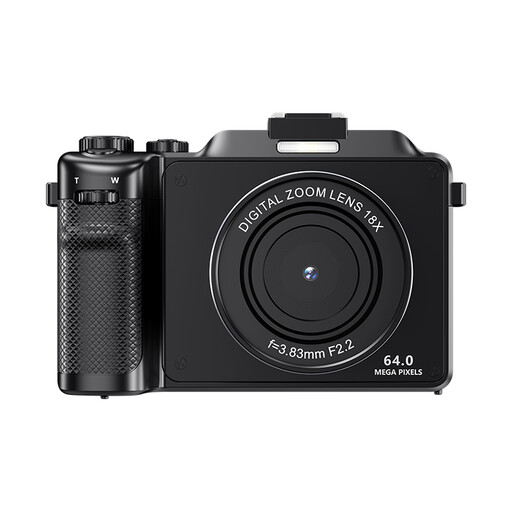
Komery X9 4K 64MP autofocus camera, black

Komery X9 4K 64MP autofocus camera, black

Use a test frame to assess whether the camera shows the whole stamp and the details you need in sharp focus.

The product name lists autofocus, 4K and 18× digital zoom. The product information warns that digital zoom can reduce image quality.

Joybuy

DJI Osmo Pocket 3 Creator Combo

DJI Osmo Pocket 3 Creator Combo

Take a test shot of a complete stamp and a detail to see whether this camera suits your shooting distance and setup.

The product name lists a 1″ CMOS sensor and 4K/120fps. The product information also mentions autofocus and an included microphone.

Joybuy
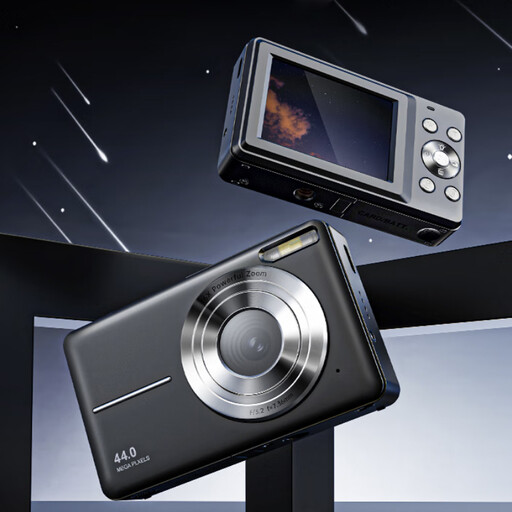
Songdian Pocket Camera 4K 44MP, black

Songdian Pocket Camera 4K 44MP, black

Take a shot on the table you’ll actually use to check that the frame is large enough for the whole stamp and sharp enough to capture the details you want to preserve.

The product name lists 4K, 44MP and 16× zoom. The product information mentions autofocus.

Joybuy
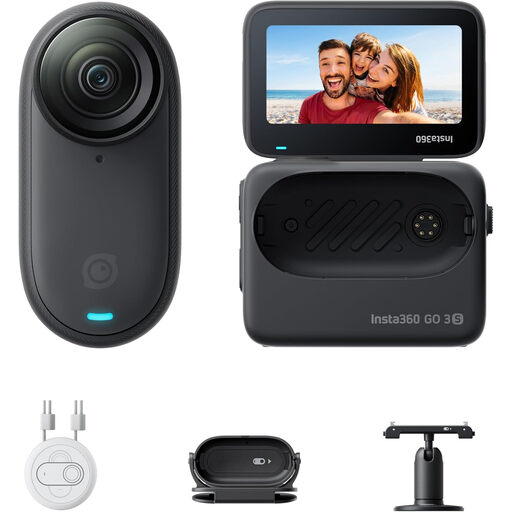
Insta360 GO 3S 128GB mini camera

Insta360 GO 3S 128GB mini camera

Before choosing, check that the camera can produce the framing and sharpness you want for stamp photography with your fixed table setup.

The product name lists 128GB, 4K, stabilisation and a stated battery life of 140 minutes. It also mentions a photo mode and a mountable design.

Joybuy

Frequently asked questions

How should I position a camera to photograph a whole stamp?

Position the camera securely, directly above the stamp, and keep the image sensor as parallel to the paper as possible. Check the entire frame, including the edges, and use even lighting. Maximum magnification isn’t necessarily the goal for an overall shot.

Is a focusing distance of 1 cm always better?

No, not necessarily. The OM SYSTEM TG-7 and PENTAX WG-90 specify shooting from 1 cm with their close-up capabilities, but also check that the whole stamp stays in the frame and that the camera doesn’t get in the way of the lighting.

What can I do if my phone photo looks blurry up close?

First, check whether your phone has a macro feature and keep it steady. If a macro shot looks blurry, Apple recommends moving slightly further away or, on a supported iPhone, switching to the ultra-wide camera. Then check that the edges are in focus too.

What guarantee and cooling-off period apply to an online purchase in the Netherlands?

According to the Dutch Government, there’s no fixed statutory guarantee period in the Netherlands. If a fault occurs, the seller is your point of contact, and your rights also depend on what you could reasonably expect from the product. In many cases, a 14-day cooling-off period applies to a qualifying distance sale. Check the terms and any exceptions that apply to your purchase.

Can I publish photos of stamps online without permission?

Not always. The Dutch Government distinguishes between making a copy for personal use and distributing or making copyright-protected material available to the public. Before publishing, check whether the specific image is protected and whether permission or an exception applies.
