Start with your shooting setup: soft, movable lighting and a stable camera will help you control reflections and framing. A different camera body won’t automatically eliminate glare. A compact camera with a fixed lens may be all you need for overview shots, while a mirrorless camera gives you more lens options for capturing small details, provided you choose a suitable lens. A polarising filter isn’t a universal fix for reflections on metal; assess glass, paintwork and metal separately.
Who is this choice relevant to?
Restorer working with glossy surfaces
You want to photograph the paintwork, glass and metal trim clearly, without distracting reflections overpowering the radio. Canon Netherlands describes diffused light as a way to shape the lighting in product photography. Assess reflections on metal separately from those on non-metallic surfaces.
Documenting restoration details
You want to capture lettering, knobs or repaired parts individually. Check the focusing capabilities of the lens you’ll actually be using; Canon Netherlands describes separate RF and RF-S close-up lenses for EOS R cameras.
Taking overview shots
You want to photograph the whole radio from different angles, with consistent framing. Canon Netherlands recommends a tripod as a way to keep the composition consistent across a series of product photos.
What should you consider when choosing?
First decide whether your main priority is controlling reflections, capturing small details or framing the whole radio consistently. Then choose a camera and lens to suit the shot.
Compact camera with fixed zoom lens
Choose this option if: you mainly want overview shots and would prefer to use as little separate equipment as possible.
Keep in mind: you can’t change the lens. For detail shots, check the focusing distance at the zoom setting you want to use.
Mirrorless camera with a suitable lens
Choose this option if: you want to capture small restoration details as well as overview shots, and are happy to choose a suitable lens.
Keep in mind: choosing a lens may mean buying extra equipment, so check exactly which lens is included in the kit.
Keep your current camera
Choose this option if: your current lens already captures the radio and the details you want clearly enough, but lighting or framing is making the shot difficult.
Keep in mind: a tripod or diffused light won’t change your lens’s minimum focusing distance.
| Factor |
What to look for when buying |
Who should prioritise this? |
| Reflections and lighting |
Check whether you can diffuse and move the light, and position the camera steadily. Don’t expect a polarising filter to work on metal in the same way as it does on glass or paintwork. |
I want to control reflections on glossy parts and keep the radio clearly recognisable. Around 36% of consumers make reflections their top priority. |
| Small details |
Compare the minimum focusing distance and magnification of the exact lens; don’t assume a camera body is suitable for macro photography on its own. |
If I want to capture knobs, lettering or repaired parts clearly, the lens I use will determine my choice. Around 29% of consumers prioritise detail shots. |
| Overview shots |
Check whether you can frame the whole radio from the available distance and whether a tripod will fit into your setup. |
I want to capture the whole radio from several angles in a consistent way. An estimated 21% of consumers prioritise overview shots. |
| Simplicity and kit costs |
Compare what you already own with the lens, tripod and lighting you’ll need. If you’re buying a camera kit, check which lens is included. |
If I want to keep my equipment simple, I weigh up a fixed lens against the option to choose different lenses later. Around 14% of consumers consider simplicity and kit costs their main priority. |
Common buying pitfalls
-
Buying a polarising filter for every glossy part
ZEISS’s filter information describes reducing reflections on non-metallic surfaces. That doesn’t make it a universal solution for reflections on metal trim.
Assess glass, paintwork and metal separately, and first check whether changing the light source alters the reflection you want to control.
A separate filter is an extra item to buy. ZEISS lists a light loss of 1.5–2 EV for the filter in question.
-
Assuming close-up capability comes from the camera body
Close-focusing capability also depends on the lens; a camera kit doesn’t automatically include a close-up lens.
Check the full kit contents and the focusing specifications of the included lens.
If the included lens isn’t suitable for your detail shots, you may need to buy a separate lens.
-
Assuming zoom means you can focus at close range
Sony lists a focusing distance of around 8 cm at the wide-angle end and around 100 cm at the telephoto end for the RX100 VII. The focusing distance therefore varies depending on the zoom setting.
Compare the focusing distance at the focal length you want to use for the radio detail.
Camera brands to compare
Canon
Canon offers the EOS R50 mirrorless camera and the PowerShot G7 X Mark III with a fixed lens, among other models.
- Canon lists a 24.2-megapixel APS-C sensor for the EOS R50, along with compatibility with RF and RF-S lenses.
- The EOS R50 doesn’t have sensor-shift stabilisation. Canon specifies a fixed zoom lens with a 35mm equivalent of 24–100 mm for the PowerShot G7 X Mark III.
Sony
The RX100 VII is a compact camera with a fixed zoom lens, for anyone who wants to combine overview and detail shots with one camera.
- Sony specifies a zoom lens equivalent to 24–200 mm.
- Sony lists a focusing distance of around 8 cm at the wide-angle end and around 100 cm at the telephoto end. Check the distance at the zoom setting you plan to use for each detail shot.
Nikon
The Z50II is a mirrorless camera for anyone who wants to choose the lens and shooting controls separately.
- Nikon lists 20.9 million effective pixels and an electronic viewfinder that displays settings.
- Check which lens is included with the kit you’re considering; the camera body alone doesn’t confirm that a suitable close-up lens is included.
Cameras at Joybuy
These camera options at Joybuy include features for zoom, photography or video. For photographing a radio, check whether each model’s lens can focus at the distance you need and whether your setup gives you enough control over the lighting.
 No image available
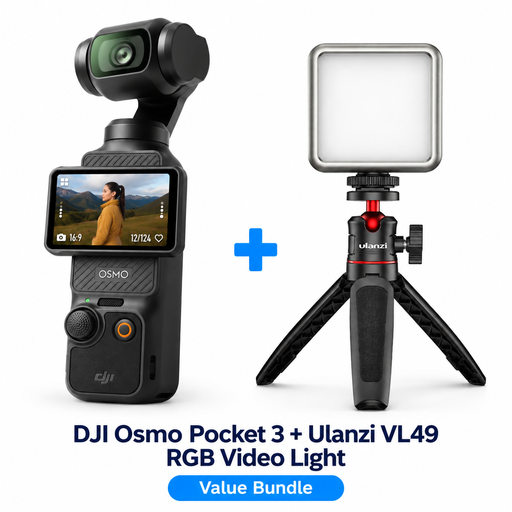
DJI Osmo Pocket 3 Creator Combo with Ulanzi VL49 RGB video light
This bundle may be worth considering if extra lighting is part of your product photography setup; the bundle details include a Ulanzi VL49 RGB video light.
The product name describes a Creator Combo for vlogging and photography.
View at Joybuy
 No image available
KOMERY G7-A 4K camera, 80MP, 18X zoom, pink
The listed zoom may be useful if you want to adjust the framing of the radio. For small details, check the focusing distance at the zoom setting you plan to use.
The product name lists 4K, 80 MP and 18X zoom.
View at Joybuy
 No image available
KOMERY G7 5K camera, 80MP, 18X zoom, white
The zoom can help you choose the framing for an overview shot. For restoration details, check the focusing distance at the zoom setting you need.
The product name lists 5K, 80 MP and 18X zoom.
View at Joybuy
 No image available
Komery W6 camera, 64MP, 12X optical zoom, WiFi
This camera may suit you if you want to adjust the framing. For small parts, compare the focusing distance at the zoom setting you need.
The product name lists 12X optical zoom, 64 MP and WiFi.
View at Joybuy
 No image available
DJI Osmo Pocket 3 Creator Combo with microphone, 4K/120fps
The product name mentions photography and video; check that the controls and focusing work for your still photos of the radio.
The product name lists a 1'' CMOS sensor, 4K/120fps video, 3-axis stabilisation, tracking and an included microphone.
View at Joybuy
Frequently asked questions
Will a polarising filter reduce all reflections on the radio?
No. ZEISS describes reflection reduction on non-metallic surfaces and lists light loss for the filter in question. Assess glass or paintwork separately from metal parts. If reflections on metal are distracting, try adjusting the position and size of the light source first.
How can you keep a series of photos of the same radio consistent?
Use a stable setup and settle on your framing before moving the light or the radio. Canon Netherlands describes a tripod as a way to keep the composition consistent across a series of product photos.
Do you need to buy a macro lens straight away?
Not for every overview shot. First check whether your current lens can show the smallest details you need clearly enough from your chosen shooting distance. A separate close-up lens is a sensible addition only if your current lens can’t do the job.
What are your rights when buying a camera online in the Netherlands?
According to the Dutch government, a 14-day cooling-off period applies to many distance purchases, although this depends on the purchase and any exceptions. You’re also entitled to a product that works as it should. There is no fixed statutory guarantee period in the Netherlands, and the seller is your point of contact if something is faulty.


