
If you mainly want to capture details
You want to fill the frame with the shape and reflections of individual droplets. So look at the camera or lens you’ll actually be using, and check its macro function or maximum magnification.


If you want to take close-up shots on a wet walk without changing lenses, consider a rugged compact camera with a documented macro function. A mirrorless camera with a suitable macro lens offers different magnification and focusing options, but you’ll need a complete, compatible setup. Don’t assume the lens will protect the camera body from rain.
You want to fill the frame with the shape and reflections of individual droplets. So look at the camera or lens you’ll actually be using, and check its macro function or maximum magnification.
You want to carry as little kit as possible and still be able to take photos when the park is wet. In that case, protection for your complete camera setup matters more than a claim about a lens on its own.
You want to choose where the plane of focus falls or try several focus positions. A mirrorless camera with a suitable macro lens may be worth considering, if you’re happy to put the extra components together.
Choose this option if: you want to take one camera on a wet walk without changing lenses. OM SYSTEM lists a Microscope Macro mode and waterproofing to 15 m for the TG-7. Ricoh lists a digital microscope function from 1 cm and waterproofing to 14 m for up to two hours for the WG-90.
The trade-off: the lens is fixed, so you won’t need to change lenses, but you’ll be limited to what that camera can do.
Choose this option if: you want to put together your own setup and have control over magnification and focusing. Canon lists focus bracketing for the EOS R50; according to Canon, the Canon RF 100mm F2.8L Macro IS USM offers up to 1.4× magnification. Nikon lists 1:1 magnification for the NIKKOR Z MC 50mm f/2.8 on a compatible Nikon Z camera.
The trade-off: a camera body on its own isn’t a complete macro setup. Check the lens mount and assess the rain protection of the body and lens separately.
| What to consider | What should you check? | Who should pay particular attention? |
|---|---|---|
| Filling the frame with droplets | Check the macro mode on the exact camera model or the lens’s maximum magnification. Nikon lists 1:1 magnification for the NIKKOR Z MC 50mm f/2.8; Ricoh lists a microscope function from 1 cm for the WG-90. These are different specifications. | If I mainly want to see the shape and reflections of individual droplets, I look at the macro function or magnification of the model I’ve chosen. Around 36% of consumers put capturing droplet detail at the top of their list when buying. |
| Taking photos in wet weather | Check the conditions attached to the waterproofing claim for the exact model. With a mirrorless camera, check the protection offered by both the body and the attached lens. | If I want to take photos on a wet walk in the park, I want to know whether the complete camera setup is suitable. Around 29% of consumers put protection from wet conditions first. |
| Control over focus | Check whether you can focus manually and whether the exact camera body offers focus bracketing. Canon lists focus bracketing for the EOS R50. | If I want to choose which part of a droplet and leaf is in focus, precise focusing matters to me. Around 21% of consumers name control over focus as their top buying priority. |
| Taking a complete setup with you | Compare a camera with a fixed lens with a complete mirrorless camera kit. For interchangeable lenses, check the mount and exactly what’s included in the offer. | If I want to take an easy-to-manage kit with me, I look at the complete setup, not just the body. Around 14% of consumers prioritise portability and the make-up of their kit. |
With a mirrorless camera, the lens helps determine whether you can achieve the magnification you want, and not every lens fits every body.
Before choosing a setup, check the lens mount, maximum magnification and what’s included in the offer.
A suitable macro lens may need to be bought separately. So assess the complete setup rather than just the camera body.
A specification for a lens on its own doesn’t automatically tell you how well the camera body is protected. A waterproofing claim for a compact camera applies to the model named and the conditions specified.
Before using your camera in wet conditions, check the conditions for both the body and lens. Don’t infer how well the complete setup is protected from a specification for just one lens.
The WG-90 lists a shooting distance from 1 cm, while macro lenses such as the NIKKOR Z MC 50mm f/2.8 may list a magnification ratio of 1:1. These figures don’t describe the same thing.
Compare the macro function or magnification of the exact model, and think about how you want the droplets to be framed.
Use the models and lens ranges mentioned as starting points when making your choice. A brand name alone doesn’t tell you whether every product from that brand is available or right for you.
The Tough TG-7 is a compact camera with a fixed lens, for anyone looking for a macro function and stated waterproofing in one camera.
The WG-90 is a compact camera with a fixed lens and a digital microscope function.
The EOS R50 with a compatible RF macro lens is a mirrorless camera option for anyone who wants to choose the body and lens separately.
The NIKKOR Z MC 50mm f/2.8 is a macro lens for a compatible Nikon Z camera.
The FE 90 mm F2.8 Macro G OSS is a macro lens for a compatible Sony camera with an E-mount.
The Joybuy cameras below are product options for photography. Check whether the macro function and conditions for each model suit close-up photography in a wet park. A product listing alone doesn’t confirm that a camera is rain-resistant.
 Image unavailable
The product name describes a pocket camera for photography. Before buying, check whether the exact camera is suitable for the close-up distance you want.
Specifications listed in the product name: 4K, 44MP and 16X Zoom. The product name doesn’t mention a macro function.
 Image unavailable
The product name describes a portable camera. Before choosing it for raindrop macro photography, check whether the exact camera can focus on the close-up you want.
The product name lists 5K, 80MP and 18X Zoom. The product information advises keeping the camera away from water and damp conditions.
 Image unavailable
According to the product name, this set includes a Sony ZV-E10 with a 16-50mm Zoom lens. Check whether this combination offers the magnification you want for droplets.
The product information lists manual focusing and advises against exposing the camera to moisture.
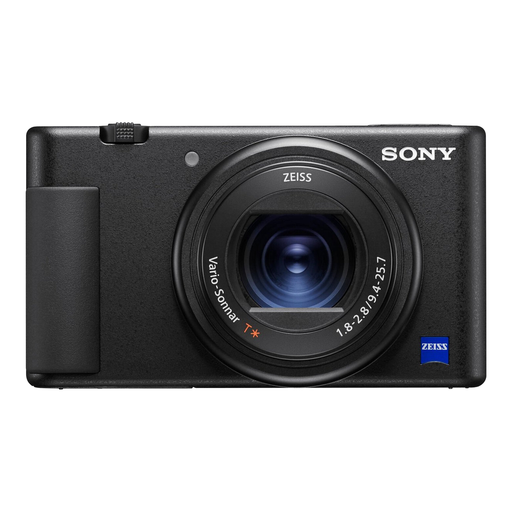 Image unavailable
The product name describes a compact camera. Check whether its close-up capabilities suit the size of the droplets you want to photograph.
The product information advises avoiding exposure to water and excessive moisture.
Not as the only point of comparison. Also check the maximum magnification or the precise macro function of the exact model: Nikon lists 1:1 magnification for the NIKKOR Z MC 50mm f/2.8, while Ricoh lists a microscope function from 1 cm for the WG-90. These are different specifications, not directly comparable measures of image quality.
Choose your focus point and aperture carefully, and keep the camera as steady as possible. Nikon recommends using a tripod and focusing manually with precision, among other things, when photographing small subjects. According to Canon, the EOS R50 offers focus bracketing if you want to use several focus positions.
Check whether a macro lens suitable for your close-ups is included and fits the body. According to the Consumers’ Association, not every lens fits every camera; Canon specifies an RF mount for the EOS R50.
According to the Dutch government, a 14-day cooling-off period applies in many cases to distance purchases. There are legal exceptions, and the rule doesn’t apply in the same way to an online purchase from a private individual.
First check which privacy rules apply. According to the Dutch Data Protection Authority, identifiable people’s details count as personal data; a legal basis under the GDPR is needed for wider sharing or commercial use. Photos of leaves only, with no identifiable people, don’t answer the separate question of whether a particular park has its own rules about photography.