What should you look for?
Start with a test shot: a complete card, a close-up detail and a flat reproduction don’t always need the same set-up.
Your existing camera or phone
Choose this when: a test shot already shows the whole card and the details you want clearly.
Consider: a stable, straight set-up and even lighting are still important for consistent results.
Mirrorless camera with standard zoom lens
Choose this when: you want to photograph complete cards in different compositions and set up the shot yourself.
Consider: a standard zoom lens isn’t automatically suitable for very small embossed details. Check exactly which lens comes with the kit, too.
Mirrorless camera with macro lens
Choose this when: small lettering or paper texture calls for a separate close-up that your standard lens can’t frame well.
Consider: check the lens mount, magnification and working distance. A lens that focuses close up can leave less room for lighting.
A4 flatbed scanner
Choose this when: your invitation is flat, fits on the scanner bed and you mainly want a straight reproduction of the print.
Consider: a scan won’t create a styled arrangement or give a folded card the sense of depth that a photograph can.
| What to consider |
What to look for when buying |
Who should pay particular attention? |
| Overall view and readability |
Take a test shot where you work, then check the lens and text sharpness in the crop you plan to publish. |
If I mainly want to show the whole card with readable text, I’ll start with a straight test shot. Around 33% of consumers prioritise an overall view and readability. |
| Colour and paper white |
Compare a test image with the printed piece and check whether you can adjust the white balance. RAW can be useful if you want to fine-tune colours afterwards. |
If I photograph several invitations in similar conditions, I want the paper white and ink to look consistent. Around 25% of consumers prioritise colour consistency. |
| Small details |
Check the magnification and focusing distance of the exact lens, its mount and whether a macro lens is actually included. |
If I want to show a small letter, foil or embossing separately, I’ll first check that the detail appears large enough in the image. Around 25% of consumers prioritise fine details. |
| Set-up and components |
Check what’s included in the kit and try your current device first. For flat work, you could also compare an A4 scanner. |
If I mainly want a practical solution without unnecessary extra equipment, I’ll first find out what my current device can do. Around 17% of consumers prioritise simplicity and keeping set-up costs down. |
Cameras at Joybuy
These cameras have the stated zoom options for trying out different framings of printed invitations. A zoom lens alone doesn’t tell you whether small embossed details will be captured at a large enough size, so assess this with a test shot.
 No image available
KOMERY W6 camera with 12× optical zoom
The zoom range lets you try different ways of framing an invitation. Take a test shot to check that the text remains readable in your chosen crop.
The product information lists 12× optical zoom and a 64 MP sensor.
View at Joybuy
 No image available
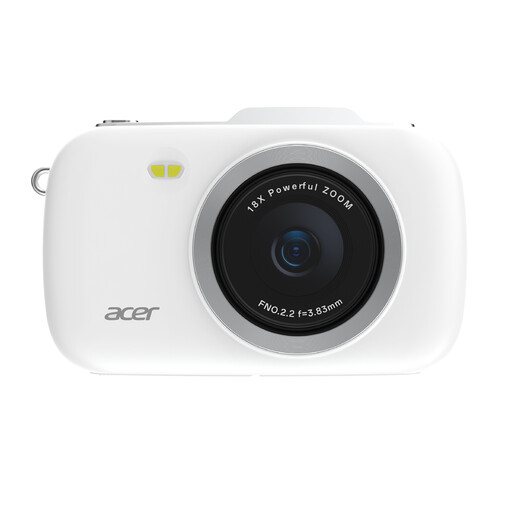
KOMERY G7-A 4K camera with 18× zoom, white
The stated zoom can help you try different framings. Take a test shot to see whether your chosen crop shows small print details.
The product information lists 18× zoom, 80 MP photos and 4K video.
View at Joybuy
 No image available
Sony ZV-E10 with E PZ 16–50mm zoom lens, black
The zoom lens gives you different framings to try with complete invitations. Assess small details separately with a test shot.
The product information lists a 24.2 MP APS-C sensor and an E PZ 16–50mm lens.
View at Joybuy
 No image available
Sony Alpha A6100 with 16–50mm f/3.5–5.6 OSS II
The zoom lens lets you try different ways of framing an invitation. Test separately whether your crop shows small lettering or embossing clearly enough.
The product information lists a 24.2 MP APS-C sensor and a 16–50mm lens.
View at Joybuy
 No image available
Sony ZV-1 compact camera
The stated zoom range gives you different framings to try. Take a test shot to check that your chosen crop shows the text and paper details clearly.
The product information lists 20 MP, 2.7× optical zoom, a 24–70mm focal length and RAW shooting.
View at Joybuy
Frequently asked questions
Do I need to buy a new camera to photograph invitations for my portfolio?
Not necessarily. First, take a test shot of the whole card with your current device and assess the text, framing and colour. Canon Europe suggests a kit lens or compact camera as a possible starting point for a flat shot. A stable, straight set-up helps you capture flat work.
How can you avoid skewed cards and inconsistent colours between photo sessions?
Position the camera directly opposite the flat card and keep your set-up and lighting as consistent as possible. Adjust the white balance to suit the light you’re using and compare a test image with the original. RAW can give you more scope to adjust the white balance afterwards.
Does a camera kit usually include a lens for small embossed details?
Don’t assume it does: a macro lens may be sold separately. Canon lists different magnification figures for the RF-S 18–45mm and the separate RF 35mm Macro. Nikon’s Z MC 50mm is a separate lens, alongside the Z50II zoom kit mentioned above. Check exactly what’s included in the kit.
What cooling-off period and guarantee apply when buying online in the Netherlands?
For many eligible distance purchases from a business, you have a 14-day cooling-off period, according to the Rijksoverheid. Consumers also have a statutory guarantee: if a product is faulty, the seller must provide a solution. The Netherlands doesn’t have a fixed statutory guarantee period; the rules depend on the type of purchase.
Can you simply post a photo of a customer’s invitation in your portfolio online?
First check whether the invitation contains personal information or someone else’s work. According to the Autoriteit Persoonsgegevens, publishing other people’s personal data on an organisation’s website is generally only allowed with their consent. The Rijksoverheid also identifies the creator’s consent as the starting point for using other people’s copyright-protected text or photographs. Check the rights for each invitation.


