Who is this camera setup for?

Key detail photographer

You want to capture wear, engravings and other small features clearly, so magnification and focusing matter. Canon Netherlands, Nikon Netherlands and Sony Netherlands explain macro options and the significance of focusing distance and working distance.

Key collection photographer

You want to photograph keys consistently and clearly, perhaps with the same framing and background each time. Canon Netherlands recommends a tripod to help keep a product setup steady.

Fan of simple close-ups

You want to take photos at home by a window without constantly changing lenses, and are looking for a camera with a useful close-up mode. OM SYSTEM describes the macro modes on the TG-7.

What should you consider when choosing?

Compact camera with close-up mode

A good fit if: you want to photograph small details without changing lenses; OM SYSTEM describes the macro modes on the TG-7.

Bear in mind: check which version and accessories are included; the short shooting distance can affect where you position the camera and the light.

Mirrorless camera with a macro lens

A good fit if: you want a choice of lenses and more precise control over focusing. Canon lists the RF 85mm F2 Macro IS STM as compatible with the EOS R50 and specifies 0.5× magnification; Nikon specifies 0.67× for the NIKKOR Z DX MC 35mm f/1.7 on DX.

Bear in mind: the camera body and macro lens are separate items unless the offer explicitly includes both. A wide aperture alone does not guarantee that the entire key will be in focus.

What to consider What should you check? Who is this important for?
Capturing fine details Check the maximum magnification and working distance; compare figures only in the context of the lens and sensor specified. If I want to see small areas of wear or engravings clearly, I look at both magnification and the space in front of the lens. Around 33% of consumers put capturing fine details first.
Consistent focus Check whether you can set up the camera steadily and which focusing features the exact model offers. Focus bracketing does not automatically produce a merged image. If I want to photograph several keys with the same framing, I need to be able to position the camera steadily and reproduce the focus. Around 25% of consumers prioritise consistent focus.
Simplicity or interchangeable lenses Check what’s in the box, the lens mount and whether an advertised kit actually includes a macro lens. If you want to take a quick close-up at home without changing lenses, look for a simple process. Around 25% of consumers prioritise simplicity and a straightforward purchase.
Window light and shadows Consider whether there’s room to place a reflector or white card next to the key. In window light, I want to be able to brighten the darker side of the key without immediately choosing a different camera. Around 17% of consumers prioritise control over lighting.

Pitfalls to avoid when buying

  • Judging the camera body on its own

    Magnification and the lens mount depend on the lens and camera you choose. Canon lists the RF 85mm F2 Macro IS STM as compatible with the EOS R50; check the combination and everything included in the offer.

    A suitable macro lens may need to be bought separately.

    Before buying, check which items are included in the offer and whether the lens is compatible with the camera body.

  • Assuming ‘macro’ or a wide aperture means the whole key will be in focus

    Close-ups can have a limited depth of field. Combining shots taken at different focus points is a separate step, not an automatic result of focus bracketing.

    Decide how much of the key needs to be in focus, then check the focusing features and any image-merging steps for the exact model. Canon Netherlands and Nikon Netherlands explain focus stacking as combining shots taken at different focus points.

  • Confusing minimum focusing distance with working distance

    Minimum focusing distance is measured from the image sensor; working distance is the space between the subject and the front of the lens. This space affects where you can position the camera and the window light.

    Sony Netherlands clearly explains the difference. So, when photographing keys, also compare working distance rather than relying only on a distance figure in a product title.

  • Seeing an extended warranty as a replacement for your statutory rights

    An additional service plan is not the same as your statutory rights if a product is faulty. The Dutch Government explains that the Netherlands has no fixed statutory warranty period.

    Check what extra cover the plan provides and read the terms and conditions; don’t assume there is one fixed statutory period.

Camera brands to consider

OM SYSTEM

The TG-7 is a compact camera with macro modes for close-ups, without the need for interchangeable lenses.

  • OM SYSTEM states that the microscope mode can focus from 1 cm.
  • This manufacturer’s specification alone doesn’t tell you whether an entire key will be in focus in a single shot. Also check the version and any accessories.

Canon

The EOS R50 is an APS-C mirrorless camera; the RF 85mm F2 Macro IS STM is a separate lens that Canon lists as compatible.

  • Canon specifies 0.5× magnification for the lens and describes focus stacking to increase depth of field.
  • Check what’s included in the package and what’s involved in using the feature; this manufacturer information is not an independent comparison with other brands.

Nikon

The Z50II with the separate NIKKOR Z DX MC 35mm f/1.7 lens is a mirrorless camera setup for close-ups and more general framing.

  • For this DX lens, Nikon specifies a maximum reproduction ratio of 0.67× and a distance of 7.2 cm between the front of the lens and the subject at the closest focusing distance.
  • Nikon describes the framing as similar to 1:1 on FX; this is not the same as an optical reproduction ratio of 1:1.

Sony

According to Sony, the SEL30M35 is a 1:1 macro lens for APS-C cameras with an E-mount.

  • The 1:1 magnification is a useful figure when assessing the level of detail you want to capture.
  • Sony’s product information and guidance give different figures for minimum focusing distance. Don’t use that figure as a buying threshold without checking it for the exact lens.

Cameras at Joybuy

These Joybuy products are digital cameras for photography. For each model, check whether the focusing distance and close-up capabilities are suitable for capturing details on old keys; zoom and megapixel specifications alone won’t tell you this.

Komery W6 digital camera, 12× optical zoom, 4K

Komery W6 digital camera, 12× optical zoom

For close-ups of keys: check whether the camera can focus at the distance you want to photograph the details from; zoom specifications alone don’t indicate macro suitability.

The product name lists 12× optical zoom, 4K, 64 MP and Wi-Fi.

Joybuy

Songdian pocket camera, 4K, 44 MP, pink

Songdian pocket camera, 4K, 44 MP, pink

For photographing small details on keys: first check whether the camera can focus at the close distance you need.

The product name lists 4K, 44 MP and 16× zoom.

Joybuy
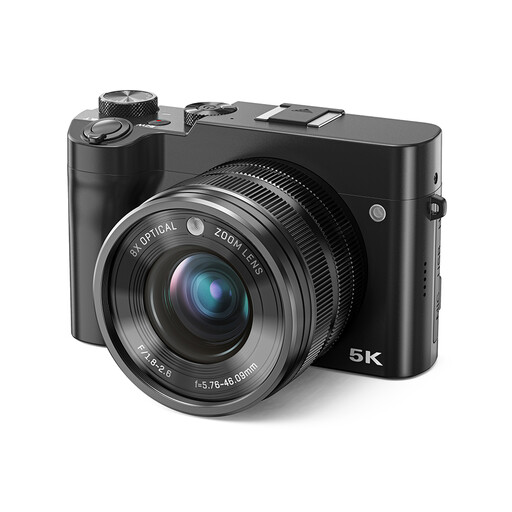
Songdian digital camera, 8× optical zoom, black

Songdian digital camera, 8× optical zoom, black

For close-ups of old keys, suitability depends on the camera’s focusing capabilities; check these for your subject and shooting distance.

The product name lists 8× optical zoom, 5K, 64 MP, a dual-lens design and night vision.

Joybuy

Frequently asked questions

Do I always need a macro lens to photograph old keys?

No, not always. First decide how small the detail is that you want to show clearly; a camera with a suitable close-up mode may be enough. With a mirrorless camera, maximum magnification depends on the lens you choose and how it works with the camera body.

How can I keep the key and the shot in focus in window light?

Set the key and camera up steadily, and use a tripod if needed. If a single plane of focus isn’t enough, check whether the camera supports focus bracketing and whether the shots need to be merged afterwards; Canon Netherlands and Nikon Netherlands describe focus stacking as combining images taken at different focus points. Canon Netherlands suggests using white card to bounce light back onto a dark side.

What should I check when buying a camera with a separate lens?

Check whether the offer includes a camera body, a lens or both, and whether the lens mount is compatible. Also check the magnification and working distance of the exact lens, so you know how much space there’ll be in front of it for window light or a reflector.

Can I publish photos of my keys if recognisable people appear in them?

It depends on how you use the images. The Dutch Data Protection Authority describes an exception for photos kept solely for personal or household use; the GDPR may apply when publishing recognisable people more widely or for business purposes. Consider each publication on its own merits.
