
Detail enthusiast
You want to capture the shape and texture of a small leaf bud in close-up. Compare the magnification and the distance at which the camera and lens can focus. Canon and Nikon list different lens specifications for this.


The right camera for photographing leaf buds in a city park depends mainly on how much detail you want to capture and how much equipment you want to carry. The compact OM SYSTEM TG-7 has a built-in close-up mode; with a mirrorless camera, you’ll need a suitable macro lens, but you can change lenses. If you’re buying a kit, always check which lens and accessories are actually included.
You want to capture the shape and texture of a small leaf bud in close-up. Compare the magnification and the distance at which the camera and lens can focus. Canon and Nikon list different lens specifications for this.
You want to take photos spontaneously on a walk without constantly changing lenses. A compact camera can be convenient to carry; the Dutch Consumers’ Association lists portability as a factor to consider when choosing a camera.
You may already have a camera body and want to know whether a compatible macro lens will do the job. Canon, for example, documents an EOS R50 paired with an RF 35mm F1.8 MACRO IS STM; check whether the lens is included in the kit on offer.
First decide how much detail you want to capture and how close you can get to the bud. Then consider portability, focusing and the equipment you already own.
| What to consider | What should you check? | Who should consider this? |
|---|---|---|
| Filling the frame with a small bud | Compare the reproduction ratio on the same basis, and check both the minimum focusing distance and the working distance. | If I want to examine the fine shape of a bud, capturing enough detail is my priority; around 33% of consumers prioritise high magnification for detail. |
| Being able to take photos quickly and travel light | Check whether the camera has a built-in close-up mode and which accessories are included with the version you’ve chosen. | If I want to stop and take a photo quickly while out walking, I want to carry as little separate equipment as possible; around 27% of consumers prioritise portability. |
| Focusing in low light, with a shallow depth of field or on a moving subject | Check the focusing options offered by the exact camera body, and bear the available light in mind. | If a bud or branch is moving, I want to be able to focus on the right part of the bud; around 20% of consumers prioritise reliable focus. |
| Existing equipment and a complete kit | Check the lens mount and whether the kit includes a suitable macro lens. | If I already own a camera body, I want to know whether I can keep using it and which lens I still need; around 20% of consumers prioritise reusing their existing system and having a complete set-up. |
A good fit if: you want to photograph accessible leaf buds close up on a walk without carrying a separate lens. OM SYSTEM says the TG-7 can focus from 1 cm in microscope mode.
Bear in mind: the lens is built in, and the stated distance applies to that mode; an accessory included in a kit won’t necessarily come with every version.
A good fit if: you want to change lenses or already own a compatible camera body. Canon and Nikon each document a mirrorless camera paired with a separate macro lens.
Bear in mind: the lens isn’t always included with the body. Canon quotes magnification of up to 0.5×; Nikon lists 0.67× on the sensor and describes it as the equivalent of 1:1 in the FX image area. These are different specifications.
A good fit if: you already own a compatible Sony camera and are considering a suitable E-mount macro lens. Sony describes the SEL30M35 as a 1:1 lens.
Bear in mind: Sony lists a working distance of around 2 cm for this lens; branches may make it harder to get close or light your subject. Check that the camera and lens are compatible.
The Canon and Nikon close-up combinations described here each use a specific lens alongside the body. Without a suitable lens, a mirrorless camera won’t automatically be able to handle the same close-up photography.
Compare complete kits and check the lens mount and what’s included before you buy.
If the lens isn’t included, you’ll need to factor the cost of a suitable one into your choice.
Manufacturers use different magnification figures and descriptions. A specification may refer to the sensor or to the FX image area.
Compare reproduction ratios on the same basis, and also consider the working distance and the framing you want.
The LG-1 light guide is included with the OM SYSTEM micro-adventure kit mentioned here; it doesn’t automatically come with every version of the TG-7.
Check the contents of the exact package before relying on an accessory being included.
The Tough TG-7 is a compact option with built-in close-up modes for small subjects within easy reach.
Canon documents the EOS R50 with the RF 35mm F1.8 MACRO IS STM lens for close-ups and everyday photography.
The Z50II with the NIKKOR Z DX MC 35mm f/1.7 is a DX mirrorless combination documented by Nikon for close-ups and everyday photography.
The E 30mm F3.5 Macro SEL30M35 is a lens option for a compatible Sony camera with an E-mount.
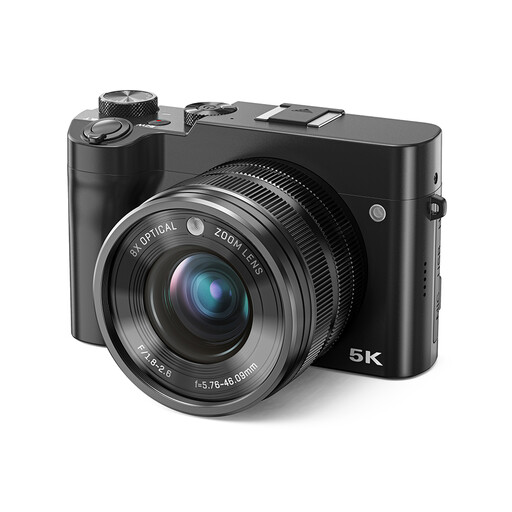
This Joybuy selection is a digital camera. If you want to photograph leaf buds, check separately whether the camera can focus at the close distance you need.
 No image available
This is only worth considering for photographing leaf buds if the exact camera can focus close enough; check its close-up capabilities before buying.
The product title lists 8× optical zoom, 5K, 64MP and a dual-lens design. The zoom specification alone doesn’t tell you whether the camera can focus on small buds.
No, you don’t need one for every type of photo; first decide how large you want the bud to appear in your final image. Compare specifications on the same basis: Canon lists up to 0.5× for the RF 35mm lens, while Nikon lists 0.67× on the sensor and describes it as the equivalent of 1:1 in the FX image area.
The minimum focusing distance is measured from the sensor; the working distance is measured from the front of the lens to the subject. Sony Support lists around 9.5 cm from the subject to the sensor and a working distance of around 2 cm for the SEL30M35. Check both measurements if branches restrict your access.
Choose exactly which part of the bud you want in focus. Canon explains that depth of field becomes shallower as you move closer to the subject; focus bracketing may be an option if your specific camera supports it and the subject stays still enough.
In the Netherlands, products must be of satisfactory quality, and the seller must provide a solution if a product is faulty. The Dutch government says there is no fixed statutory guarantee period. In many cases, online purchases from a business come with a 14-day cooling-off period, subject to applicable exceptions. This is separate from your rights if a product is faulty.
According to the Dutch Data Protection Authority, an exception applies to personal or household use when you keep private photos within your household or a very limited circle. Other privacy rules may apply if people are identifiable and you share the photos more widely. Check the signs and rules at the park for access and use; Staatsbosbeheer’s rules don’t automatically apply to every city park.