
Greeting card seller with a dedicated photography spot
If you photograph new cards regularly, you’ll want to be able to repeat the same framing and background. Canon UK describes a tripod as a useful way to keep your composition consistent.


Start with a fixed set-up and controlled lighting: a different camera won’t automatically give you an even background, consistent framing or accurate colour. Try your current phone or camera first. Only buy a standalone camera if you need more control over the lens, file format or settings, and check the lens and exactly what’s included in the set.
If you photograph new cards regularly, you’ll want to be able to repeat the same framing and background. Canon UK describes a tripod as a useful way to keep your composition consistent.
If you want white paper and illustrations to look as consistent as possible, consider lighting and white balance as well as the camera. Nikon explains how your choice of white balance can affect colour reproduction.
If you also want to capture small print or paper details, check that your chosen lens can focus at the distance you need. The camera’s lens mount and specifications can help you assess this, but they don’t determine a lens’s suitability on their own.
First, see whether your current device can deliver the result you want with a fixed position and even lighting. Then consider which camera features or lens you still need.
| What to consider | What to look for when buying | Who is this important for? |
|---|---|---|
| Colour and white paper | Check the white balance settings and take a test shot under the lighting you actually use, ideally with a neutral reference. | If I want paper and illustrations to look similar in photos taken at different times, I consider both the lighting and the white balance. Around 40% of consumers put colour reproduction first. |
| Repeatable framing | Check that you can position the camera practically above the card using your tripod and the available height. | When I photograph a series of cards, I don’t want to have to set up the frame again each time. Around 30% of consumers prioritise repeatable framing. |
| Small details | Check the focusing distance or maximum magnification of the supplied or chosen lens for the details you want to capture. | If small text, print details or paper texture need to be clearly visible, I check both the lens and the working distance. Around 20% of consumers start with this need for detail. |
| What’s included and how much it costs | Check whether the offer is for a body only or a kit, and which other items you’ll need for your set-up. | If I want to avoid unnecessary purchases, I first check what my current device and set-up can already do. Around 10% of consumers prioritise avoiding extra costs. |
White balance can change how white and other colours appear. Simply changing the background won’t automatically make your photos colour-consistent.
Take a test shot using the lighting you use for your cards, and keep the set-up as consistent as possible. Nikon shows how different white balance settings can produce different results.
A fixed lighting set-up takes preparation and may take time to get right.
A camera body and a kit with a lens are different buying options. The lens and the distance at which it focuses both matter for framing and detail shots.
Read the list of what’s included and check the specifications of the lens actually supplied with the offer.
If the lens isn’t suitable, you may need to buy one separately.
The number of effective pixels doesn’t tell you how close a lens can focus or how large a detail will appear in the image.
Compare the complete camera-and-lens combination for the details on your cards and, if possible, take a test shot.
The EOS R50 is an APS-C mirrorless camera with interchangeable RF or RF-S lenses.
The ILCE-6400 is an APS-C mirrorless camera with an E-mount, giving you the freedom to choose a lens.
The X-S20 has an X-mount, so you can choose a separate lens.
The Z50II is available as a camera body only or as a kit with a lens.
These cameras are options to consider for photographing greeting cards. Check whether the lens and focusing distance of each model suit your set-up.
 Image unavailable
For card details, check whether this model focuses at the distance you need; digital zoom alone won’t tell you.
The product name lists 4K, 64MP, autofocus and 18X digital zoom. The product information warns that digital zoom can reduce image quality.
 Image unavailable
Check the focusing capabilities before choosing this model for small text or print details on a card.
The product name lists 4K, 64MP, 12X optical zoom and Wi-Fi. Zoom specifications alone don’t tell you whether the camera can focus at close range.
 Image unavailable
Before choosing this model for still photos of cards, check that its focusing distance and controls suit your set-up.
The product name lists a 1-inch CMOS sensor, 4K/120fps video and 3-axis stabilisation. Video specifications don’t automatically make a camera suitable for detailed card photography.
 Image unavailable
Check whether the camera focuses at the distance you need if you also want to photograph small card details.
The product name lists 4K, 44MP and 16X zoom. The zoom specification doesn’t tell you how close the camera can focus.
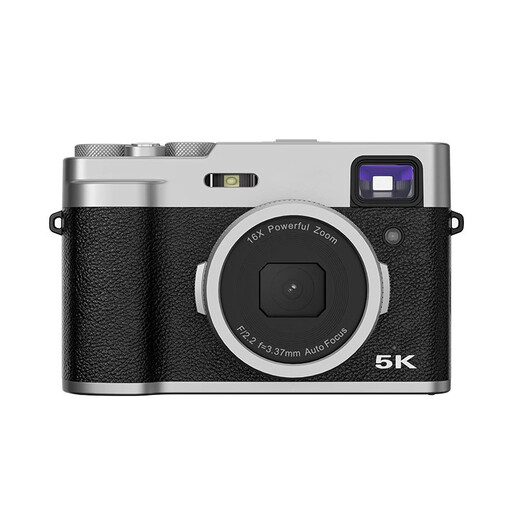 Image unavailable
Check the focusing distance for the details on your cards; autofocus alone doesn’t tell you whether a camera can focus close enough.
The product name lists 48MP, autofocus and a 2.8-inch LCD screen.
Not necessarily: first try your current camera or phone with a fixed composition and controlled lighting. Canon UK describes a tripod as a way to keep framing consistent. Take a test shot to see whether your device captures enough detail for your needs.
Keep the lighting as consistent as possible and test the white balance using a neutral reference. Nikon shows how different white balance settings can change colour reproduction.
First check whether you’re looking at a body only or a kit with a lens. Nikon shows both options for the Z50II; you may also need a tripod for a repeatable set-up. Check what you already have and what else would suit your set-up.
According to the Government of the Netherlands, you’re entitled to a product that works as it should, but there is no fixed statutory warranty period in the Netherlands. If a product is faulty, contact the retailer to resolve the issue. A manufacturer’s warranty or an extended warranty may provide additional cover.
Don’t assume that you can. The Government of the Netherlands states that you may only use other people’s copyright-protected texts and photos with the creator’s permission. For a specific card, check who owns the rights to the content shown; this is separate from your choice of camera.