Start with a stable, straight camera set-up and controlled lighting. For an accurate reproduction, use a grey or colour reference chart too. A mirrorless camera with a suitable lens can be useful for repeatable overall and detail shots, but it won’t fix uneven lighting or reflections. National Museums Scotland describes using colour references and adjusting lighting angles. For flat artwork, a stable set-up can help keep the camera straight and make the exposure repeatable.
Who is this buying guide for?
Maker of accurate etching photographs
You want to capture the paper colour, tones and lines consistently for a portfolio or reproduction file. Lighting, a colour reference and control over the file are important considerations. National Museums Scotland describes colour management using a grey card or colour checker.
Photographer of etching techniques and details
You want to show fine linework or sections of an etching. So assess not just the camera, but also the lens’s magnification, focusing and working distance. DT Heritage describes a stable copy stand set-up for flat artwork.
Occasional documenter
You mainly need a recognisable overall shot and want to find out first whether your existing equipment will do the job with a stable set-up. Printbeat describes a phone as a usable option for small, flat artwork in good light. This is practical advice from a supplier, not a comparative product test.
What should you look for when choosing?
Existing camera or phone
Best suited to: You mainly need an overview for your own records and want to try your existing equipment first, using a straight, stable set-up and even lighting.
Trade-off: For repeatable reproductions, you may need more control over lighting, colour references and file editing.
Mirrorless camera with interchangeable lens
Best suited to: You want to take overall or detail shots regularly and need a different lens framing or working distance.
Trade-off: Check the lens mount and what’s included in the kit. A camera body on its own won’t determine whether you can get the framing you want or reproduce colours accurately.
| Consideration |
What should you look for when buying? |
Who is this important for? |
| Paper colour and tone |
Check whether the model supports RAW images, and take a reference shot using the lighting you’ll actually use. |
If I want to capture paper colour and tone consistently, I also consider colour references and lighting; around 33% of consumers rank accurate colour and tone as their top buying priority. |
| Lighting and reflections |
Check that the camera and lighting can be positioned securely. Test even lighting for an overall shot and, separately, raking light for texture. |
If you want to photograph the etching evenly or bring out its relief, you need to be able to assess the lighting angle; around 27% of consumers prioritise control over lighting. |
| Fine lines and details |
First decide on the framing you want. Then check the magnification, working distance, lens mount and focusing options. |
For framing fine lines, it also matters whether the lens can focus close up; around 20% of consumers make detail reproduction their first buying consideration. |
| Complete set-up |
Check whether the offer includes a body or a kit, and find out which lens and set-up components you’ll need. |
If I only need an overall shot now and then, I want to know in advance which components I already have; around 20% of consumers prioritise a simple, complete set-up. |
Common buying mistakes
-
Assuming more megapixels will fix poor lighting
The number of megapixels doesn’t change how light falls across the etching. National Museums Scotland explains that the angle of the light affects which tones and textures are visible.
Start by testing how evenly the artwork is lit and take a reference shot. Then compare cameras based on the framing and workflow you need.
-
Assuming a body or kit is a complete detail-photography set-up
For a tight crop, the lens needs to suit the magnification and working distance you want. The Canon RF 35mm F1.8 Macro IS STM is a separate lens; Canon lists it as compatible with the EOS R50.
Before ordering, check the full kit contents, lens mount and magnification needed for your etching.
-
Using the same lighting set-up for an overall shot and texture
National Museums Scotland explains that raking light can bring out relief, but it can also make shadows more pronounced.
Decide what each shot needs to show. If necessary, take a separate photo with an adjusted lighting angle to capture the plate mark or texture.
Camera brands to compare
Canon
The EOS R50 is an APS-C mirrorless camera with an RF mount. For certain detail shots, you can assess a suitable lens separately.
- Canon lists 24.2 effective megapixels for the EOS R50. Canon says the RF 35mm F1.8 Macro IS STM is compatible with the EOS R50 and offers up to 1:2 magnification.
- The RF macro lens is a separate product. Canon does not list sensor-shift stabilisation for the EOS R50, and EF-M lenses are not compatible. These are manufacturer specifications, not a reproduction test.
Sony
The ILCE-6400 is an APS-C camera with an E-mount. Choose a lens to suit the overall or detail framing you want.
- Sony lists approximately 24.2 effective megapixels and 14-bit RAW for the ILCE-6400.
- Assess the lens and kit contents separately. The specifications listed don’t, by themselves, show that a shot will reproduce colours accurately without suitable lighting.
Fujifilm
The X-S20 is an APS-C mirrorless camera with an X-mount. It offers a RAW workflow and a choice of compatible lenses.
- Fujifilm lists 26.1 effective megapixels, 14-bit RAW and five-axis sensor stabilisation for the X-S20.
- The stated stabilisation performance applies under the CIPA test conditions specified by Fujifilm. It’s no substitute for even lighting or a stable reproduction set-up.
Camera options at Joybuy
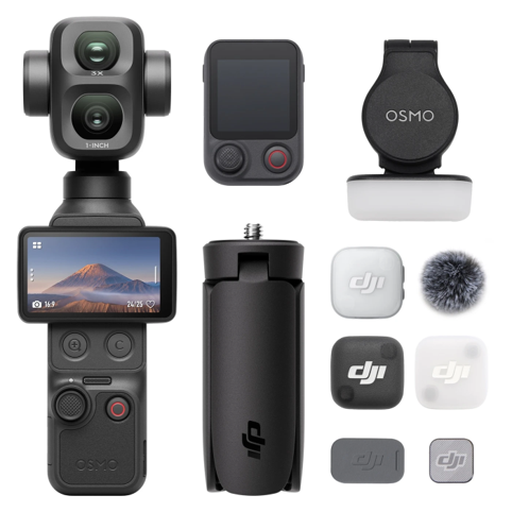
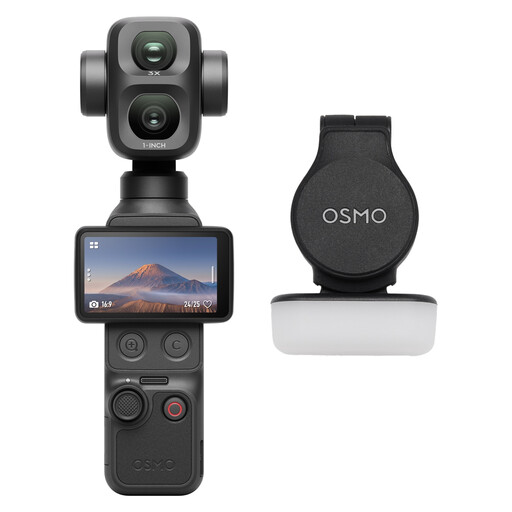
These Joybuy products are pocket vlogging cameras. Before photographing an etching, check that the framing you want and stable positioning suit your workflow.
 No image available
Osmo Pocket 4P – Vlog Combo – Black
Before choosing, assess whether this pocket vlogging camera suits the framing you want and a stable, straight set-up for an etching.
The product description lists a 1-inch CMOS sensor, a 20 mm f/2.0 lens and 4K video. According to the description, the stated 4K/240fps applies to slow motion only.
Joybuy
 No image available
Osmo Pocket 4P – Standard Combo – Black
Before choosing, assess whether this pocket vlogging camera suits the framing you want and a stable, straight set-up for an etching.
The product description lists a 1-inch CMOS sensor, a 20 mm f/2.0 lens and 4K video. According to the description, the stated 4K/240fps applies to slow motion only.
Joybuy
Frequently asked questions
Do I need to buy a special camera for a dark background?
Not just because of the dark background. Start with a stable, straight set-up and controlled lighting. Check that the etched lines, paper and background are each clearly visible. For repeatable reproductions, National Museums Scotland describes using a grey or colour reference chart and editing RAW files.
How can I show the plate mark without affecting the overall shot?
If necessary, take two shots: an evenly lit overall image and a separate photo using raking light to show the texture. National Museums Scotland explains that raking light accentuates relief, but stronger shadows can obscure details.
What should I check after buying or if there’s a fault?
When your order arrives, check the exact kit contents and make sure the lens fits the camera. ACM ConsuWijzer states that online consumer purchases generally come with a statutory 14-day cooling-off period after delivery. Your statutory guarantee for a faulty product depends on what you could reasonably expect from it under normal use; the seller is your point of contact.
Can I publish a photograph of an etching online or sell it as a print?
Taking a photo for your own use is not the same as distributing or making the etching available to the public. The Dutch government states that copyright-protected work by others cannot be distributed or made public without permission. So check what rights apply to the specific etching before publishing it or selling it as a print.


