
Maker with a product catalogue
You photograph several ceramic pieces for a shop or portfolio and want to keep their colours and framing consistent as the window light changes. Nikon explains how a white reference card can help in mixed lighting.


You don't automatically need a new mirrorless camera: for photographing complete pots, an existing camera or phone may be enough if it can focus close enough and achieve the framing you want. For small relief details, the lens's magnification and focusing distance matter more than the megapixel count alone. When window light changes, a consistent set-up and controlled white balance can help. A macro lens, tripod or filter will require additional equipment.
You photograph several ceramic pieces for a shop or portfolio and want to keep their colours and framing consistent as the window light changes. Nikon explains how a white reference card can help in mixed lighting.
You want to show stamps, surface texture or small decorations clearly. For details like these, it's important to consider the magnification and focusing distance of the lens you choose. Fujifilm X Series explains why maximum magnification matters in macro photography.
You need to take quick overview shots between market stalls and weigh up how much camera and lens equipment is practical to carry. The Consumers' Association highlights compactness as an important consideration if you don't want to carry a heavy bag.
Start with what you want to capture: complete pots mainly call for useful framing, while small relief details make lens choice more important.
| Consideration | What should you check? | Who should pay particular attention? |
|---|---|---|
| Colour in window light | Check whether the camera offers white balance settings and, if you want to edit your images, supports RAW capture. Compare test shots in the light at your market stall. | If I'm photographing several pieces in changing window light, I want to keep glaze colours consistent across a series. Around 28% of consumers put colour consistency first. |
| Small details | Compare the maximum magnification, minimum focusing distance and working distance of the exact lens and mount. | If you want to fill the frame with stamps or small decorations, focus on how well the lens can show them up close. Around 22% of consumers prioritise detail. |
| Travelling and working light | Check the total weight of the camera body and lens, and whether the zoom offers both an overview and the framing you want. | If I'm moving between stalls, I want to take pictures quickly without carrying more than I need. Around 22% of consumers prioritise portability and ease of use. |
| Reflections on glaze | First try changing the position of the pot, camera or window. If you're considering a filter, check the fitting and its effect on the image. | With glossy glaze, a reflection can hide details I want to show. Around 17% of consumers put reflection control first. |
| Complete set-up | Check what comes with the camera body and which compatible lens or support you still need. | If I want to avoid needing essential extras after buying, I compare the complete set-up. Around 11% of consumers prioritise having all the equipment they need. |
For a maker's mark or relief, the lens's magnification and focusing distance affect how large the detail appears in the image. The camera body alone won't tell you whether the lens you've chosen is suitable for small details.
Compare the exact camera body and lens combination with the size of the details you want to photograph.
You may need a separate, suitable lens for small details.
In changing or mixed light, automatic settings can produce different results from a fixed white balance or reference card. Nikon uses mixed lighting as an example of a situation where a white reference card can help.
Take a test shot with a colour reference in the light at your market stall, then assess the series consistently.
Nikon explains that a polarising filter can reduce certain reflections, but it also reduces the amount of light and can change the visible sheen.
First move the subject, camera or light source. Only then try a suitable filter and use test shots to check whether the sheen you want is still there.
A suitable filter is an additional purchase.
The EOS R50 range is an APS-C option to consider if you're comparing a lightweight mirrorless camera with RF or RF-S lenses.
The Z50II is a DX camera with a Z mount for anyone looking for a viewfinder and interchangeable lenses.
The X-S20 and X lens system are worth considering if RAW capture and a choice of close-up or macro lenses are important to you.
The Alpha range is worth considering if you're comparing an APS-C body with an E mount and a choice of lenses.
The OM-5 Mark II is worth considering if you want to explore in-camera focus stacking for still close-ups.
This selection includes a mirrorless camera with a zoom lens and compact handheld cameras. For each model, consider the framing you want and what you'll need to capture ceramic details up close.
 Image unavailable
The included zoom lens offers different framing options for overview shots and medium-sized details. Check whether this exact lens can capture very small details.
The product description lists a 24.2 MP APS-C sensor and Product Showcase mode, which switches focus from a face to an object.
According to the product description, an adapter or charger and an SD card are not included.
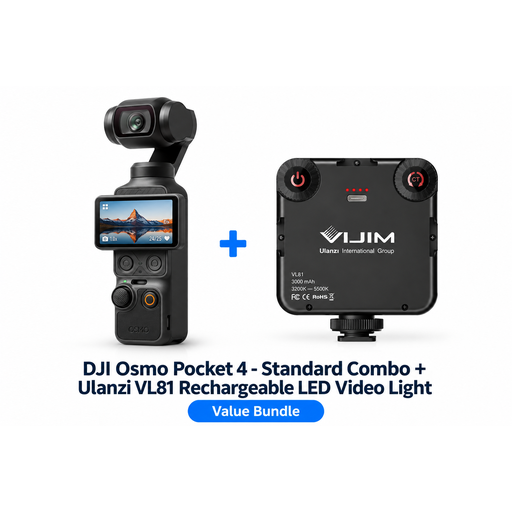 Image unavailable
This bundle pairs a handheld gimbal camera with a portable LED video light and is described as suitable for indoor product photography. Use test shots to check whether the camera can capture ceramic details from the distance you need.
The product description lists an adjustable colour temperature of 3200 K to 5500 K for the light.
 Image unavailable
The product description lists photography as one of its uses. For ceramic details, take test shots to check whether the focus and framing work at the distance you want to shoot from.
The version described has a 1-inch CMOS sensor, a rotating 2-inch touchscreen and weighs 179 g.
No. If you mainly photograph complete pieces, first test whether your current lens can focus close enough and achieve the framing you want. For very small features, you can compare the maximum magnification and focusing distance of specific lenses.
Start with test shots from a fixed set-up and, in changing or mixed light, try a white balance setting or reference card. A tripod can help you keep the framing consistent. If your camera supports RAW, you can adjust the white balance later.
Not necessarily. First try changing the angle of the light or camera. A suitable polarising filter can reduce certain reflections, but it also reduces the amount of light. Use test shots to check whether the sheen you want is still there.
Contact the seller. According to the Dutch government, the seller must offer a solution if a product is faulty. The Netherlands has no fixed statutory guarantee period; the expected lifespan depends on the product and the circumstances. An additional warranty does not replace your statutory rights.
If you photograph identifiable visitors as a business or organisation and process the images, the GDPR applies, according to the Dutch Data Protection Authority, and you need a lawful basis. Consent can be a lawful basis, but it isn't the only one. If you want to avoid this privacy issue, set up your product photos without identifiable visitors and agree photography arrangements with the event organiser.