
Volunteer documenting a collection
You want to take clear, consistent overview shots before the exhibition, and first check whether your existing phone or camera will do the job.


You don’t necessarily need a new camera: the Cultural Heritage Agency of the Netherlands says that a good mobile phone camera or compact camera can be used to document objects. Start by taking test shots of an entire object and the smallest detail you want to show. If those details don’t come out clearly, a compact camera with a close-up mode could be a good option. If you’re considering a system camera, you’ll also need to assess the lens included.
You want to take clear, consistent overview shots before the exhibition, and first check whether your existing phone or camera will do the job.
You also need to show stamps, wear or small areas of damage. So make sure you test the smallest relevant detail.
You photograph ceramics in different sizes and want to be able to adjust settings or change lenses. Assess the complete camera kit, not just the camera body.
Start with some test shots, then choose based on what’s missing: consistent overview shots, clear detail, control over colour or a complete kit.
The Cultural Heritage Agency of the Netherlands says that a good mobile phone camera or compact camera can be used to document objects. When taking a series of photos, keep the background, distance, angle and lighting as consistent as possible.
| What to consider | What should you check? | Who is this important for? |
|---|---|---|
| Overview shots | Take photos of objects in different sizes using the same background, distance and angle. | If you want to document every piece clearly and consistently, this should be your first priority. Around 33% of consumers prioritise consistent overview shots. |
| Small details | Test the smallest maker’s mark or area of damage using the exact camera and lens. | If stamps, wear or small areas of damage need to be clearly visible, focus your test shot on these details. Around 25% of consumers prioritise detail. |
| Colour and gloss | Compare test shots taken in the same lighting and check whether you can adjust the white balance. | If the colour of the glaze is important in your presentation, look for an even lighting set-up and the option to adjust the white balance. Around 25% of consumers prioritise colour and gloss. |
| Complete kit | Check which lens is included, whether the mount is compatible and which accessories you’ll need. | If you want to get started without choosing an extra lens, check what’s in the complete kit rather than looking at the camera body alone. Around 17% of consumers prioritise a complete, straightforward kit. |
The Cultural Heritage Agency of the Netherlands says that a good phone or compact camera can be used to document objects. So you don’t automatically need to buy a new one.
First, use your current equipment to take an overview shot and a photo of the smallest detail you want to show.
A camera body isn’t the same as a kit with a lens. The specific lens will affect whether you can take the close-up shots you need.
Check what’s included in the bundle, the lens mount and the close-up capabilities of the lens you’ll actually receive.
The OM SYSTEM TG-7 manual describes shooting from 1 cm away in its specific close-up mode. On its own, this doesn’t tell you how an entire object will look at the intended presentation size.
Test both a small detail and the whole object using the set-up you plan to use for the exhibition.
The EOS R50 is a system camera worth considering if you want to compare kits with lenses and may want to choose different lenses later.
The ILCE-6400 is a system camera body worth considering if RAW shooting and interchangeable E-mount lenses suit the way you work.
The Z50II is an alternative system camera to consider if you want to compare a camera with a vari-angle screen and a Nikon Z kit chosen to suit your needs.
The Tough TG-7 is a compact camera worth considering if small maker’s marks or areas of damage are the main subjects of your close-up shots.
Below are cameras that are relevant to the subject, but vary in type and use. For photographing ceramics, check whether the camera can take still photos and capture the close-ups you need.
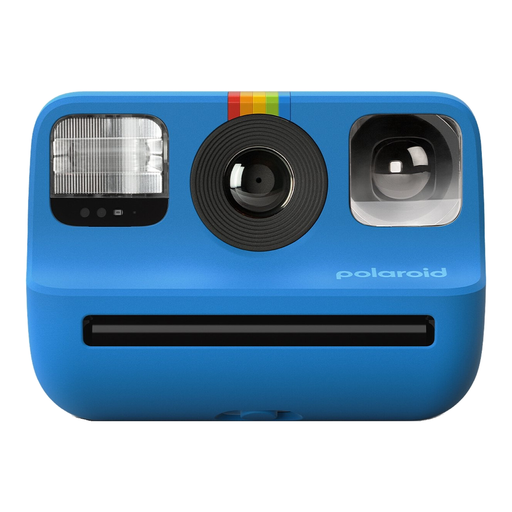 No image available
This is an instant camera for anyone who wants physical prints as well as digital images. Check that it suits the way you plan to use your ceramic photos.
It uses Polaroid Go film and produces prints measuring 66,6 × 53,9 mm. The film contains caustic paste: avoid contact with skin and eyes, and keep film and small parts out of children’s reach.
 No image available
The product title describes this as a gimbal vlogging camera. Check whether its photo settings and close-up capabilities are suitable for capturing still images of ceramic objects.
The title lists a 1-inch CMOS sensor, 2× lossless zoom, 107 GB of built-in storage and a 2-inch rotating screen.
 No image available
This is a pocket camera described in the product title as suitable for photography and video. Before buying, take a test shot of the smallest detail you want to document.
The title lists 4K, 44 MP and 16× zoom; the product description lists autofocus.
 No image available
This system camera bundle is described as including a 16–50mm lens. Use test shots to check whether this combination can capture close-ups of maker’s marks and areas of damage.
The description lists a 24.2 MP APS-C sensor and a vari-angle screen. An SD memory card and adapter/charger are not included, according to the description.
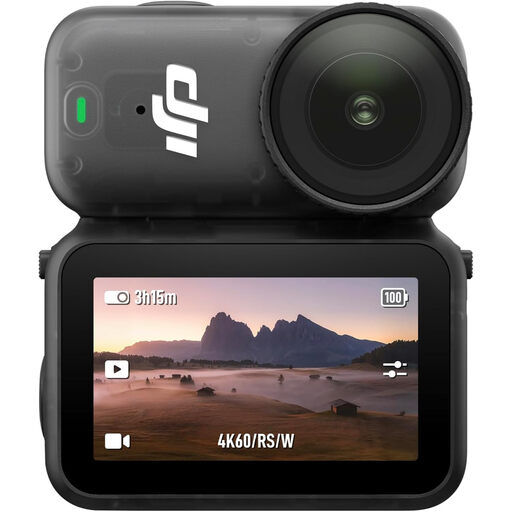 No image available
The product title describes this model as an action camera. Consider whether the camera type and your preferred way of shooting are suitable for still photos of ceramics.
The title lists 4K/60fps, a 1/1.3-inch sensor and a 143° field of view.
No, not necessarily. The Cultural Heritage Agency of the Netherlands says that a good mobile phone camera or compact camera can also be used to document objects. First, test it on an entire object and the details you want to show.
Use as much of the same distance, angle, background and lighting as possible. Also take separate shots of any relevant maker’s marks or areas of damage.
First check whether the offer is for a camera body or a kit with a lens. Under Dutch consumer law, the product must be fit for purpose. The Dutch government says that if there’s a problem, the retailer is your point of contact for a solution. There is no fixed statutory two-year guarantee period.
According to the Dutch Data Protection Authority, an organisation needs a lawful basis to take identifiable photos of people at an event or publish identifiable images of them. Consent is often the most obvious option. This concerns people in the image, not photos showing ceramics alone; whether a particular image can lawfully be published depends on how it was taken and processed.