Which camera is right for you?

Walker who wants to take photos straight away

You don’t want to change lenses while out walking, and you’re happy to accept that a fixed field of view won’t always fit an entire row of façades into the frame from the same spot. The Consumentenbond describes compact cameras as cameras with a fixed lens.

Photographer on a narrow quayside

You have little room to step back, so you want to assess the field of view of the complete camera-and-lens combination. Canon and Nikon offer separate ultra-wide-angle lens options for their mirrorless camera ranges.

Photographer who wants straight façades

You want to capture vertical lines and brickwork details carefully. Sony recommends keeping the camera level and leaving space around the building if you may need to correct perspective afterwards.

What should you look for?

Compact camera with a fixed lens

Best for: walks when you want to carry as little equipment as possible and usually frame a single building or architectural detail.

Trade-off: you don’t need to change lenses, but you can’t adjust the fixed field of view by fitting a different lens.

Mirrorless camera with an ultra-wide-angle zoom

Best for: a narrow quayside where you want to frame more of a tall or continuous façade from where you’re standing.

Trade-off: check that the right lens is included with the camera body; a body or standard kit doesn’t guarantee the field of view you need.

What to consider What should you check? Who should pay particular attention?
Whole façade or row of façades Check the lens’s field of view on the relevant sensor, and make sure that lens is actually included in the kit. Compare a fixed 28 mm-equivalent field of view with the ultra-wide-angle zooms available. If I want to capture a whole row of façades from a narrow quayside, the width of the frame matters most. Around 31% of consumers prioritise framing a wide façade.
Taking photos quickly Compare what you’ll actually be carrying and whether you can leave the lens you need on the camera. For a quick photo opportunity, I want to be able to pick up the camera without changing lenses first. Around 31% of consumers prioritise having a camera ready to use.
Straight façades Consider whether you can keep the camera level from where you’ll be standing, and whether the frame leaves room for cropping or perspective correction. If I want a façade to look as straight as possible, I take extra care with framing. Around 19% of consumers prioritise keeping façades straight in their photos.
Details in low light Check the stabilisation of the exact camera body and lens, and look at the lens’s maximum aperture. When photographing brickwork details in changing light, I want to know what the body and the lens I’m using each offer. Around 19% of consumers prioritise photography in low light.

Common buying mistakes

  • Comparing camera bodies alone

    The lens also determines how much of a façade fits in the frame. A camera body and a suitable ultra-wide-angle lens are separate products, so the body alone won’t tell you the field of view you’ll get with the complete kit.

    Check the exact kit contents, lens mount and field of view of the combination you’re considering.

    You may need a compatible ultra-wide-angle lens as well as the body.

  • Expecting an ultra-wide-angle lens to straighten sloping façades

    If you tilt the camera upwards, vertical lines may converge. A wider lens won’t automatically prevent this.

    Keep the camera level where possible. If you have to tilt it upwards, leave space around the building in case you need to correct the image afterwards.

    Framing more loosely may take extra time when composing and editing your photo.

  • Assuming every camera from a brand has stabilisation

    Stabilisation varies between camera bodies and lenses. Canon states that the EOS R50 does not have in-body image stabilisation; Nikon specifies vibration reduction for the NIKKOR Z DX 12-28mm lens.

    Check stabilisation for the exact body and lens. Don’t assume that the stated number of stops is guaranteed for every shot.

Brands and lens options to consider

Canon

The EOS R50 is an APS-C mirrorless camera that supports RF-S lenses. The RF-S 10-18mm is a separate ultra-wide-angle option for tight shooting positions.

  • Canon specifies a weight of approximately 375 g for the black EOS R50 body, including battery and card.
  • Canon states that the EOS R50 does not have in-body image stabilisation. Check whether the lens you need is included in the kit you’ve chosen.

Nikon

The Z50II is a Z-system mirrorless camera. For wider framing, the NIKKOR Z DX 12-28mm f/3.5-5.6 PZ VR is a separate option in Nikon’s DX system.

  • Nikon specifies a 12-28 mm range and a weight of 205 g for this lens, as well as lens VR of up to 4.5 stops under its own test conditions.
  • These lens specifications don’t automatically apply to every Nikon body or kit, so check the exact combination.

Ricoh

Ricoh describes the GR IV as a compact APS-C camera with a fixed lens equivalent to approximately 28 mm, designed for taking photos without changing lenses.

  • Ricoh specifies five-axis in-camera image stabilisation.
  • With the fixed lens, you can’t switch to a significantly wider lens from the same position.

Sony

The E PZ 10-20 mm F4 G is a separate ultra-wide-angle zoom lens for Sony APS-C cameras with an E-mount.

  • Sony specifies a 10-20 mm range and a constant maximum aperture of F4 for this lens.
  • Check the exact camera-and-lens combination, and its stabilisation, separately.

Cameras at Joybuy

These cameras are options to explore for photography on the go and framing canal houses. If you’re choosing a mirrorless camera, check that the lens range suits the space you have on the quayside.
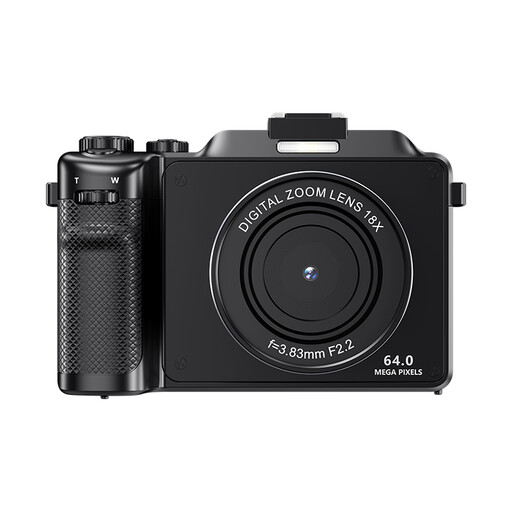
Komery X9 4K 64MP autofocus vlogging camera

Komery X9 4K 64MP autofocus vlogging camera with 18X digital zoom

A digital camera to consider if you want to compare autofocus and digital zoom.

The product information lists 64MP images and 18X digital zoom; it also states that the zoom may reduce image quality.

View at Joybuy
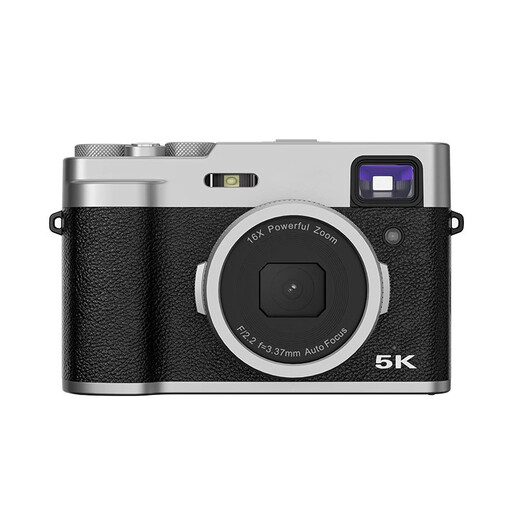
Songdian retro compact camera, 48MP, 5K, optical viewfinder and 2.8-inch LCD screen

Songdian retro compact camera 48MP with optical viewfinder

A compact option to take with you if you’d like an optical viewfinder.

The product name lists 48MP, 5K and a 2.8-inch LCD screen. The product information mentions autofocus and an optical viewfinder.

View at Joybuy

Songdian dual-lens camera, white, 5K, 64MP and 8X optical zoom

Songdian dual-lens camera 5K 64MP with 8X optical zoom, white

An option to consider if you want to frame different crops using optical zoom.

The product information lists 8X optical zoom and manual control of zoom and focus via the lens ring.

View at Joybuy
Songdian 5K camera, black, 56MP, with 10X optical zoom

Songdian 5K camera 56MP with 10X optical zoom, black

An option to consider if you want to take different crops using optical zoom.

The product information lists 10X optical zoom and electronic stabilisation; the product name mentions 56MP and front and rear cameras.

View at Joybuy
Sony ZV-E10 with E PZ 16-50mm OSS zoom lens, black

Sony ZV-E10 with E PZ 16-50mm OSS zoom lens, black

A mirrorless camera kit to consider if you’re looking for a body supplied with a zoom lens.

The product information lists an APS-C sensor, 24.2 MP, 4K video and an E PZ 16-50mm OSS kit lens. Check that the lens range suits where you’ll be standing.

View at Joybuy

Frequently asked questions

Which lens do I need if I can’t fit an entire façade in the frame from the quayside?

Start by checking the field of view of the complete kit. A suitable ultra-wide-angle lens on a compatible mirrorless camera can give you more room to frame the shot; check the sensor, lens mount and the lens actually supplied. A wider lens won’t automatically correct a camera tilted upwards.

Do I need to set up a tripod straight away to photograph straight façades?

Not necessarily just to compose your shot: Sony recommends keeping the camera level and, if possible, stepping back. If you have to tilt the camera upwards, leave space around the building in case you need to correct the perspective afterwards. Whether a handheld shot comes out sharp also depends on the light and the equipment you’re using.

What should I check if the wide-angle lens isn’t included with the camera?

Check that the lens is compatible with the body and that its field of view suits where you’ll be standing. Compare the complete kit you need: a body alone isn’t the same as a complete wide-angle setup.

What are my rights if a camera I bought online isn’t up to standard?

For a consumer purchase in the Netherlands, the seller must supply a product that meets the required standards and resolve problems with a faulty product, according to the Government of the Netherlands. Online purchases generally come with a 14-day cooling-off period after delivery; ACM ConsuWijzer explains that exceptions may apply. The statutory guarantee is not simply a fixed two-year period.

Can I publish photos of canal houses that show identifiable passers-by?

Not automatically. The Dutch Data Protection Authority points out that identifiable people in images are personal data, and taking and publishing such images may involve privacy rules. The assessment depends, among other things, on how the photo is used; a picture of a façade does not, in itself, give you general permission to post identifiable people online.
